EN
EN  DE
DE  RU
RU  PT
PT  JA
JA  ES
ES  IT
IT Heavy-duty machine guarding
Machine guarding safety fence for scrap flyout and impact control
Machine guarding safety fence systems are built for scrap crushing, car dismantling, and metal recycling lines where heavy fragments, fork trucks, and moving load gear can strike a barrier hard enough to deform a light frame. This layout pairs a tested Q235 steel structure, 60×60 mm uprights, and a 20×100 mm anti-entanglement mesh with proof images from the installed fence and the hardware details.

Why this machine guarding safety fence fits heavy scrap zones
When a recycling line throws metal chips or a forklift clips the perimeter, the weak point is usually the fence itself. Light wire mesh bends, opens gaps, and loses alignment. This machine guarding safety fence is specified to stay standing under impact pressure, keep flying debris inside the danger zone, and keep hands away from the machinery edge.
| Requirement | SGF support detail |
|---|---|
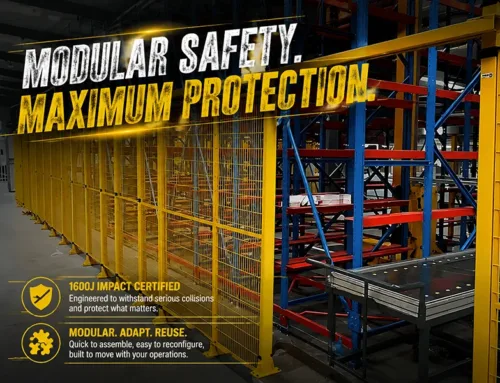
| Impact resistance | Q235 carbon steel frame with 60×60 mm uprights, designed for 1600 J impact energy, which is enough for frequent accidental contact in metal recovery sites. |
| Flyout containment | 20×100 mm micro-mesh helps block shards and broken pieces from escaping the cell during shredder or dismantling work. |
| Safe access | Gate hardware and base plates keep the entry point rigid, so operators can access the zone without weakening the perimeter. |
| Maintenance visibility | Open mesh geometry preserves line of sight to the machine while still creating a reliable physical barrier. |
Structure evidence behind the machine guarding safety fence
1. Full-line perimeter that stays rigid after knocks
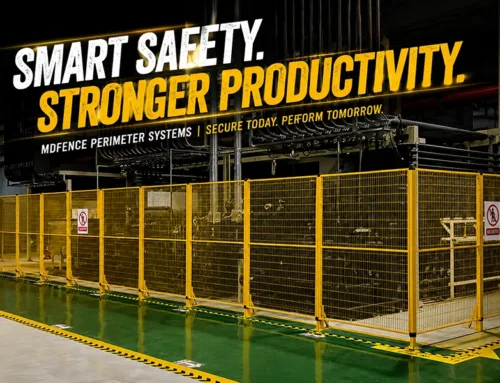
The installed perimeter image shows the fence running along the machine line in a clean factory aisle, which is exactly the kind of layout used where repeated side contact is a risk. The rigid posts and frame help the barrier keep shape after bumps instead of folding into the work path.

2. Secure access point without weak frame drift
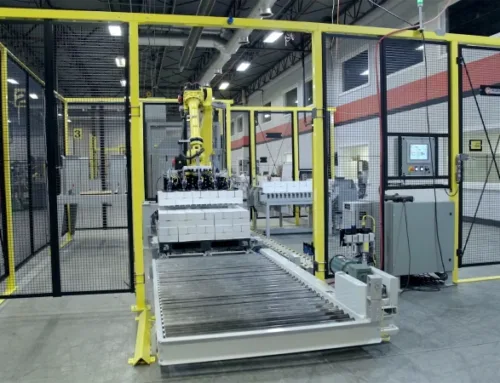
The gate view shows black posts, base plates, and a controlled entry opening. That matters on scrap and dismantling lines because the safest fence is not a sealed wall; it is a barrier with access that still holds alignment and does not loosen at the hinge or floor interface.

3. Mesh and frame details that explain the protection level
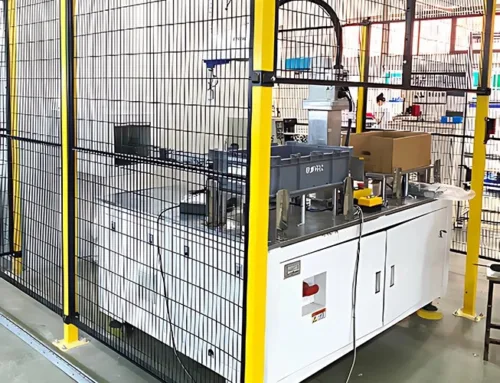
The close-up image makes the yellow frame and black mesh easy to inspect. Combined with the Q235 steel body, the 20×100 mm mesh opening, and TÜV safety certification, it explains why the fence is not a decorative boundary but a protective machine guarding barrier for impact and debris control.

Where a machine guarding safety fence makes the most sense
- Scrap shredding lines where metal fragments may fly out under sudden load release.
- Car dismantling stations where tools, parts, and loose metal pieces need a fixed containment edge.
- Forklift-adjacent aisles where accidental side contact can happen during material handling.
- Recycling yards and indoor recovery plants that need a barrier stronger than light mesh fencing.
In these applications, the result is simple: fewer deformation events, better fragment containment, clearer access control, and a safer work perimeter around the machine cell. The fence supports daily production while reducing the chance that a single collision turns into a shutdown or injury incident.
Specification takeaway
If the site has heavy scrap, repeated machine contact, or flying debris, specify the fence by impact requirement first, then mesh opening, then gate and base plate details. That order keeps the machine guarding safety fence matched to the actual hazard instead of to a generic light-duty partition.
Build the barrier before the collision happens
For high-impact recycling and dismantling zones, the right machine guarding safety fence is the one that can take a hit, keep fragments inside the cell, and still hold the line for the next shift. Use the structure, parameters, and image evidence above to plan the layout with less guesswork.