EN
EN  DE
DE  RU
RU  PT
PT  JA
JA  ES
ES  IT
IT Machine guarding
safety fencing machine guarding for forklift impact and AGV lanes
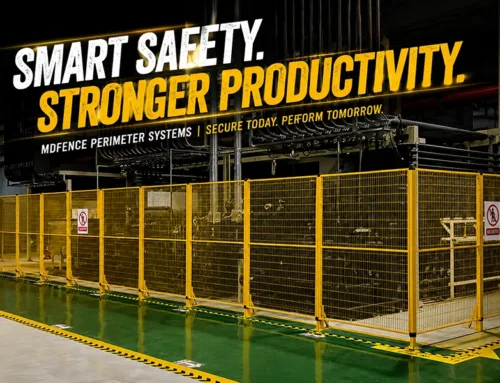
safety fencing machine guarding keeps AGV corridors, forklift unloading bays, and machine cells closed after minor contact, so one bump does not turn into a site-wide stop.
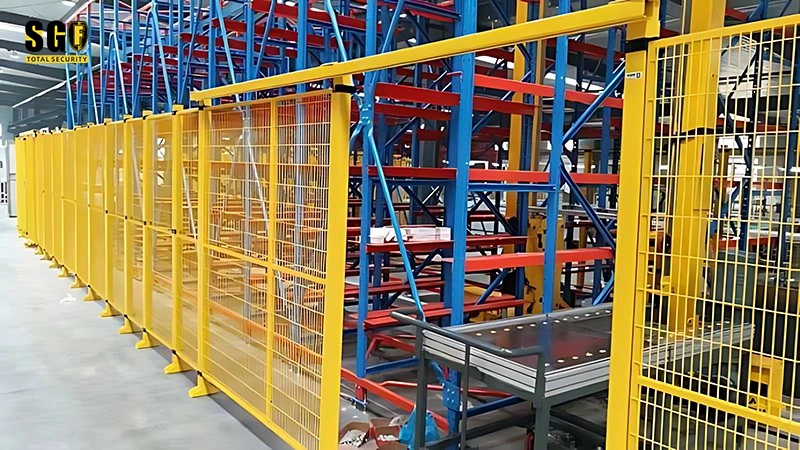
Why this machine guarding system holds up in high-traffic logistics zones
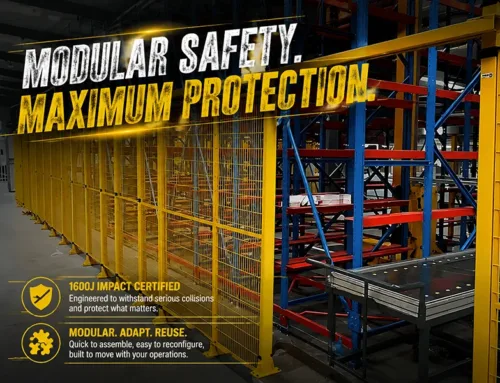
In fast-moving warehouses, the weak point is rarely the fence on day one. The real problem appears after repeated side contact: a cheap frameless mesh panel loosens, a post bends, a gate no longer closes, and the automation system sees an open safety circuit. Mdfence is built for that operating reality. It uses Q235 carbon structural steel, 60×60 mm thickened square-tube posts, and a 20x30x1.5 mm rectangular panel frame. Every contact point is fully welded, so the structure stays aligned instead of collapsing into a jammed gate and a full-line shutdown.
| Engineering factor | Mdfence response |
|---|---|
| Typical impact zone | Forklift loading areas and AGV route edges where light side contact happens every week, not once a year. |
| Post construction | 60×60 mm thickened square-tube upright improves bending resistance and keeps panel alignment under repeated bumps. |
| Panel frame | 20x30x1.5 mm rectangular frame gives the mesh panel a rigid perimeter instead of a loose frameless edge. |
| Connection method | All contact points are full-welded to avoid the joint failure and rattling common in low-cost wire mesh systems. |
| Failure behavior | When impact exceeds the design limit, the steel can plastically deform to absorb energy instead of breaking apart and scattering parts into the aisle. |
| Operational result | Lower corrective maintenance, fewer stuck doors, and less unplanned downtime after accidental scrapes. |
Structure details that explain the difference
Rigid frame geometry, not loose mesh hardware
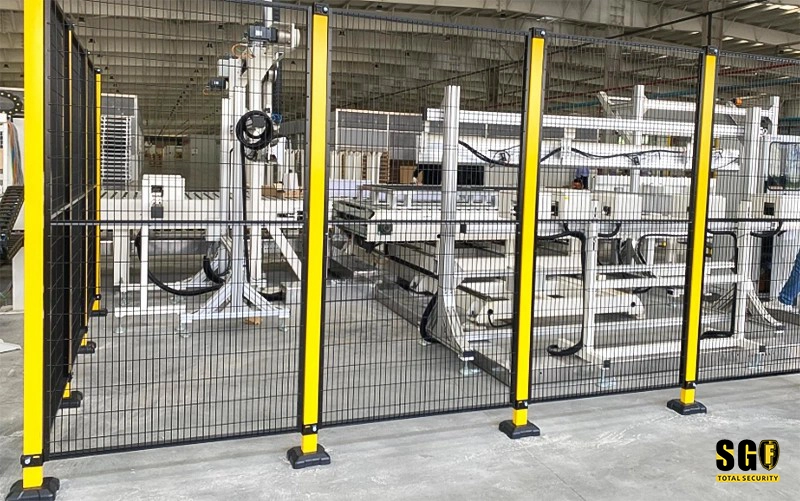
The key reason safety fencing machine guarding works in a logistics cell is simple: the frame must stay square. The technical front view shows the post and mesh layout in clear relation, which is exactly what keeps the door line and panel line stable when a trolley or fork tip brushes the edge. That stability matters more than a neat appearance, because a misaligned opening is what triggers the chain reaction from a small collision to a failed safety interlock.
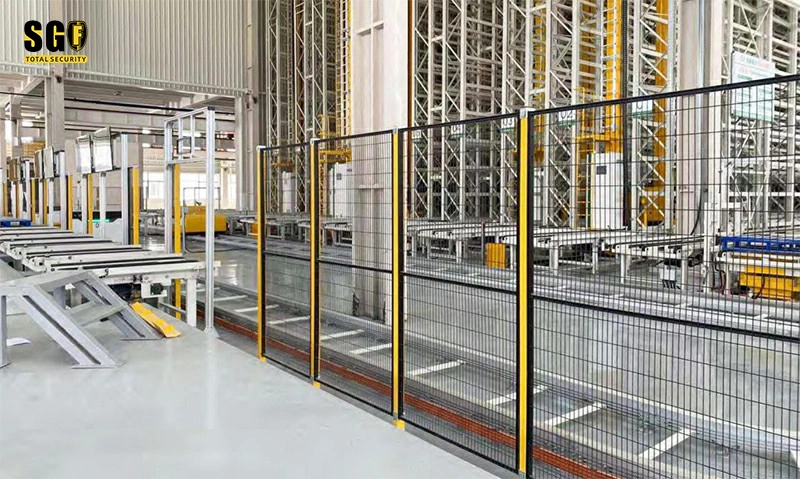
Welded contact points and base plate proof
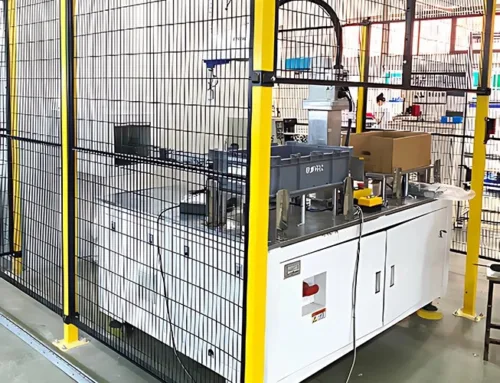
The product detail board gives the evidence buyers usually ask for before approval: weld seam quality, coating coverage, and base plate detail in one view. That matters because a fence for impact-prone logistics zones cannot depend on adhesive, thin spot welds, or loose fasteners. The fully welded contact points and heavy-duty base interface are what help the system keep its shape after impact and reduce repeat service calls after handover.
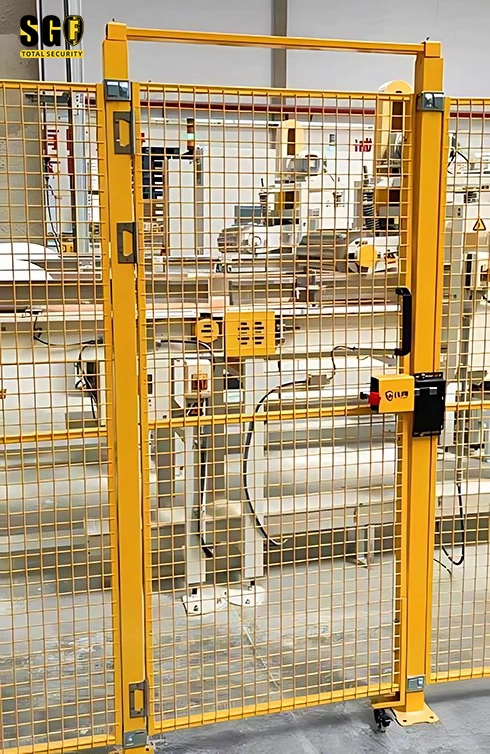
Secure gate access instead of a door that drifts out of alignment
In mixed traffic areas, the gate is usually where failure becomes visible first. A bent hinge line or warped latch means the door does not close cleanly, which is exactly how a local hit turns into a broader automation stop. The framed gate with lock hardware is designed to keep access controlled and the closure path consistent, so the safety state stays predictable even after repeated handling and minor contact.
Where this system fits best
- AGV route perimeters where guided vehicles need a clean boundary and a gate that still closes after minor side contact.
- Forklift loading and unloading zones where trolley corners, pallets, and forks can scrape the fence edge during peak shifts.
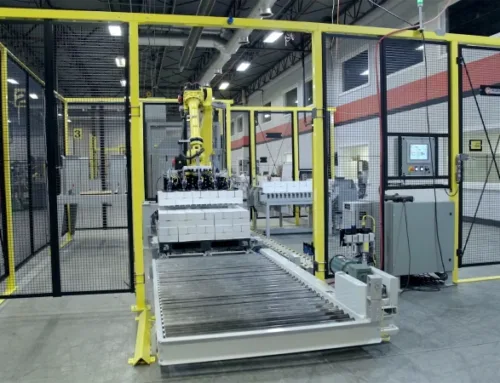
- Automation cells that cannot tolerate a jammed gate, because one misaligned safety door can stop the whole line.
- Retrofit projects replacing frameless wire mesh that bends, loosens, or drops panels after light impact.
For these use cases, safety fencing machine guarding is not only a barrier. It is a structural control layer that protects uptime by staying usable after the small collisions that happen in real warehouse traffic.
What to specify before ordering
Before procurement, define the collision zone, the gate opening width, the traffic direction, and whether the fence must survive repeated forklift brushes or only occasional maintenance contact. Then match the structure to the risk: Q235 carbon steel, 60×60 mm posts, 20x30x1.5 mm frame members, and full-welded joints are the practical baseline when downtime is more expensive than steel.
Build a fence that keeps working after contact
If your current barrier fails by bending, loosening, or leaving the gate out of alignment, the problem is not the alarm. It is the structure. Use safety fencing machine guarding designed for impact absorption, alignment retention, and lower maintenance load in dense logistics environments.