EN
EN  DE
DE  RU
RU  PT
PT  JA
JA  ES
ES  IT
IT Machine Fencing for fault-mode containment
Machine Fencing for impact containment in automated machining cells
When a machine fault turns into a real impact event, Machine Fencing has to do more than mark a boundary. It has to hold the line against broken parts, flying material, and side loads that can otherwise push a weak enclosure open and expose the aisle outside.
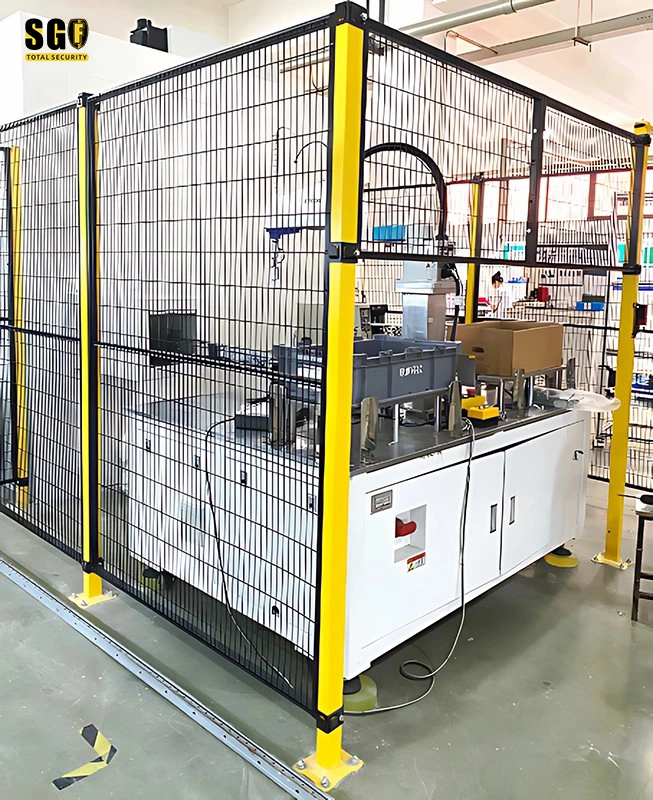
Why weak perimeter fences fail when the failure happens inside the cell
In many automation projects, the first version of the guard is only designed for routine separation. That is not enough when a spindle, tool, fixture, or part suddenly releases energy into the boundary. The problem is not simply visibility or access control. The real test is whether the perimeter survives a hard strike without collapsing, tearing open, or transferring the shock to the aisle outside.
| Failure event | Mdfence response |
|---|---|
| Unexpected part ejection or component drop | Q235 cold-rolled carbon structural steel absorbs impact through plastic deformation instead of brittle fracture. |
| Barrier bending under a direct hit | Standard 60×60 mm thickened posts give the enclosure the rigidity needed to keep the boundary standing. |
| Frame twist at the panel edge | The 20x30x1.5 mm rectangular tube frame gives the mesh panel more than 4x the bending stiffness of a frameless mesh panel. |
| Unverified impact resistance | The system passed TÜV testing in Europe and is rated to withstand 1600 J of impact energy. |
What makes Mdfence fit fault-driven machine protection
Impact containment starts with the cell envelope
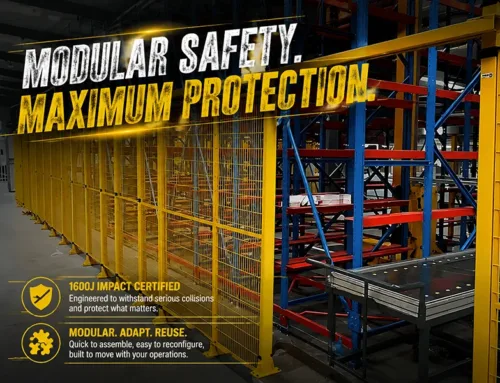
The first image shows the fence closing around a live automation cell, which is the exact operating condition that matters here: a machine does not fail in a vacuum, it fails inside a working perimeter. Mdfence is built for that environment. The Q235 structure is chosen for controlled deformation under load, so the system can absorb energy instead of cracking when the event is violent. That is the difference between a fence that simply exists and a fence that remains a boundary after the impact.
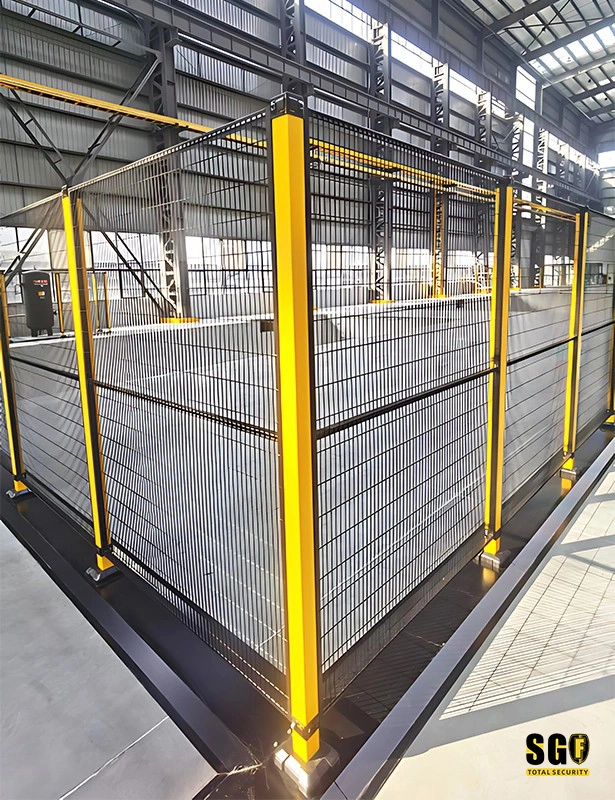
Frame stiffness is what keeps the edge from opening
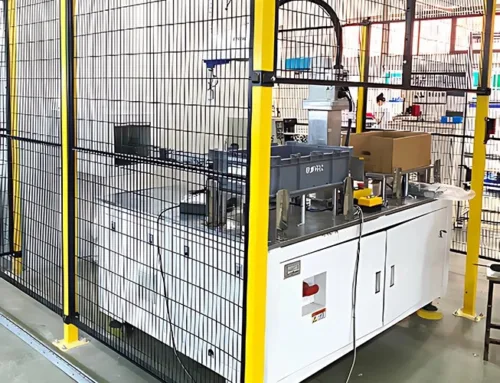
A fence panel that looks acceptable in a brochure can still fail if the frame is too light. That is why the 20x30x1.5 mm rectangular tube border matters. It raises the panel’s bending stiffness dramatically, so the mesh is not carrying the load alone when something strikes the enclosure. The close-up also points to another practical detail: the locking hardware and framed gate structure make access control part of the same mechanical system, not an afterthought added later.
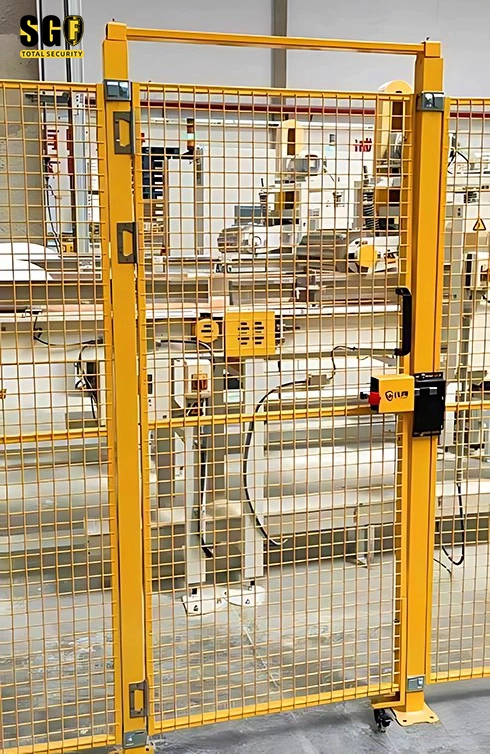
Continuous protection also depends on installation geometry
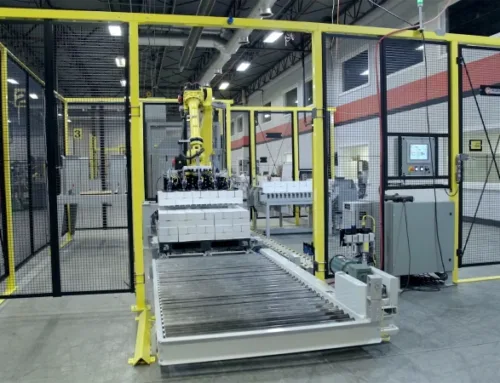
The third image shows the fence running beside transfer equipment, which is where many cells are exposed to repeated side impacts, pallet movement, and maintenance traffic. This is why the system uses 60×60 mm thick posts and a rigid panel build. The perimeter stays aligned, the boundary stays closed, and the machine cell keeps its shape even when the surrounding workflow is busy. The installation steps and fixed base structure are part of the same result: a fence that is mechanically anchored, not loosely placed.
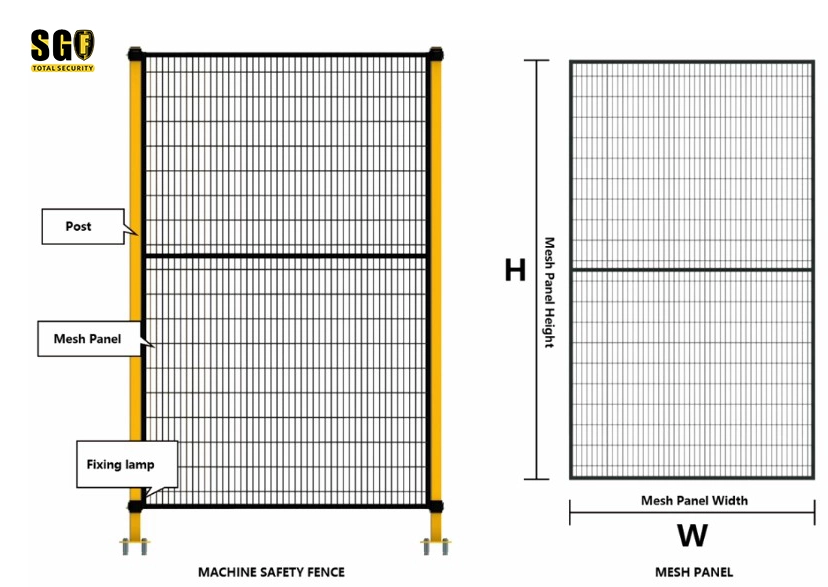
Where this Machine Fencing specification is the right fit
- Automated machining cells where internal faults can create flying debris or dropped parts.
- Robot work zones that need a rigid boundary between the cell and the operator aisle.
- Transfer and conveyor interfaces where repeated movement can load the perimeter from the side.
- Heavy industrial lines that need an enclosure tested for high-energy impact, not just visual separation.
Mdfence is not positioned as a light-duty divider. It is a heavy-duty machine boundary system for operators who need the outside walkway to remain protected after an internal failure event. With TÜV-verified 1600 J impact resistance, Q235 structural steel, thickened 60×60 mm posts, and a framed 20x30x1.5 mm panel edge, the result is a real industrial safety envelope.
What to specify before you lock the layout
If your application can produce thrown parts, broken tooling, or high-speed splash, specify the impact energy, the post size, the panel frame section, and the expected boundary load before you finalize the cell. That is the information that separates a standard safety fence from a Machine Fencing system built to survive a fault event. Mdfence gives you a clear specification path: Q235 steel, 60×60 mm posts, 20x30x1.5 mm framed panels, and 1600 J tested resistance.
Final result: a boundary that stays closed when the machine does not
When the job is to protect the aisle outside the cell, the fence cannot be decorative. Mdfence is designed to take the hit, stay standing, and keep the system boundary intact so the line can be brought back under control safely.