EN
EN  DE
DE  RU
RU  PT
PT  JA
JA  ES
ES  IT
IT Robot Safety Fencing for impact containment
Robot Safety Fencing for 1600 J Impact Containment in Fault-Prone Machining Cells
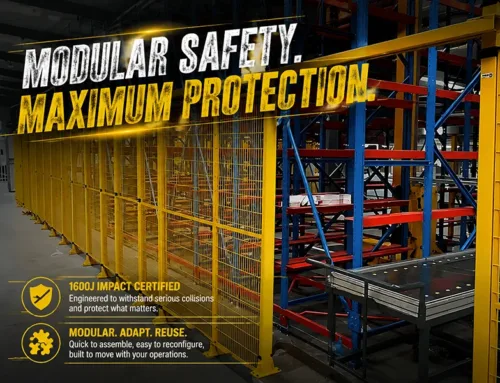
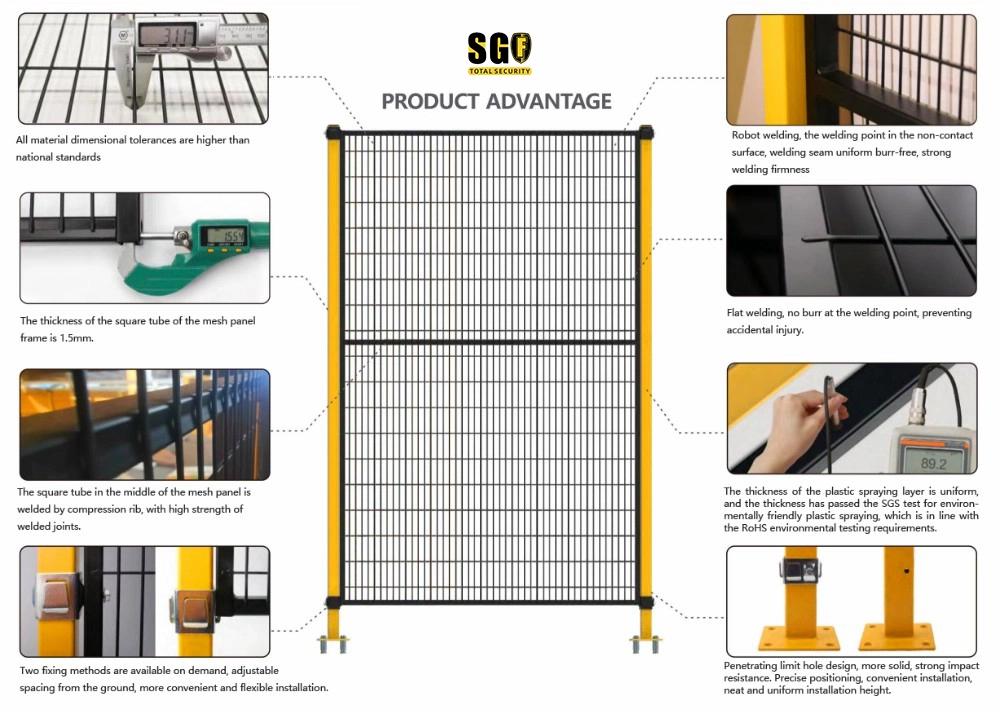
When a machining cell fails, the fence is not there to look neat — it is there to stop flying parts, keep the aisle boundary standing, and protect people around the line. Mdfence is built for that job with Q235 carbon structural steel, 60×60 mm uprights, a 20x30x1.5 mm framed mesh panel, and TÜV-tested 1600 J impact resistance.
Why the old boundary fails first
In an automated machining cell, the failure mode is not slow and gentle. A broken tool, a loose fixture, or a thrown workpiece can hit the perimeter at high speed. Light mesh, thin posts, and frame-free panels bend too easily, and once the boundary opens, the walkways outside the cell become the secondary impact zone. Robot Safety Fencing has to absorb energy, not simply mark a line on the floor.
| Specification | Mdfence value |
|---|---|
| Steel grade | Q235 cold-rolled carbon structural steel for controlled plastic deformation under impact |
| Standard upright | 60×60 mm thickened post for higher boundary rigidity |
| Panel frame | 20x30x1.5 mm rectangular tubular frame, with bending rigidity more than 4× an unframed mesh panel |
| Impact rating | TÜV tested to 1600 J super-high impact energy |
| Protection logic | Strong enclosure, energy absorption, and no brittle fracture in a collision event |
What makes the system fit a high-risk machining cell
Rigid frame proof, not just visual coverage
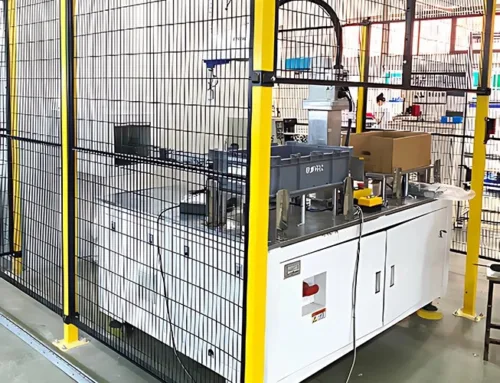
The first thing to check in Robot Safety Fencing is whether the panel itself can carry load. The framed mesh panel on Mdfence uses a 20x30x1.5 mm rectangular tube, so the panel behaves like a structural member rather than a loose screen. That is why the enclosure can keep its shape when an internal machine event pushes back against the perimeter.
Post and clamp geometry that keeps the line closed
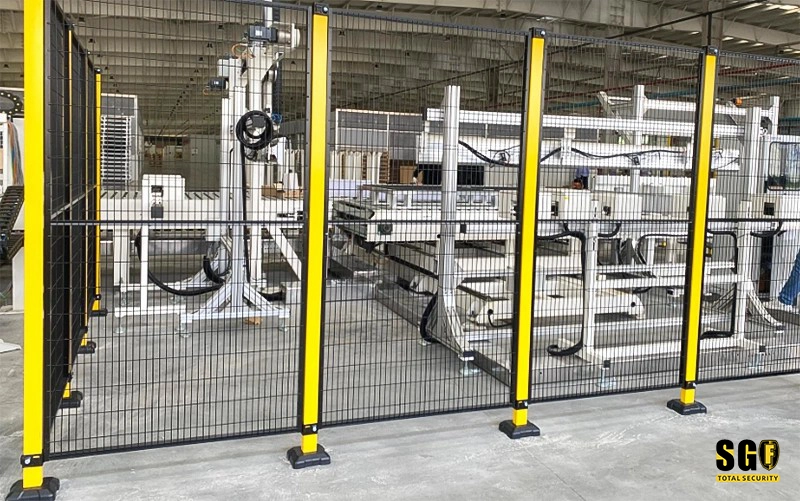
A collision-safe perimeter needs more than a strong mesh. The 60×60 mm uprights and the fixing-clamp layout give the fence a clear load path from the panel into the post and into the floor. That is what prevents local damage from becoming a full opening at the machine boundary.
Corner closure for real shop-floor containment
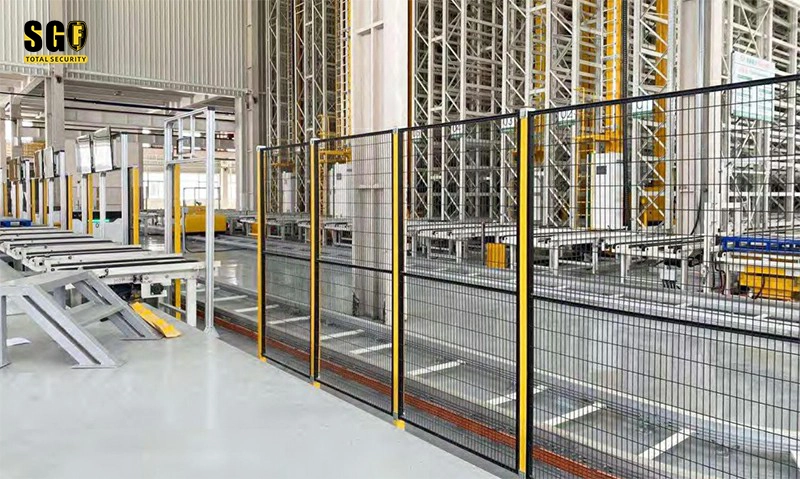
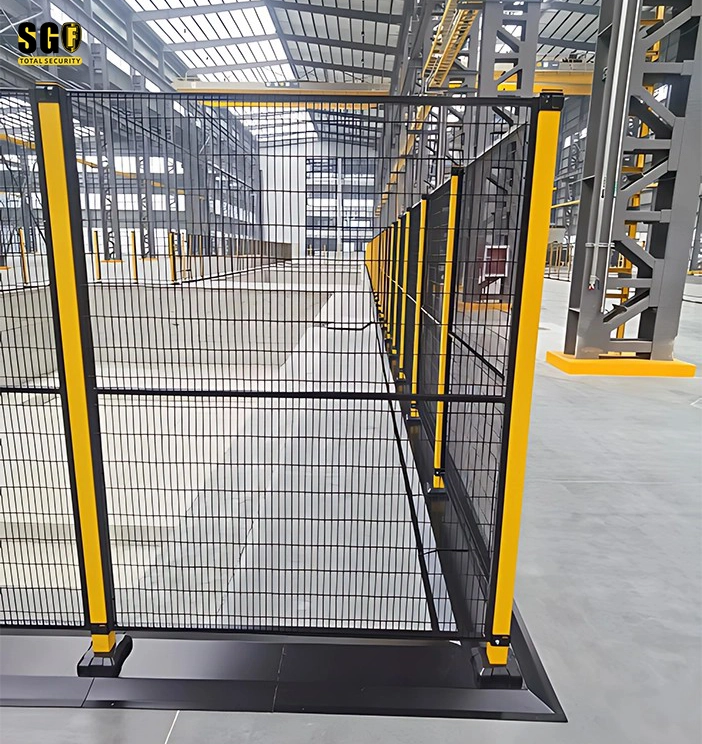
Most failures happen where systems meet: corners, gates, and transitions. The corner detail matters because it keeps the enclosure continuous around the machine cell, which is exactly what you want when the boundary must hold during an unexpected throw or internal strike.
Where Robot Safety Fencing earns its keep
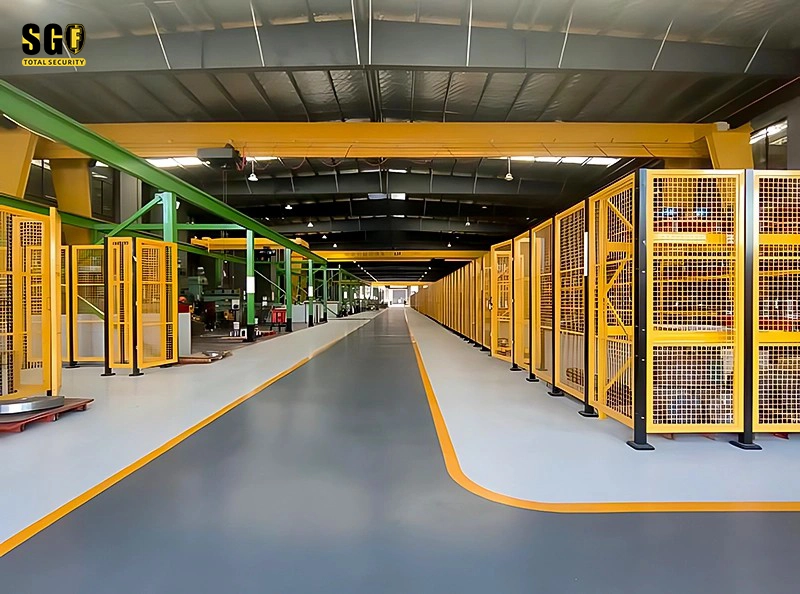
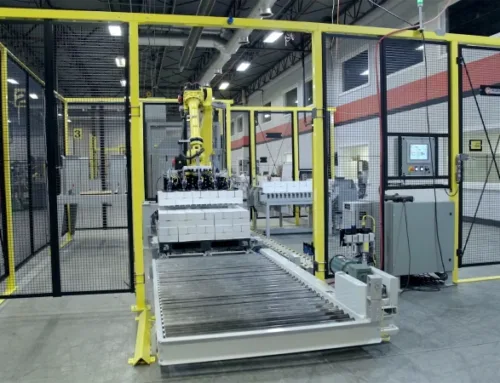
- Machining cells where broken parts can be ejected toward walking aisles.
- Automated stations that need a stiff physical boundary instead of a light divider.
- Shop-floor zones where the fence must survive impact without brittle collapse.
- Facilities that need a tested perimeter to support operator safety and internal machine isolation.
In practice, the result is simple: when the machine misbehaves, the fence keeps working. Q235 steel absorbs energy through deformation, the framed panel resists bending, and the overall boundary stays intact long enough to protect the surrounding workspace. That is the real value of Robot Safety Fencing in a heavy-duty machining environment.
Evidence pack for Robot Safety Fencing selection
If your specification needs a perimeter that can justify itself in front of operations, maintenance, and EHS teams, start with the measurable parts: 60×60 mm uprights, 20x30x1.5 mm framed mesh, Q235 steel, and 1600 J impact verification. Those are the numbers that separate a visual guard from a real containment system.
Build the boundary before the failure event
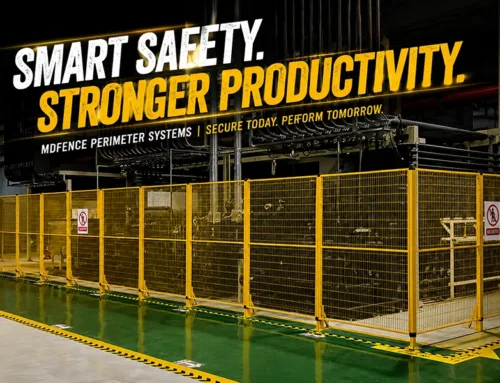
Robot Safety Fencing should be selected for the collision case, not the calm-day case. Mdfence is designed for that harder job.