EN
EN  DE
DE  RU
RU  PT
PT  JA
JA  ES
ES  IT
IT Heavy Forklift Impact in Steel Coil and Sheet Handling
Robot Safety Fencing for 1600 J Forklift Impact in Steel Coil Transfer Bays | Mdfence
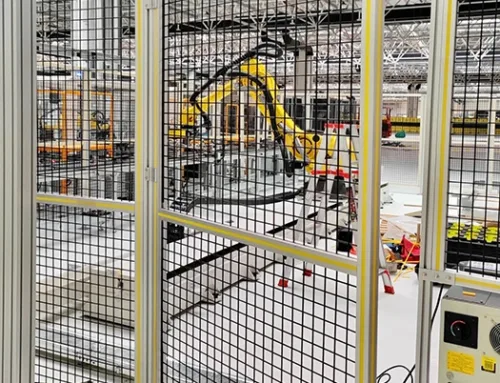
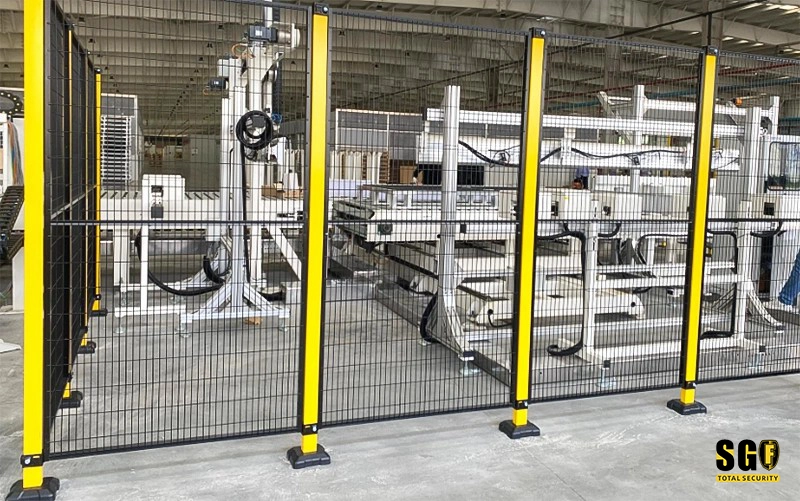
Robot Safety Fencing is built for heavy logistics aisles where forklift contact is not a rare mistake but a daily risk. With 60x60mm Q235 carbon structural steel posts, TÜV certification, and up to 1600 J impact resistance, it gives steel coil and sheet handlers a barrier that can absorb energy instead of shattering on the first hit.
Why Robot Safety Fencing fits high-impact forklift lanes
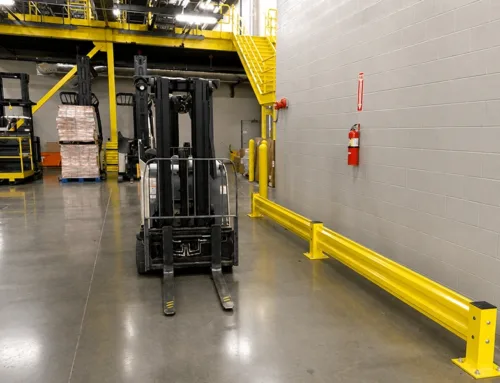
In steel coil and plate workshops, the real problem is not a one-off bump. It is the constant combination of tight turning radii, full-load braking, blind corners, and narrow transfer aisles. Ordinary wire mesh fences often rely on light frames and thin posts. Once a forklift clips them, they bend, crack, or collapse, and the safety boundary disappears together with the repair budget. Robot Safety Fencing uses a different logic: the structure is designed to take the hit, deform plastically, and keep the line protected.
| Site reality | Mdfence response |
|---|---|
| Heavy forklifts repeatedly scrape or strike the barrier while moving coils and sheet packs | 60x60mm Q235 carbon structural steel posts absorb and redistribute impact instead of brittle failure |
| Ordinary mesh fences fail after one collision and require frequent replacement | TÜV certified design rated for up to 1600 J impact resistance helps keep the barrier in service |
| A failed fence turns a minor contact into a personnel and asset risk | Plastic deformation absorbs kinetic energy and preserves the protective boundary after impact |
| Downtime is expensive in steel coil logistics and machine-adjacent aisles | Durable structure reduces emergency repairs, repeated rework, and unplanned exposure |
Structure evidence behind the impact rating
Base plate and weld quality are not cosmetic details
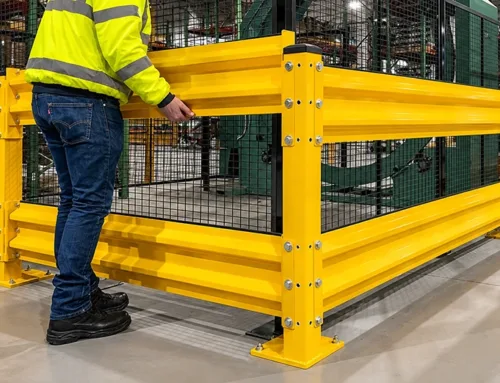
The product proof board shows the details that matter in a hard-hit environment: weld seams, coating control, caliper-checked dimensions, and a solid base plate. That is important because a fence in a forklift corridor is only as reliable as its load path. The impact does not vanish; it moves through the post, into the base, and down into the floor. Robot Safety Fencing is built for that mechanical chain, not for showroom appearance.
Post, mesh, and clamp layout carry the load
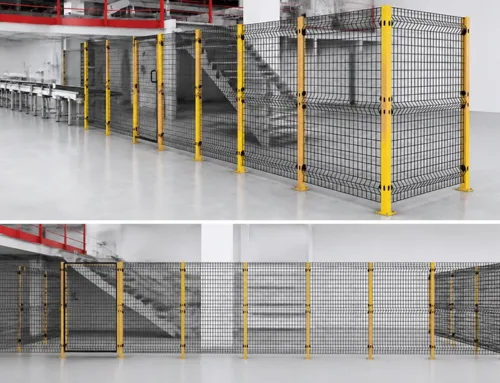
The technical front view makes the structure easy to read: posts, mesh panel, and fixing clamps work together as one frame. In a heavy logistics aisle, that joint logic matters more than a thin decorative mesh. The clamps keep the panel aligned, the post keeps the fence upright, and the full assembly helps the system stay functional after a side impact. That is why the product is a real industrial barrier rather than a temporary divider.
Anchoring turns the fence into a stable safety edge
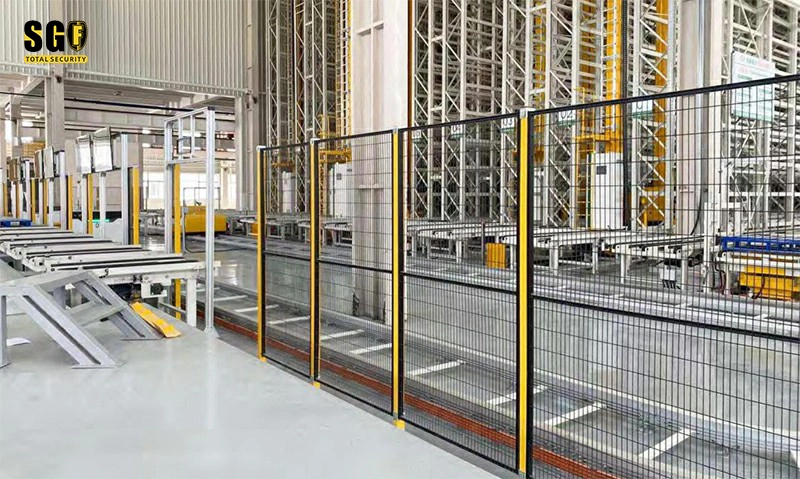
The installation diagram shows base plate drilling, expansion bolts, and retaining rings. That is the final reason the system suits forklift-heavy plants: the barrier is not floating in place. It is anchored to the floor so the structure can do the job it was designed for. In practical terms, that means better resistance to repeated touches, less loosening over time, and a cleaner handoff from civil work to daily production.
Where the system delivers the strongest result
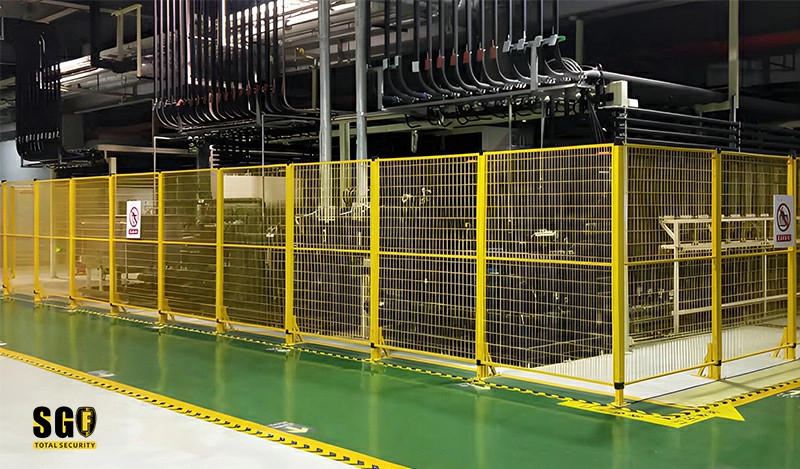
- Steel coil transfer bays where turning forklifts need a hard perimeter buffer
- Sheet staging lanes where the fence must survive accidental side contact
- Machine-adjacent logistics routes where people, robots, and forklifts share the same plant
- Loading and unloading corners where impact risk spikes during shift change and peak dispatch
- High-traffic warehouse aisles that need a durable alternative to fragile wire mesh
For these applications, Robot Safety Fencing is not just a visual boundary. It is a structural safety layer that helps the workshop keep moving even when a forklift makes contact. The result is fewer barrier replacements, better protection for people and assets, and a more predictable production flow around the heavy-material handling zone.
What to specify before you set the fence line
Start with the aisle width, turning radius, forklift load condition, and the exact locations where collisions are most likely. Then map the protection line to the coil storage, sheet staging, and transfer points that need the highest resistance. With those inputs, Robot Safety Fencing can be laid out around the actual risk path instead of a theoretical one, which is how the 1600 J class of protection turns into a practical result on the floor.
Need a heavy-duty fence plan for a forklift impact zone?
If your line is exposed to repeated contact from heavy logistics equipment, Mdfence can turn the risk into a controlled boundary with Robot Safety Fencing built on Q235 steel, tested impact resistance, and floor-anchored stability.