EN
EN  DE
DE  RU
RU  PT
PT  JA
JA  ES
ES  IT
IT Safety fence industrial for plasma cutting and milling cells
Safety fence industrial that stops flying metal waste and gives floor space back
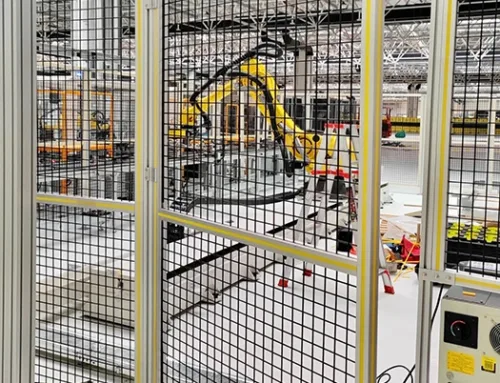
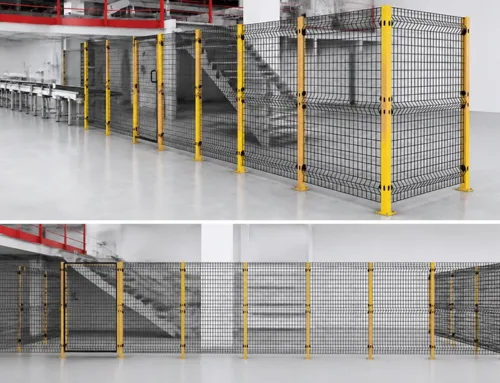
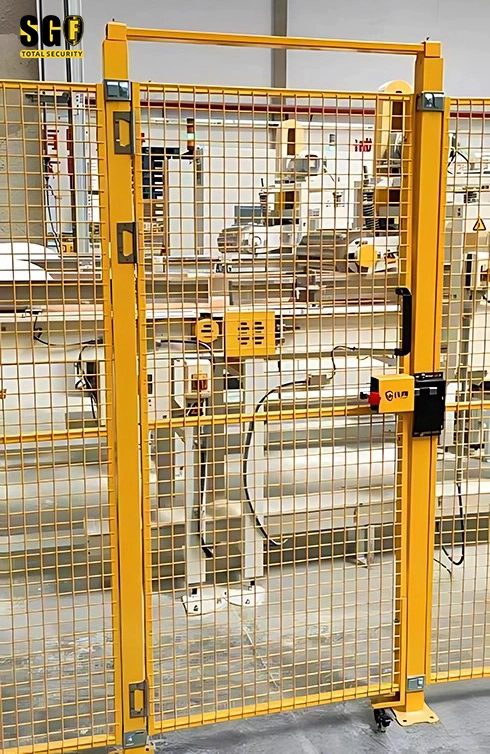
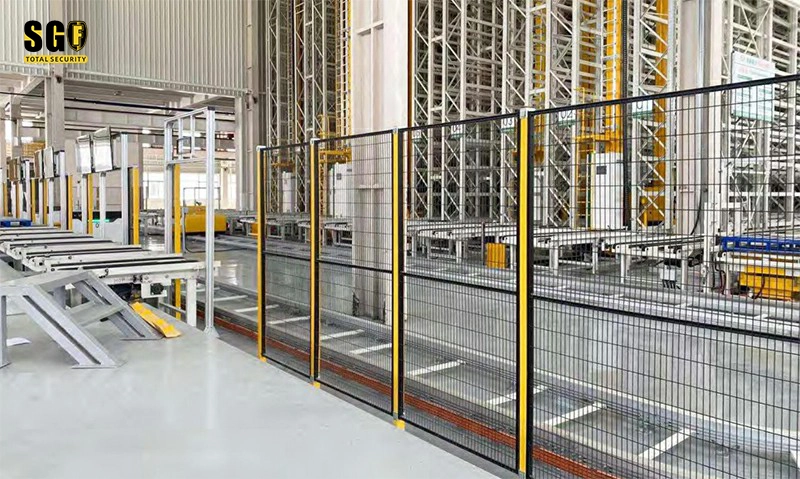
When large plasma cutting and milling machines throw high-speed metal chips, the problem is not just containment. If the mesh opening is too large, the fence must be pushed far away to stay compliant, and valuable factory area disappears. Mdfence solves both sides of the equation with a 20×100 mm anti-reach mesh and a 20×30 mm fully welded rectangular tube frame, so the barrier can sit as close as 120 mm to the hazard while still protecting people and reclaiming usable space.
What the old layout gets wrong
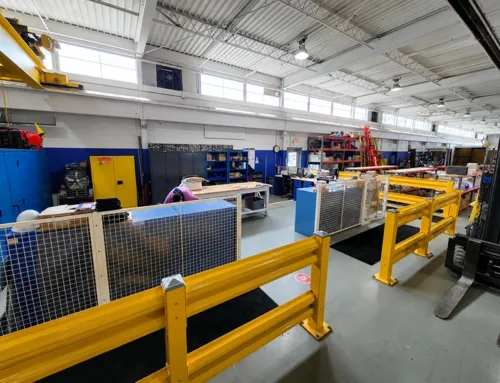
In high-energy metalworking zones, a conventional wide-mesh fence is often a false economy. It may technically separate the machine from the aisle, but it forces a larger safety offset, creates dead space around the cell, and still does not give the tight, rigid boundary needed for fast-flying chips and scrap. The result is familiar: more lost floor area, more awkward traffic routes, and no real improvement in protection.
| Key requirement | Mdfence answer |
|---|---|
| Stop high-speed chip and scrap rebound | 20×100 mm extreme narrow anti-reach mesh limits access and helps block flying debris |
| Keep the fence close to the hazard | Legal installation distance down to 120 mm helps reduce wasted aisle and buffer space |
| Maintain stiffness under impact and vibration | 20×30 mm fully welded rectangular tube frame adds strong anti-bending rigidity |
| Support compliant machine-cell planning | Rigid construction supports ISO-oriented guarding layouts instead of improvised offsets |
Why this safety fence industrial design fits the job
1) Narrow mesh for real chip containment
The core reason this solution works is the mesh itself. A 20×100 mm opening is narrow enough to push the boundary away from the operator and the walking path, while still keeping the fence practical for a machine-cell build. That geometry matters in plasma cutting and milling areas where chips are not gentle dust; they are fast, sharp, and unpredictable. The mesh is designed to make the enclosure act like a true barrier, not just a visual line.
2) Welded frame rigidity that holds the line
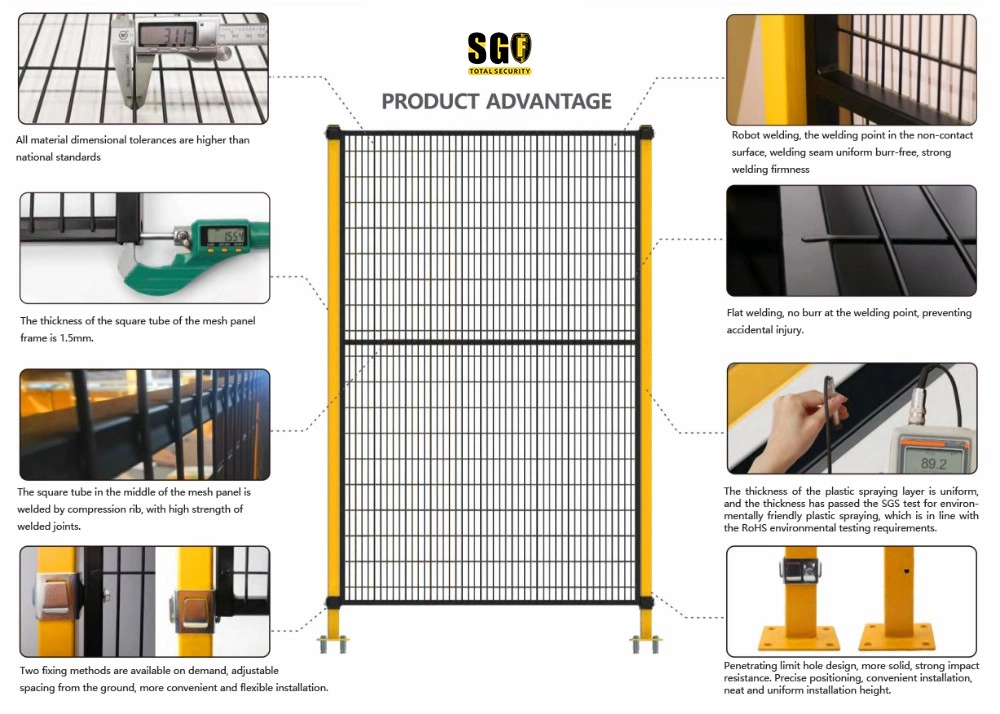
A narrow mesh only performs if the frame keeps it flat and stable. That is why Mdfence uses a 20×30 mm fully welded rectangular tube frame. The welded structure raises bending resistance, so the fence stays aligned around the hazard zone instead of flexing and opening up weak points. For buyers, this is the difference between a temporary barrier and a serious machine-fencing system that can be planned into a production layout.
3) Installation distance that protects space, not just people
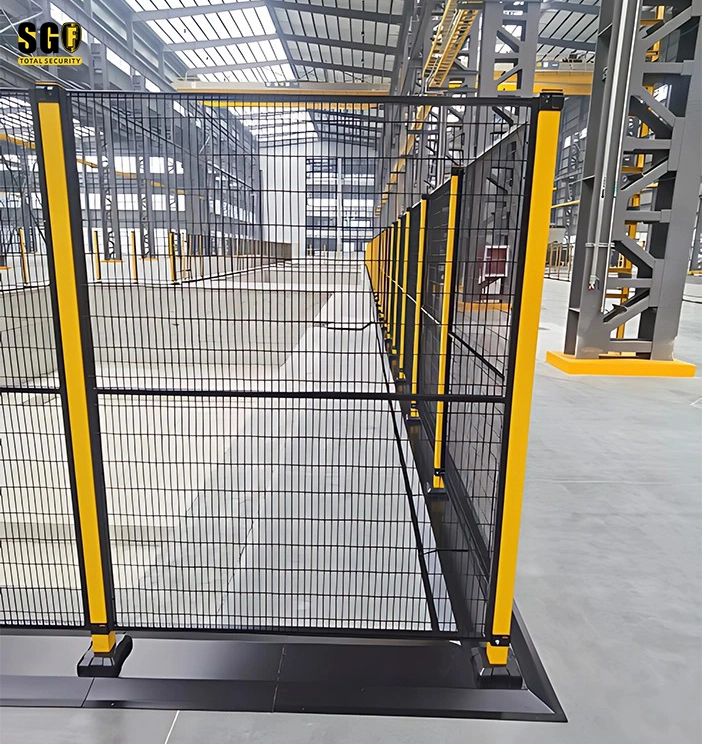
The real business value shows up on the factory floor. Because the system can be installed as close as 120 mm to the dangerous machine, the enclosure no longer consumes the large safety buffer demanded by weak or overly open fencing. That means more room for loading, service access, line movement, and future equipment changes. In dense workshops, recovered floor space is often worth more than the fence itself.
Where the layout pays off fastest
- Large plasma cutting cells that throw sparks, slag, and hot metal fragments.
- Milling and machining zones that need a tight perimeter around rotating equipment.
- Retrofits where the old fence consumed too much aisle width and blocked usable space.
- ISO-oriented machine guarding projects that need a rigid, documented fence build.
In each case, the logic is the same: use a safety fence industrial structure that controls hazard spread first, then recover floor area second. The compact mesh and welded frame let the guard sit close without turning the factory into a maze of dead space.
Specification proof you can build around
Mdfence is not positioned as a generic perimeter barrier. It is a machine-fencing system for metalworking environments where debris control, enclosure rigidity, and floor-space recovery have to be solved together. The combination of 20×100 mm anti-reach mesh, 20×30 mm welded rectangular tube framing, and 120 mm close-in installation makes it a practical answer for production lines that cannot afford wasted space.
Plan the fence around the machine, not around the waste
If you are facing the same trade-off between chip containment and space loss, the fix is to specify the guard correctly from the start. Mdfence gives you the narrow mesh, the welded rigidity, and the close installation distance needed to protect people and reclaim the floor area that too many conventional fences give away.