EN
EN  DE
DE  RU
RU  PT
PT  JA
JA  ES
ES  IT
IT Guarding fence for plasma cutting debris control
Guarding fence for plasma cutting debris control and tight-space installation
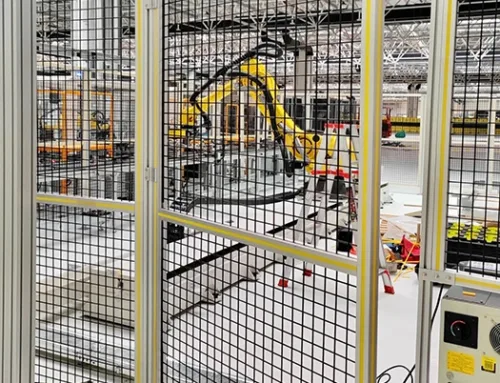
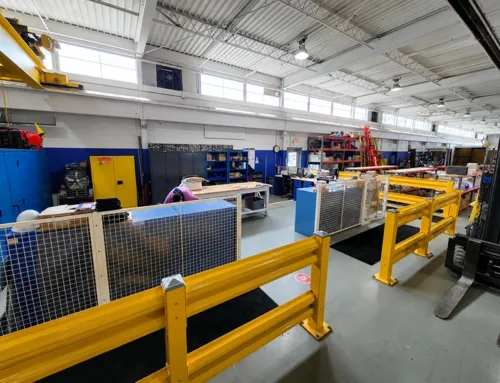
When large plasma cutting and milling machines throw hot metal chips at high speed, the real issue is not only containment. The bigger cost is the dead space created by oversized stand-off distances. Mdfence guarding fence uses a 20x100mm anti-finger mesh and a 20x30mm fully welded rectangular tube frame so the barrier can sit as close as 120mm to the hazard while still supporting a compliant guarding layout.
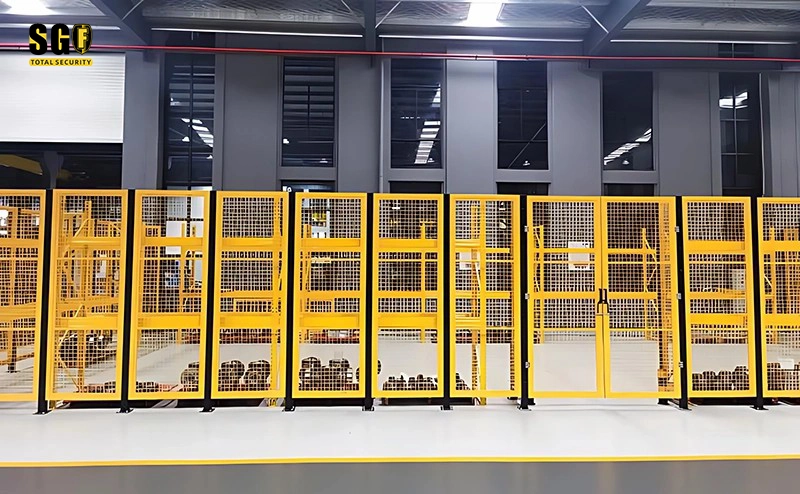
Why this guarding fence fits metal cutting and milling cells
In a cutting shop, the problem is simple: a wider mesh opening forces a larger safety distance, but a larger safety distance burns usable floor area. Mdfence solves that trade-off with a narrow 20x100mm aperture, a rigid welded frame, and installation geometry that helps planners keep the perimeter close to the machine instead of pushing it deep into the aisle.
| Specification | What it does for the shop floor |
|---|---|
| 20x100mm anti-finger mesh | Blocks flying chips and reduces finger access at the perimeter |
| 20x30mm fully welded rectangular tube frame | Raises bending stiffness and keeps panels stable under industrial use |
| Minimum installation distance: 120mm | Reclaims expensive floor area around plasma cutters and milling equipment |
| Factory guarding layout | Supports a compact machine-side perimeter without wasting aisle width |
| Rigid panel construction | Helps maintain a safe, clean, and visually organized work cell |
Structure proof behind the tight guarding fence layout
Narrow mesh that stops the splash zone from becoming a corridor problem
The first reason this guarding fence works is the mesh itself. A 20x100mm opening is narrow enough to resist the kind of high-speed metal chips that come off plasma cutting and milling operations, while still giving the fence the industrial visibility and ventilation a production cell needs. That matters when the customer wants protection without turning the entire line into a closed room.
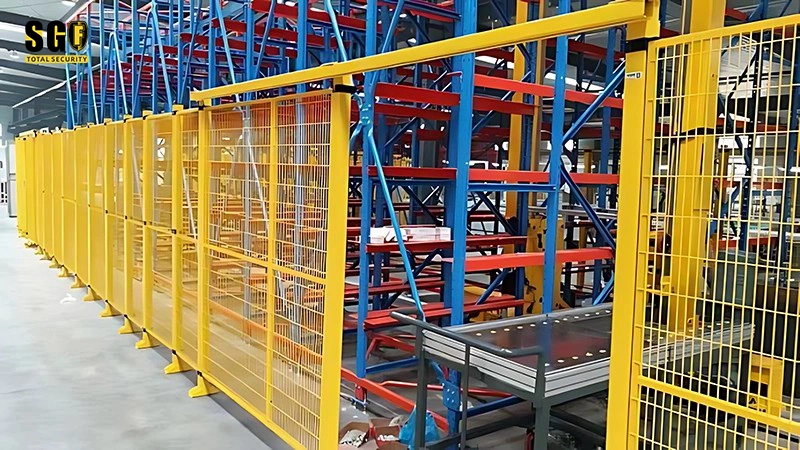
Welded 20x30mm frame that keeps the fence compact and stiff
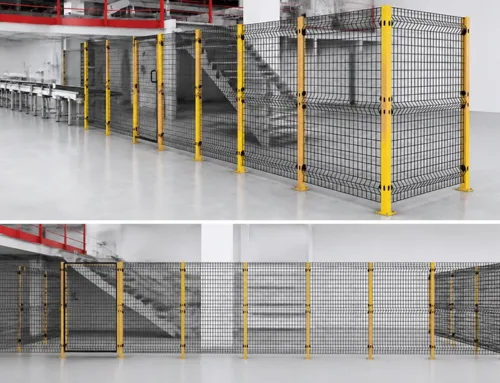
The second reason is the frame. A fully welded 20x30mm rectangular tube edge gives the panel the stiffness needed for industrial guarding, so the fence can sit tight to the machine instead of requiring a large structural buffer. That is how the design supports a 120mm stand-off and still feels like a real machine barrier, not a lightweight divider.
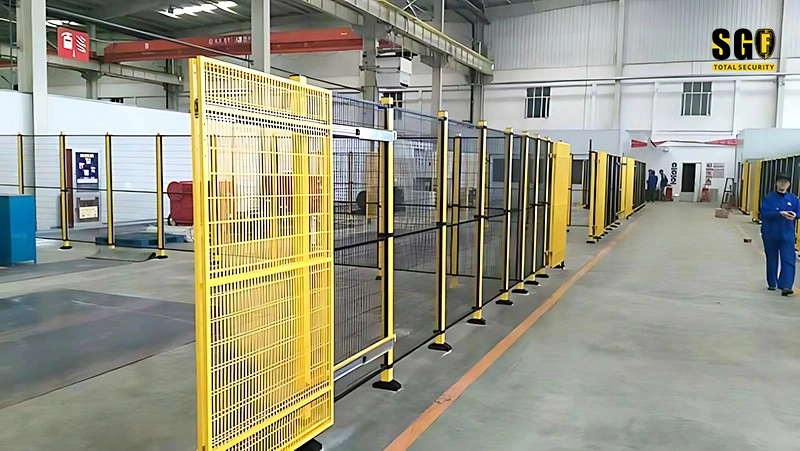
Hardware and corner closure that make the perimeter usable in real shops
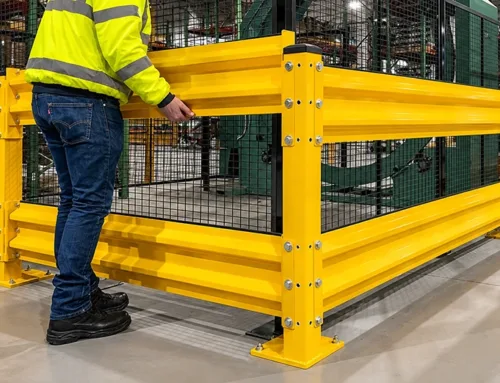
The third reason is installability. A guarding fence only saves space if it can be placed and maintained without awkward gaps. The base plate layout, lock hardware, and corner closure shown here are built for practical access control around production equipment, so operators can service the machine while the hazard zone stays contained and the aisle stays open.
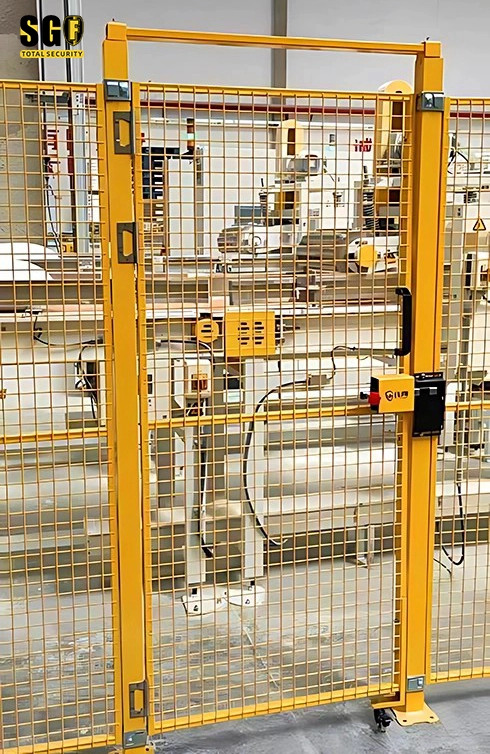
Where a guarding fence wins back usable space
- Plasma cutting cells that need a narrow, chip-resistant perimeter without losing floor width.
- Milling and machining areas where fast-moving metal fragments create a safety boundary problem.
- Retrofits where the old fence had to be pushed too far away because the mesh opening was too large.
- Factories that want a safer machine envelope while keeping aisles, carts, and maintenance access practical.
Mdfence is the guarding fence choice when the client needs two things at the same time: strong containment of flying metal debris and a compact layout that avoids wasting expensive plant space. The result is a safer work cell, better circulation around the machine, and a perimeter that finally matches the real footprint of the equipment.
What to specify before ordering a guarding fence
Confirm the machine type, chip direction, required access points, and the available stand-off distance around the hazard. For plasma cutting and heavy milling, the key question is not whether you can place a fence, but how close you can place it without compromising the guarding function. With Mdfence, the answer is a compact layout built around the 20x100mm mesh, the welded 20x30mm frame, and the 120mm installation target.
Plan a guarding fence layout that protects the machine and the floor plan
If your current fence is eating too much space, the layout has already become part of the cost problem. Use Mdfence to bring the perimeter back toward the machine, protect operators from flying debris, and recover usable space for carts, maintenance, and production flow.