EN
EN  DE
DE  RU
RU  PT
PT  JA
JA  ES
ES  IT
IT Mdfence | machine guarding for changing plant layouts
Safety fencing machine guarding for plants that keep changing layouts
When a material processing plant keeps adding machines, moving storage, or reworking aisles, fixed welded guards turn into sunk cost. Mdfence answers that problem with safety fencing machine guarding built for cold-work modular assembly, fast installation, and clean re-layouts without cutting or welding.
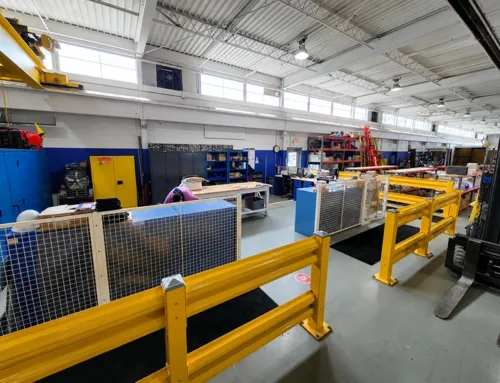
What changes the cost equation on a live factory floor
A plant that changes often does not just need protection. It needs protection that can move with the line. Traditional welded fencing forces the team to bring in hot work, shut down the area, and accept demolition waste when the layout changes again. In a heavy material warehouse, that is exactly the wrong way to spend labor, time, and floor space.
| Project need | Mdfence answer |
|---|---|
| No hot work during installation | Cold-work modular assembly with clamp-ring connections |
| Fast line changes | Install speed typically 40% to 70% faster than welded guarding |
| Future re-layouts | Panels can be removed and reassembled without damage |
| Asset waste control | Reuse rate can stay above 95% when the layout changes |
| Safe work in controlled warehouses | No on-site welding, no flame, less interruption for heavy-material storage zones |
Why this machine guarding style fits moving production lines
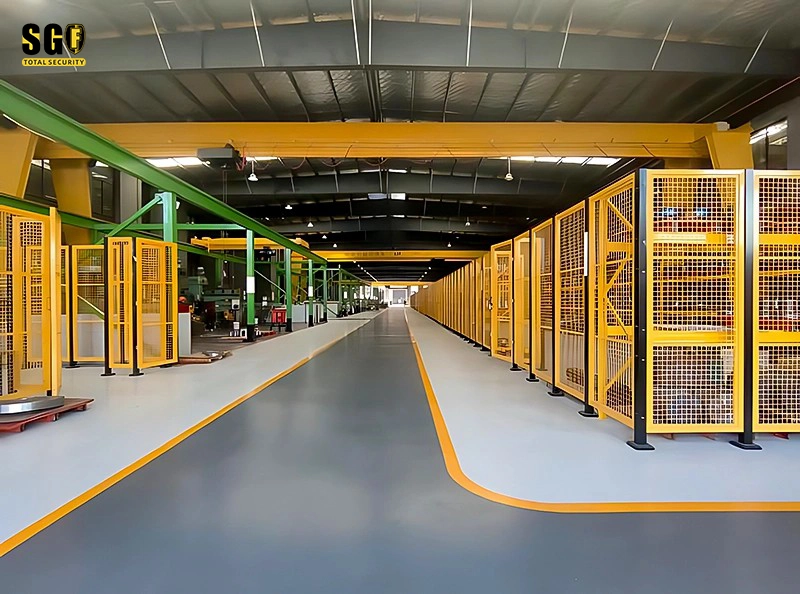
Cold-work assembly keeps the install clean
Mdfence uses modular parts and clamp-ring connections, so the fence goes up without welding on site. That matters in plants that store flammable materials, control hot work tightly, or simply cannot afford sparks near active equipment. The installation process stays short, tidy, and easier to coordinate with production.
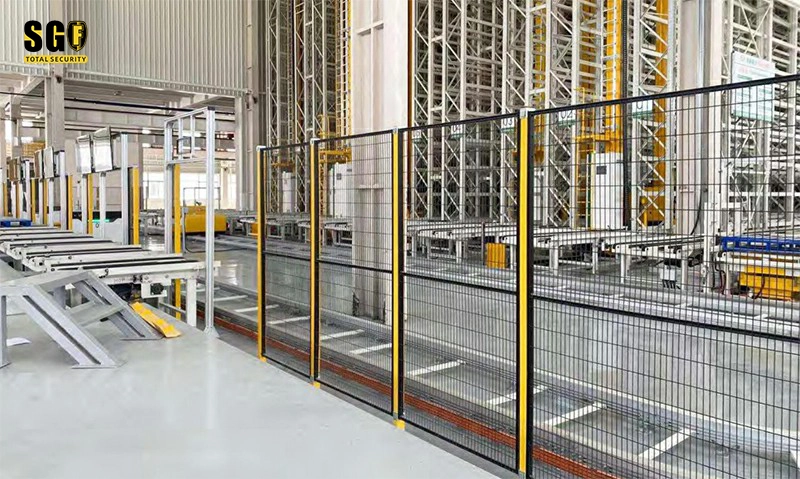
Structure details support repeat use
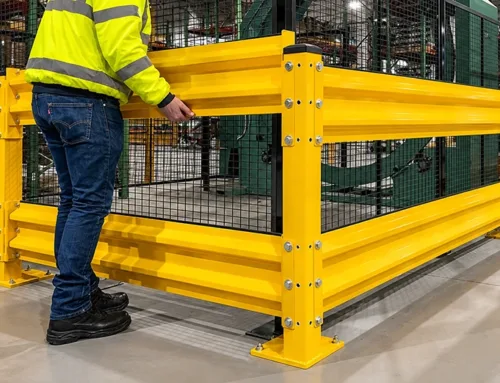
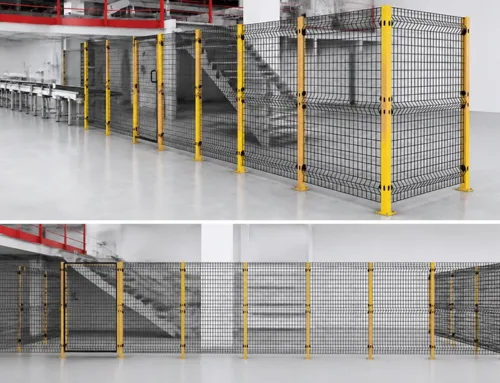
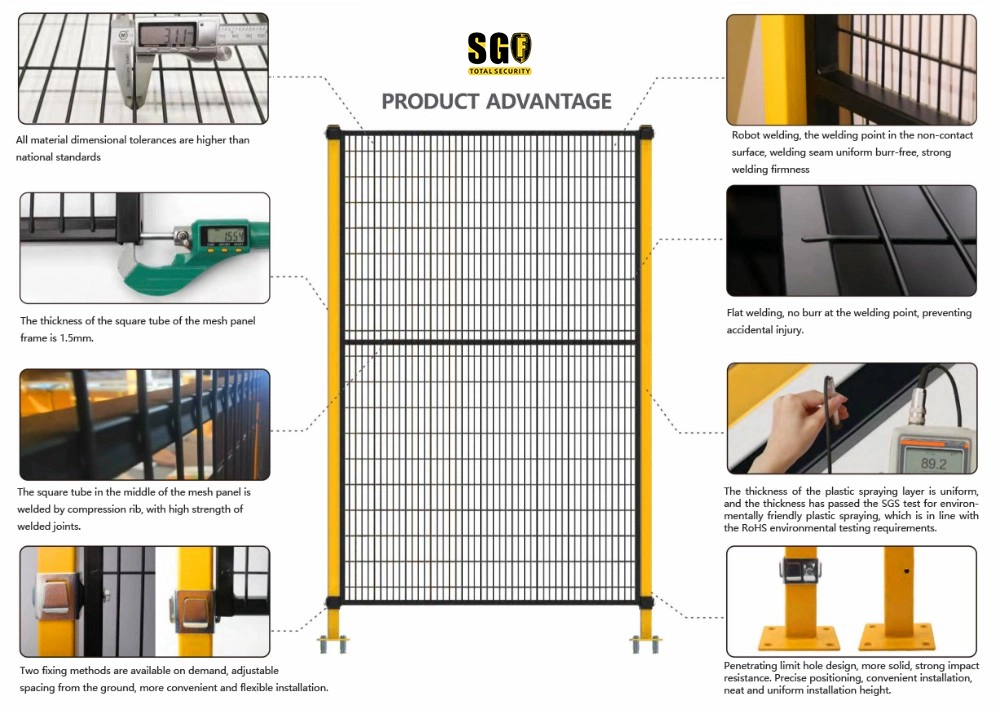
The product evidence here is not abstract. The technical front view shows posts, mesh panels, and fixing clamps working as a simple system, while the close-up board highlights weld seams, coating, and base plate details. That is the kind of structure a plant can disassemble, move, and build back again at the next machine line without throwing the fence away.
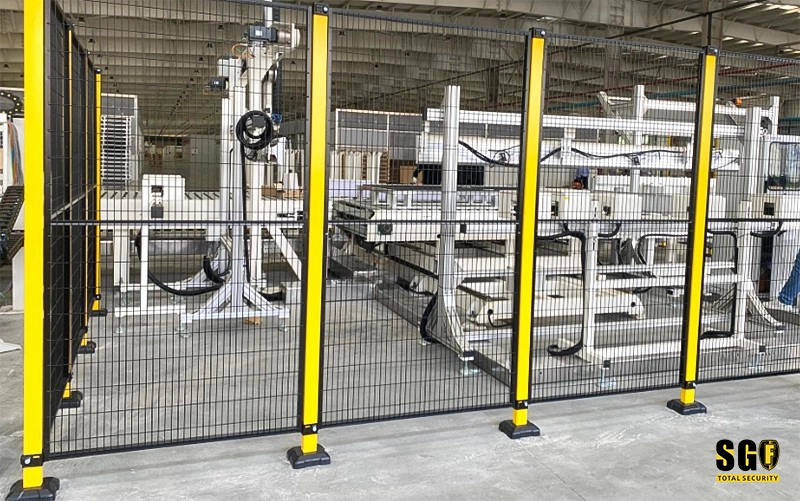
Corner fit and cell layout stay predictable
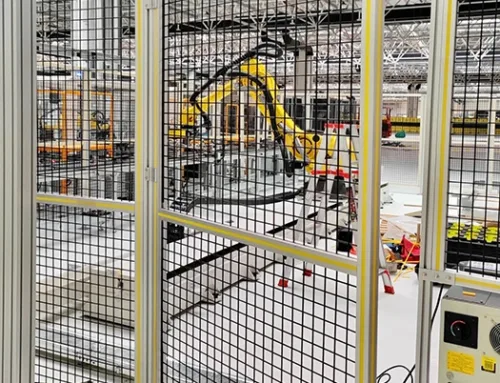
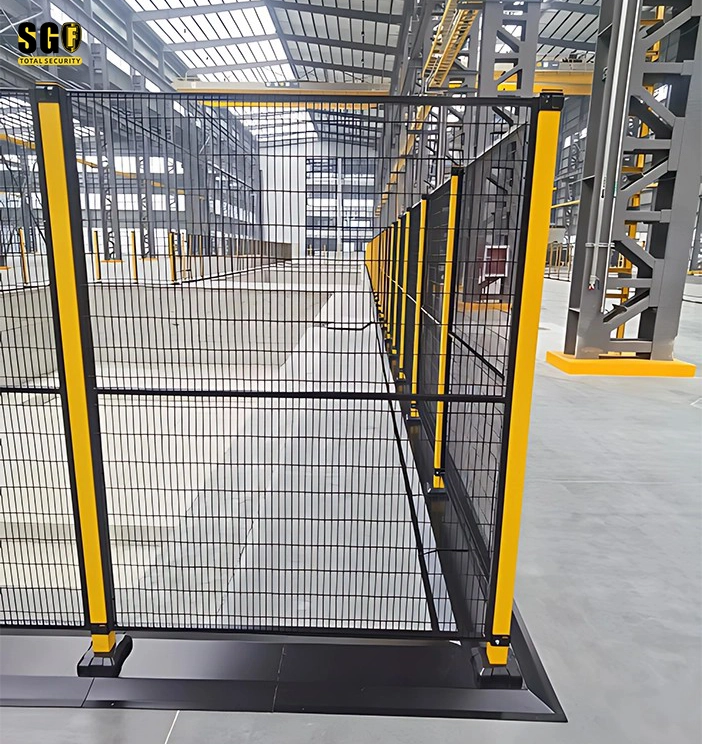
Layout changes usually fail at the corners and gate lines first. The corner close-up shows the yellow post, top beam, and mesh alignment holding a clean machine-cell edge. That makes it easier to close off a robot bay, a conveyor zone, or a storage aisle without improvising on site. In practice, that means fewer surprises when the floor plan changes again.
Where plants use it first
- Machine cells that are still being rearranged during commissioning
- Material processing centers that keep moving racks, buffers, and forklift aisles
- Warehouses with strict hot-work control and limited downtime windows
- Any site that wants guarding to behave like a reusable asset, not a one-time build
The result is simple. The fence stops being fixed cost. It becomes a reusable guard system that can travel with the plant. If a new machine comes in next quarter, the old panels do not need to be scrapped. They can be taken down, moved, and rebuilt where the line now lives.
The final outcome for changing layouts
For a plant that revises its floor plan again and again, the right machine guarding is not the heaviest fence. It is the one that can be installed fast, moved cleanly, and reused with minimal loss. Mdfence is built for that job: cold-work assembly, no on-site welding, high reuse, and a layout-friendly structure that keeps pace with the production plan instead of fighting it.
Plan a safety fencing machine guarding layout that can move later
If your line is still changing, buy for change. Mdfence helps you protect the cell now and reuse the same guard system when the next machine arrives.