EN
EN  DE
DE  RU
RU  PT
PT  JA
JA  ES
ES  IT
IT Robot Safety Fence for cut-heavy light-steel panel lines
Robot Safety Fence for cut-heavy light-steel panel lines
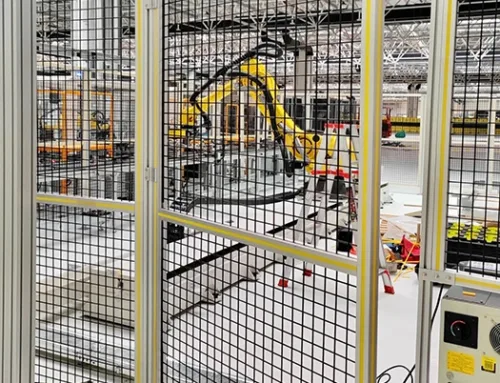
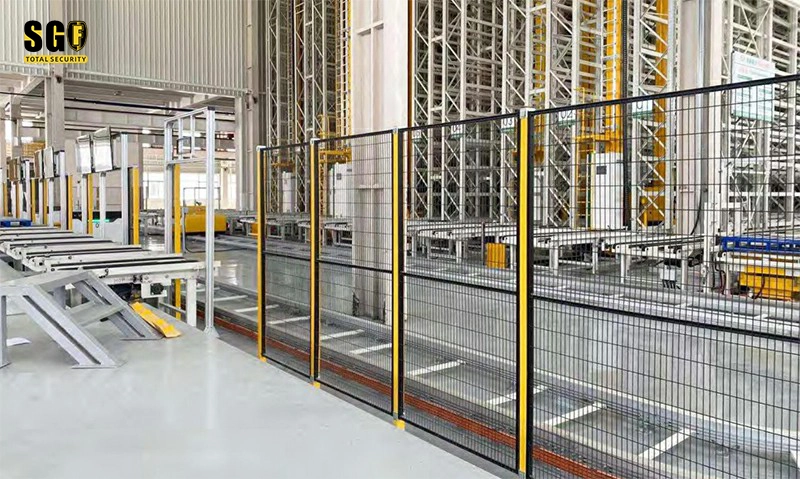
In light-steel panel production, the line throws off sharp metal chips and gypsum dust while the supervisor still needs a clear view of eight robots working at once. This Robot Safety Fence keeps the flying debris in the cell and leaves the aisle side open enough for direct line-of-sight checks.
Why this line needs Robot Safety Fence protection
The old answer on many panel lines is simple: leave the machine bay open, add a few warning signs, and hope operators stay alert. That fails fast once the cutting cycle starts. Chips travel farther than expected, dust settles into nearby zones, and the person in charge ends up walking the aisle again and again just to confirm that all robots are still on cycle. A Robot Safety Fence has to solve both problems at once: contain the debris and preserve visibility.
| Line problem | Robot Safety Fence response |
|---|---|
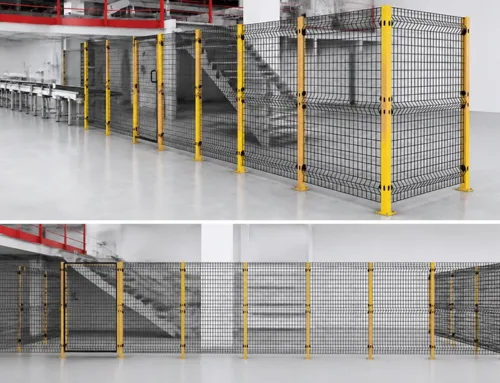
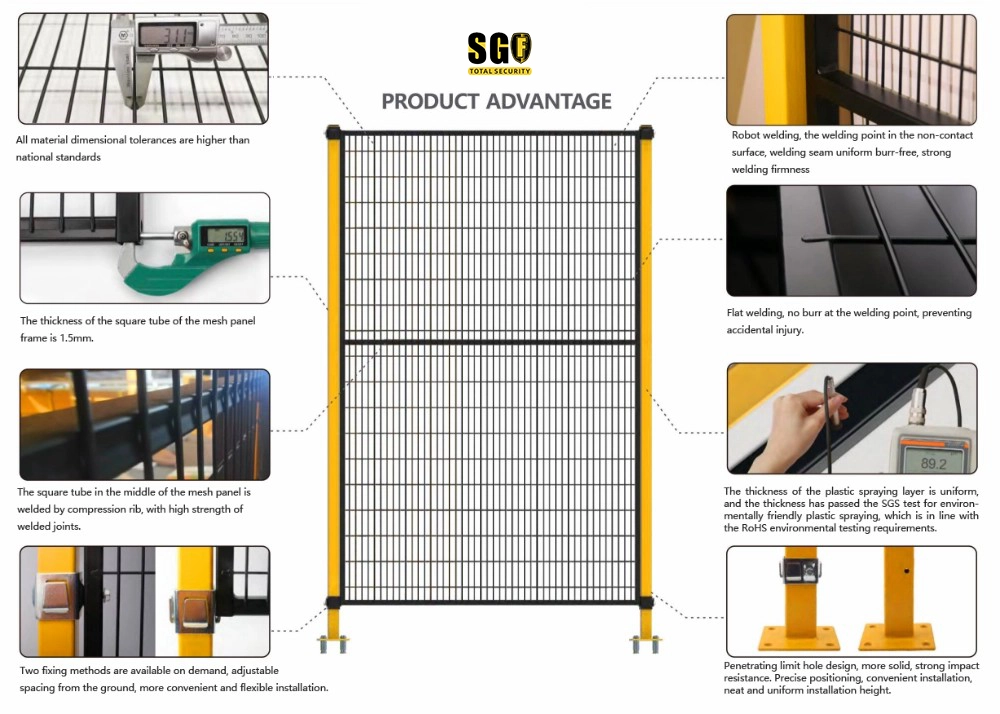
| High-speed chips from steel cutting and door/window openings | Full-welded mesh panel with a 20x30x1.5mm rectangular tube frame helps block flying fragments before they leave the cell. |
| Gypsum dust and sharp scrap near workers | Close mesh openings reduce the chance of direct contact and help keep the cut zone inside the protected perimeter. |
| Eight robots running in one line | Black RAL 9005 mesh and yellow RAL 1023 posts keep the boundary readable without turning the aisle into a blind corner. |
| Frequent supervisor checks | The open sightline from the passage makes it easier to watch the whole automated line without stepping into the cell. |
Structure details that make the Robot Safety Fence work
1. The frame and welds stop the panel from feeling flimsy
The 20x30x1.5mm rectangular tube frame gives the Robot Safety Fence a clean edge and a stronger perimeter than a light clip-together panel. Every wire and frame joint is fully welded, so the mesh acts like one piece instead of a loose assembly. That matters on a line with repeated vibration, cleaning, and chip impact.
2. The base fixing is built for real installation work
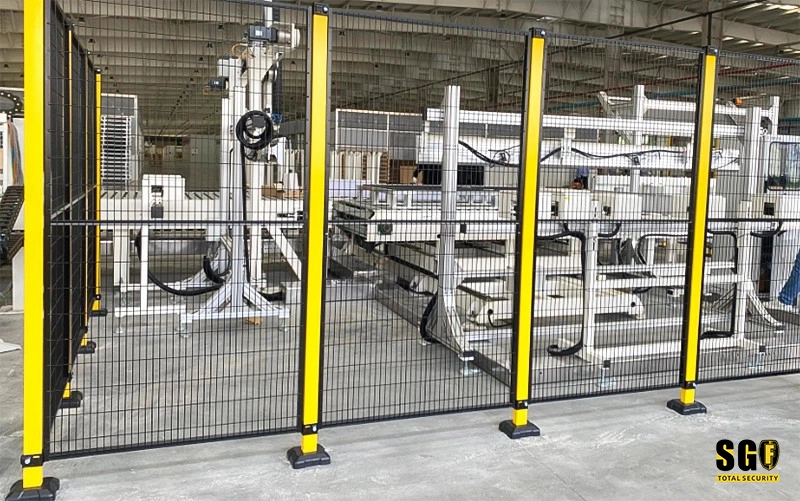
On a production floor, the best panel still fails if the base detail is weak. This system uses a defined base plate setup with drilling, expansion bolts, and retaining rings. Installers can set the line straight, lock the posts down, and keep the fence aligned across a long production corridor.
3. Visibility stays intact while the cell stays closed
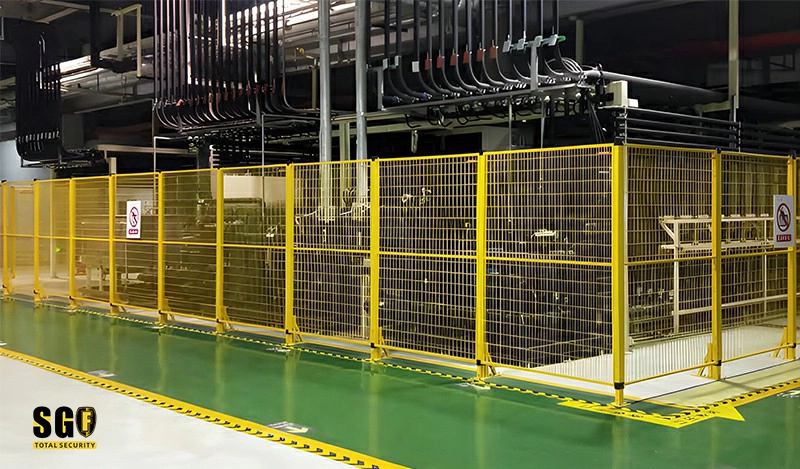
Some fencing solves containment by making the whole area dark and opaque. That is the wrong trade-off for a multi-robot line. The black mesh and safety yellow posts keep the boundary easy to read from the aisle, while still giving the supervisor a clear view through the fence. In practice, that means fewer walk-ins, faster checks, and less hesitation around an active cell.
Where this Robot Safety Fence fits best
- Light-steel panel lines with high-speed cutting, trimming, and opening operations
- Robot cells that throw chips, sparks, or powder into the surrounding aisle
- Plants where the supervisor needs direct visibility across several robots at once
- Automation zones that need a clear boundary without creating blind spots
The result is straightforward: the debris stays in the work cell, the people outside the cell stay safer, and the line remains easy to monitor. That is the real job of a Robot Safety Fence on this kind of production floor. Not decoration. Not a token barrier. A visible boundary that helps the line run cleaner and easier to supervise.
What you should specify before ordering
For a cut-heavy panel line, SGF should know the cell length, the cut-zone layout, the robot count, the aisle side that needs visibility, and any points where chips travel farther than expected. With that, the Robot Safety Fence can be laid out around the actual work pattern instead of guessed into place.
Build the Robot Safety Fence around the work, not around assumptions
If your line is producing metal debris and gypsum dust while your supervisor still needs a clear view across the robots, the fence has to do both jobs at once. SGF can help with the layout and the fence specification.