EN
EN  DE
DE  RU
RU  PT
PT  JA
JA  ES
ES  IT
IT Mdfence / Machine Fencing
Industrial Safety Fence for Heavy Cut Light-Steel Panel Lines
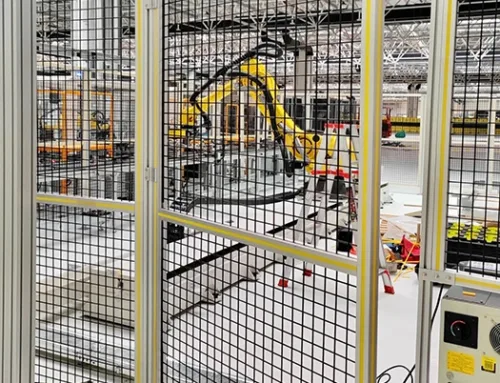
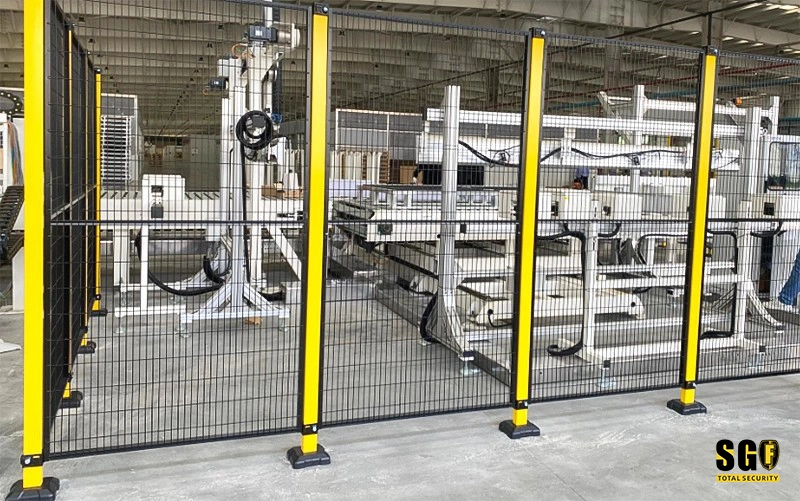
When a light-steel panel line is running door and window opening cuts, the problem is not only guarding the machine. The line also needs debris interception, clear supervision, and a layout that keeps 8 robots visible at a glance. Mdfence Industrial Safety Fence is built for that exact balance.
Why this line needs a different kind of fence
Heavy cutting on light-steel panel production throws out fast metal chips and gypsum dust. A weak mesh or a loosely assembled frame can leave gaps, create hand hazards, and force supervisors to move too close just to confirm machine status. The fence has to stop flying debris, support daily factory abuse, and still keep the line visually open.
| Customer need | Mdfence response |
|---|---|
| Intercept cutting debris before it reaches workers | Narrow-aperture mesh reduces escape paths for high-speed chips and dust |
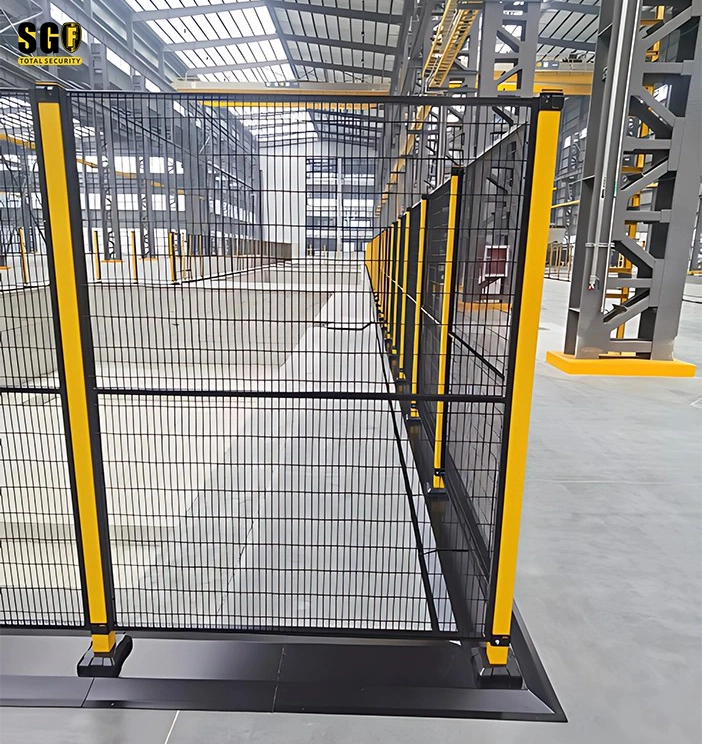
| Keep a multi-robot line visible from the aisle | Deep black mesh and yellow posts avoid a visual dead zone on the shop floor |
| Hold up in a high-impact production environment | 20x30x1.5mm rectangular tube frame with full weld construction |
| Fit a fast-moving automation cell without visual clutter | RAL 9005 mesh plus RAL 1023 posts create a clean, readable perimeter |
What the structure proves on the floor
1. The mesh is doing more than marking a boundary
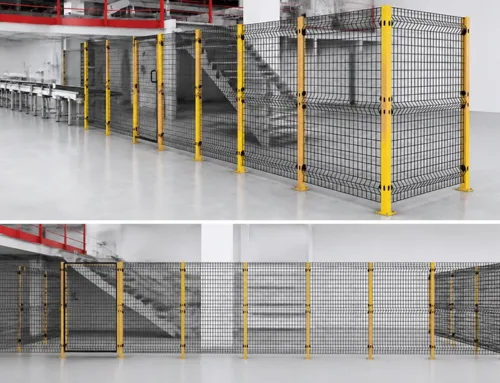
The panel shown in the spec board image is not a light decorative screen. It is a welded industrial safety fence panel built to block the debris that comes out of cutting operations. The narrow opening geometry helps contain chips and airborne dust at the cell edge, which means fewer stray particles on the aisle and less chance of a worker reaching into the danger zone.
2. The frame is built for a cutting line, not a showroom
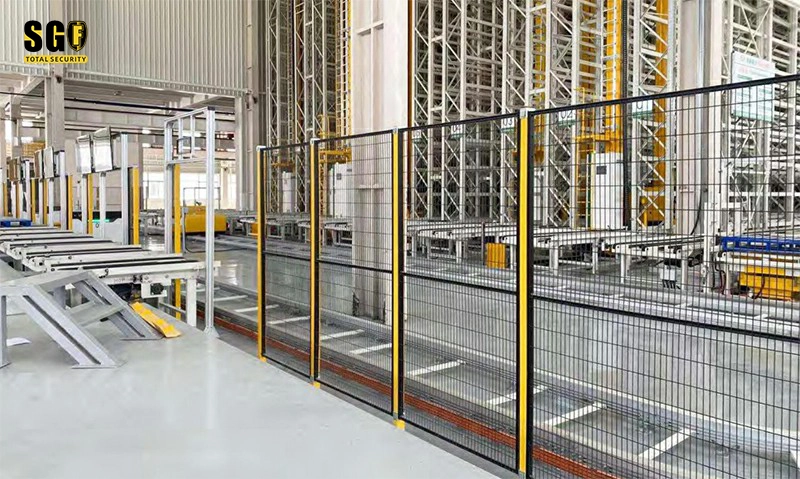
The technical front view supports the structural case: a 20x30x1.5mm rectangular tube border and full welds between the wire and the frame. That matters when the line is loaded with repeated machine vibration, panel handling, and daily cleaning. The result is a fence that stays straight, stays fixed, and keeps its guarding line where the plan says it should be.
3. Visibility stays open while protection stays closed
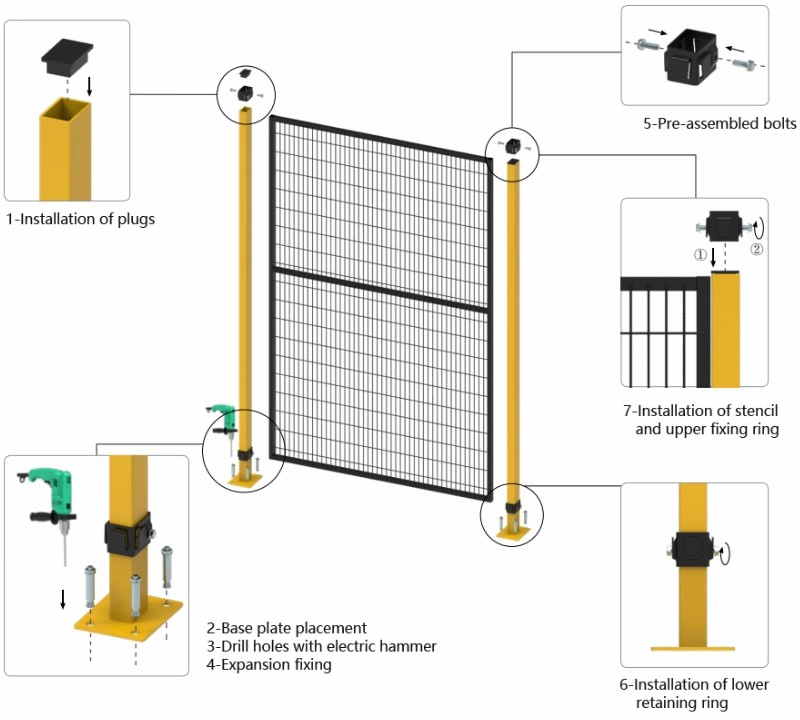
Production managers do not just need a barrier. They need a clean sightline. The black RAL 9005 mesh does not create the kind of bright reflection or visual clutter that breaks attention across a long line. Combined with the RAL 1023 safety yellow posts, the perimeter reads clearly from the aisle, so one person can monitor the status of multiple robots without stepping into the guarded area.
Where it fits best
- Light-steel panel cutting cells with flying metal chips and gypsum dust
- Door and window opening stations that need a tight machine guard perimeter
- Multi-robot production lines where supervisors must track 8 machines from the aisle
For these applications, Mdfence Industrial Safety Fence works because it combines debris containment, full-weld rigidity, and a visual layout that keeps the automation line readable. That makes the fence useful both as a physical guard and as an operational control aid.
Build the line around the fence, not against it
If your cutting process is generating debris and your operators still need clean sightlines, the answer is not a thicker wall. It is a fence that is engineered for the process itself. Mdfence gives you a closed guarding edge, a stable welded frame, and a shop-floor color scheme that keeps supervision simple.
Plan the perimeter for the next line change
Share your cell layout, robot count, and cutting zone width, and we will map the right Industrial Safety Fence arrangement for the line.