EN
EN  DE
DE  RU
RU  PT
PT  JA
JA  ES
ES  IT
IT Machine guard fencing for cutting-heavy light-steel panel lines
Machine guard fencing for debris control and robot line-of-sight on light-steel panel lines
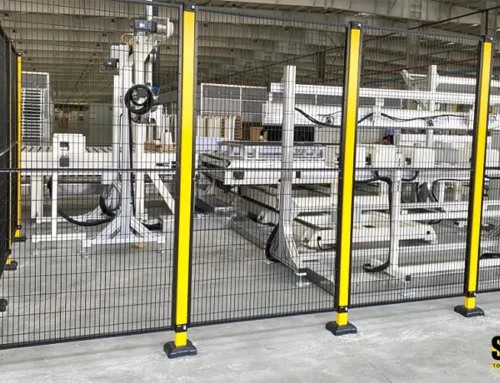
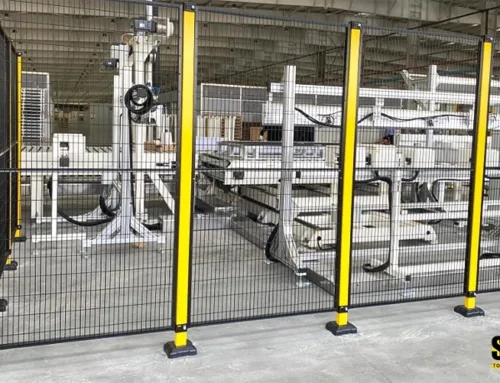
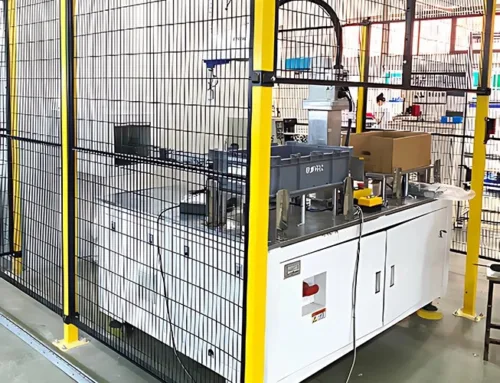
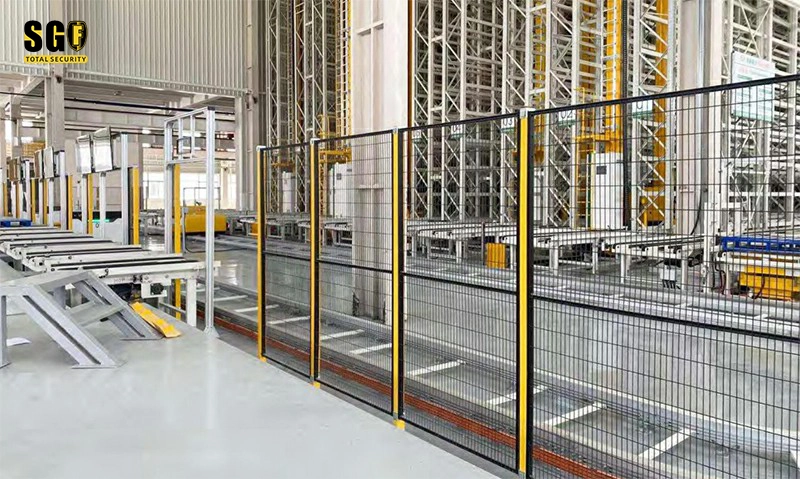
When a light-steel panel line is cutting door and window openings all day, chips and gypsum dust do not stay polite. Machine guard fencing gives the line a closed boundary for flying debris and a clean viewing lane for supervisors who need to keep an eye on 8 robots at once.
Why this machine guard fencing fits the job
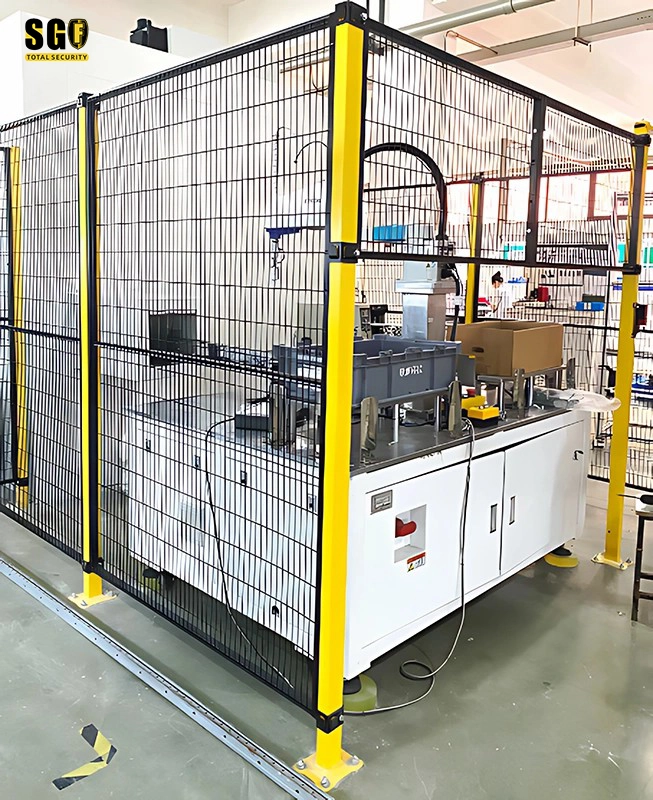
The old setup usually fails in two places. Open gaps let fast chips leave the cell, and opaque barriers make the supervisor blind to what the robots are doing. Mdfence was built for that exact mix of risk: narrow openings to slow down flying debris, a fully welded frame and wire body for a rigid guard line, and a black-and-yellow visual scheme that keeps the aisle readable instead of turning the shop floor into a wall of metal.
| Item | Detail |
|---|---|
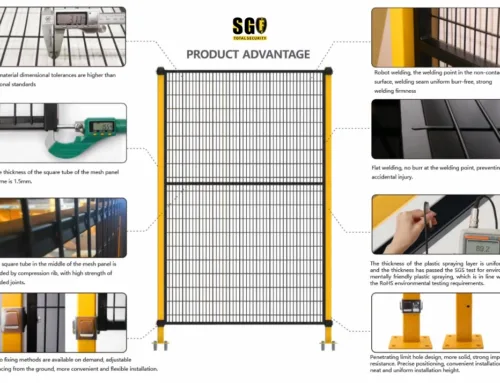
| Frame structure | 20x30x1.5mm rectangular tube border with full welds on wire and frame |
| Guarding effect | Narrow-aperture mesh helps block high-speed chips and flying fragments from cutting operations |
| Visibility | RAL 9005 black mesh stays visually quiet so the aisle does not lose line-of-sight depth |
| Safety contrast | RAL 1023 safety yellow posts keep the cell boundary easy to read for daily supervision |
| Best fit | Heavy cut light-steel panel lines, robot clusters, and shared walkways around production cells |
Structure details that solve the real problem
Rigid welded border
The first thing that matters in a cutting line is not color. It is whether the fence stays square after repeated vibration and impact. Mdfence uses a 20x30x1.5mm rectangular tube frame, and the wire is fully welded to the border. That gives the panel a hard edge, not a loose skin. When chips hit it, the guard does not feel temporary.
Install it like a real line component
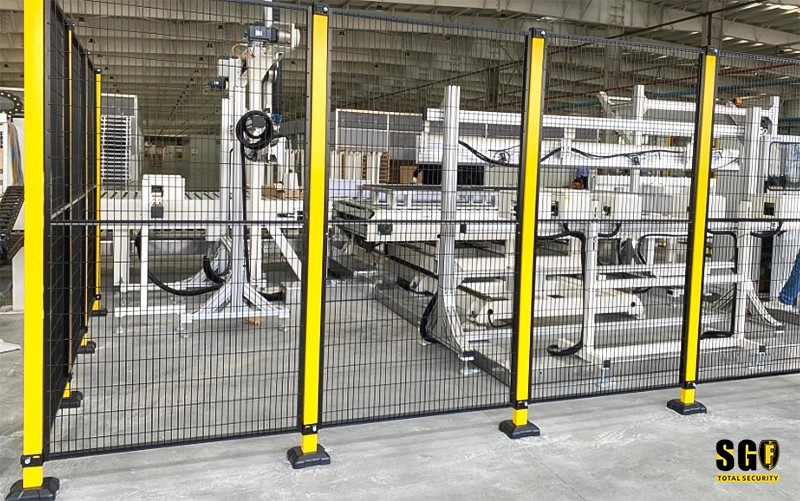
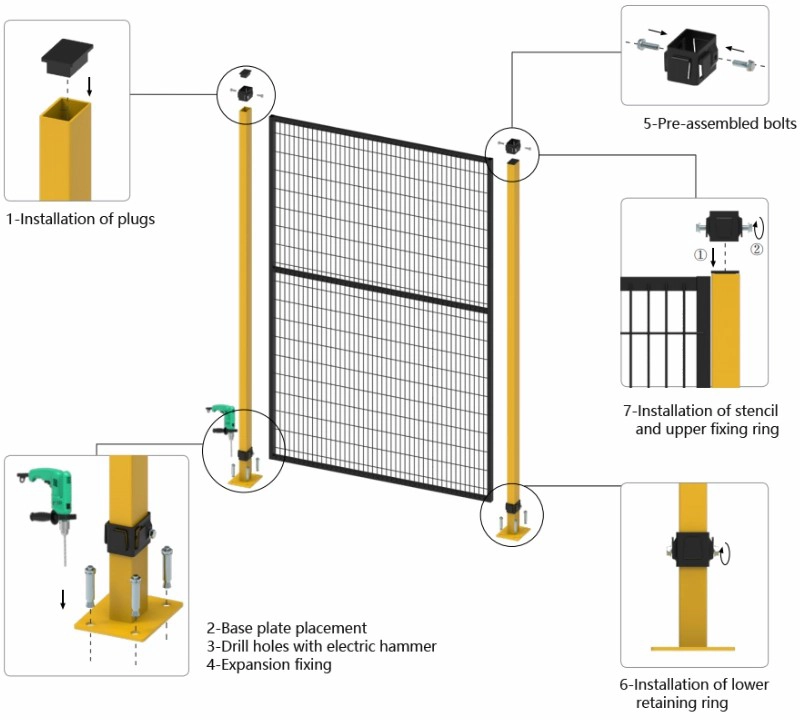
Cutting cells do not forgive weak installation. The fence has to land in the right place and stay there. The mounting sequence is straightforward: base plate position, drilling, expansion fixing, and retaining ring assembly. That makes the fence easier to set around robot reach, service access, and the operator aisle without improvising on site.
Keep the cell readable from the aisle
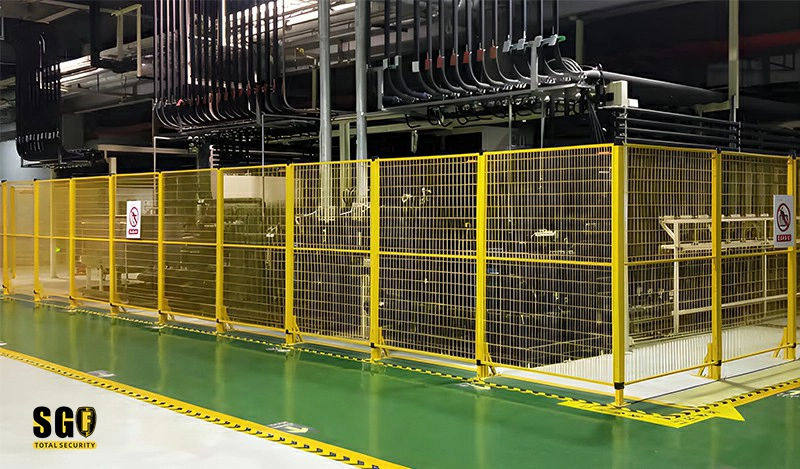
Supervisors do not need a blind wall. They need a boundary that protects people and still lets them watch 8 robots working together. The technical front view shows the post, mesh panel, and fixing clamp relationship clearly. That matters on a long line, where the fastest way to catch a problem is still a quick visual check from the walkway.
Where machine guard fencing earns its place
- Heavy cut light-steel panel lines that throw metal chips and gypsum dust across the work zone
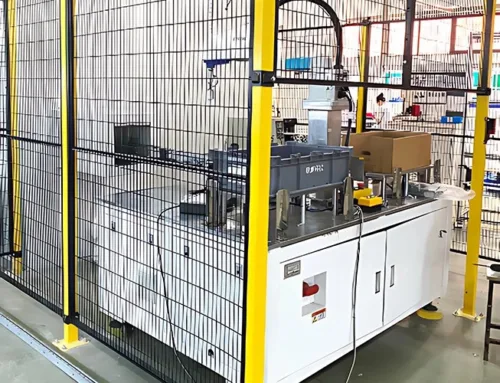
- Robot cells that need clear guarding without losing sight of motion, cycle status, and operator movement
- Shared production aisles where the supervisor has to watch multiple machines from one corridor
- Cutting and trimming stations that need a hard perimeter, not just a warning line on the floor
The black mesh and yellow posts do the job without making the area harder to manage. You get a compact boundary for debris, a clear edge for people, and a line of sight that still works when the cell is busy. In practice, that is what keeps the whole area calmer.
What to check before you place the fence order
Measure the robot reach, the cutting throw, and the walkway you want to keep open. Then map the places where chips leave the station and where the supervisor needs a clear view. If those points are known, machine guard fencing can be laid out around them instead of being pushed in later as a patch.
Need a machine guard fencing layout for a cutting line?
Send the cell size, robot count, and the points where debris is escaping. We will help you turn that into a fence layout that contains the mess, protects people, and still lets the line stay visible.