EN
EN  DE
DE  RU
RU  PT
PT  JA
JA  ES
ES  IT
IT Guarding fence for cut-heavy light-steel panel lines
Guarding fence for cutting-heavy light-steel panel lines
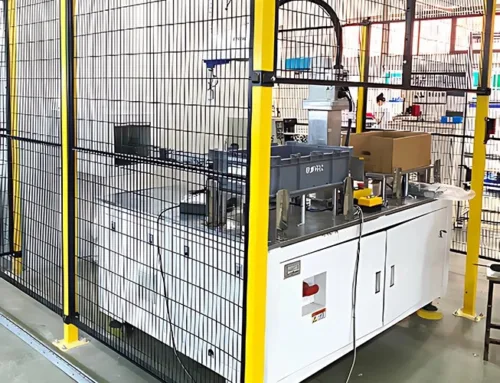
A guarding fence for a light-steel panel cell has to do two jobs at once: hold in flying chips and dust, then keep the whole line readable from the aisle. Mdfence does that with a fully welded 20x30x1.5 mm rectangular frame, a narrow-aperture mesh, black RAL 9005 panels, and yellow RAL 1023 posts.
What this guarding fence is built to handle
The line in question is not a light-duty assembly island. It is a heavy cutting zone, and the failure mode is easy to see: metal chips travel, dust hangs in the air, and the supervisor loses a clean sight line once the cell gets crowded. The fence has to close the cut zone without turning the whole floor into a blind corner.
| Structure | Value |
|---|---|
| Frame | 20x30x1.5 mm rectangular tubular border |
| Connection | All steel wires and the frame are fully welded |
| Mesh finish | Deep black RAL 9005 |
| Post finish | Safety yellow RAL 1023 |
| Practical result | Narrow openings help block high-speed chips while keeping the aisle view open |
Why Mdfence fits the cell
A welded edge that stays closed
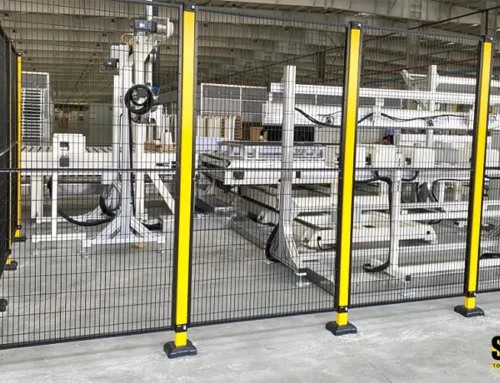
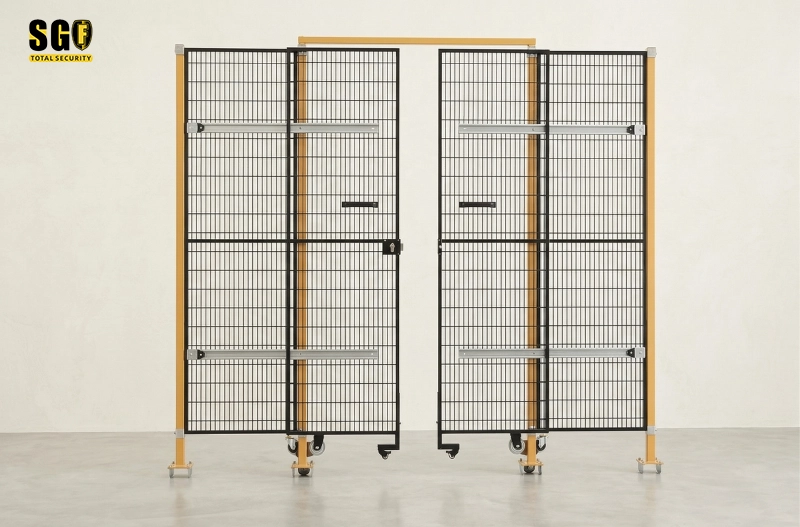
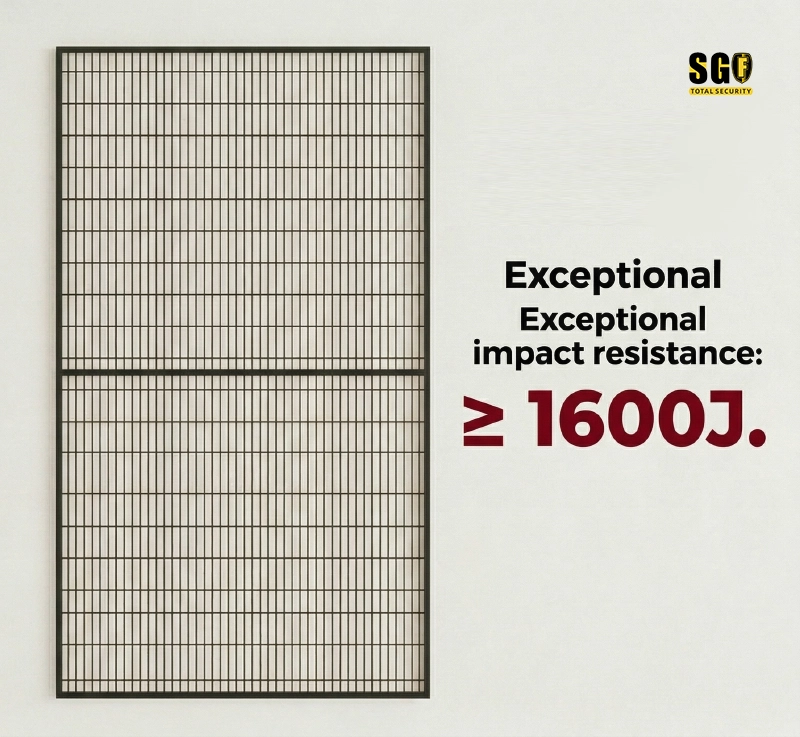
The first job is containment. In a cut-heavy line, loose joints and light frames do not age well. Mdfence uses a 20x30x1.5 mm rectangular border, and the wires are fully welded to the frame. That matters because the panel edge is where flying debris finds its way out. The build in the photo makes the structure legible, not decorative.
Corners that close the boundary cleanly
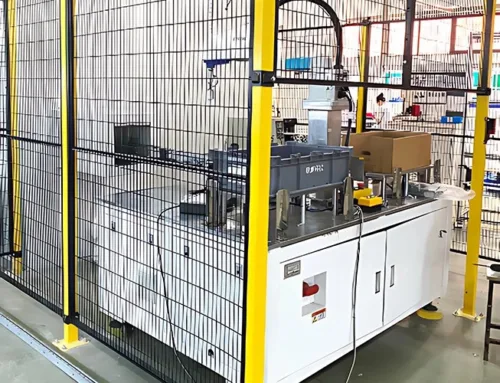
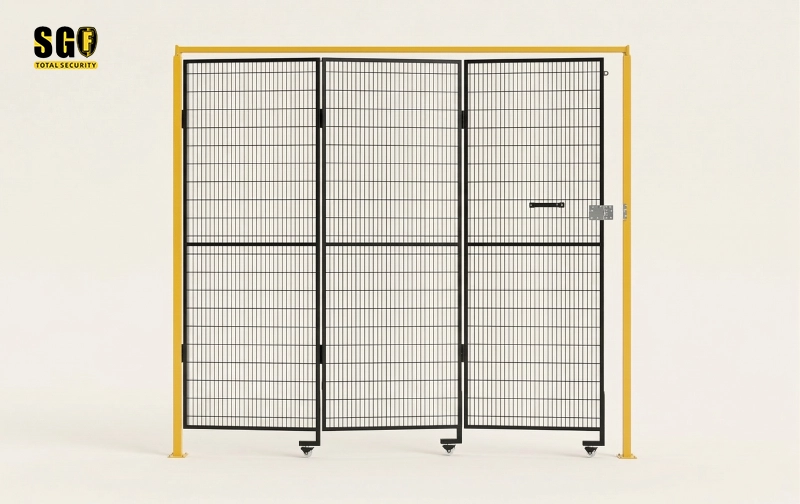
Cutting cells are often hardest at the corners, where operators, carts, and machine bodies all want the same space. The corner detail shows the black mesh, yellow post, and top beam tying the cell together. That gives the line a clear perimeter instead of a half-open cage that leaks chips and invites shortcuts.
Visibility that the supervisor can actually use
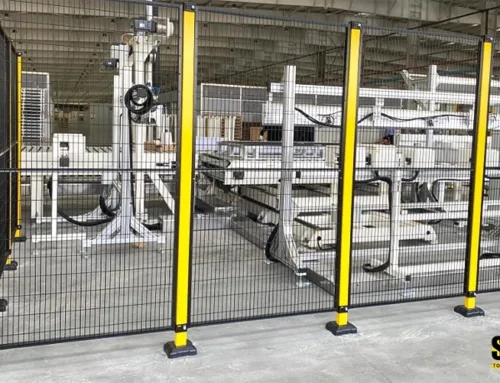
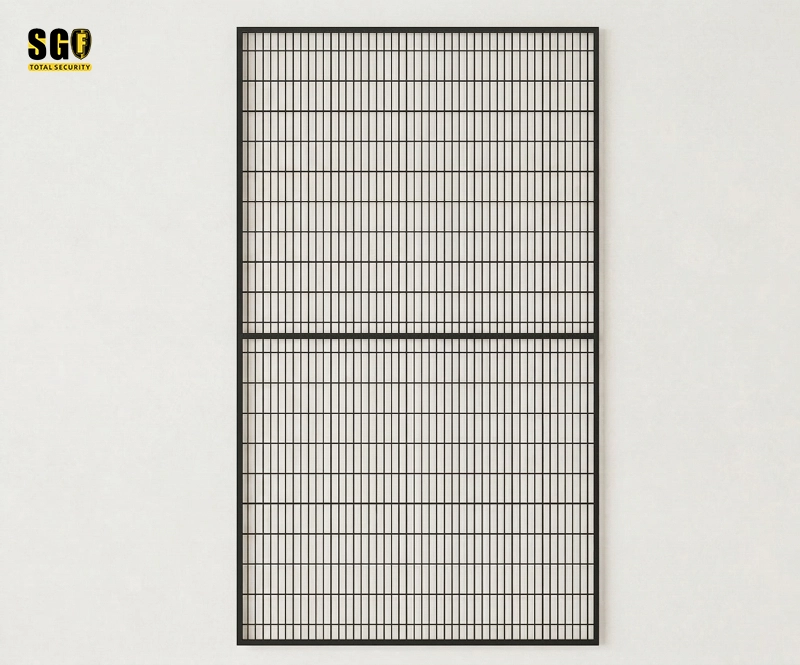
The second job is sight line control. The deep black mesh does not flare back at the aisle, and the yellow posts stand out against the floor and machine bodies. That is the point. A supervisor can stand in the passage and read the whole automation line without walking into the cell. In an 8-robot line, that saves time every shift.
Where this guarding fence pays off
- Light-steel panel lines where robots cut door and window openings and throw chips toward the aisle.
- Production cells that need one clear barrier around the cutting station, not a loose perimeter made from mixed parts.
- Lines with eight robots in view, where the supervisor needs to scan the whole cell from the aisle without blind spots.
- Clean factory layouts where the fence color needs to separate the boundary without making the floor look crowded.
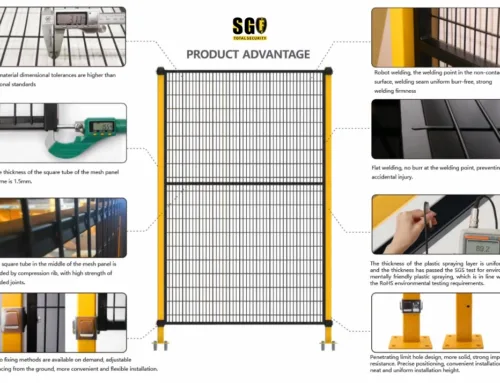
One more detail matters here. The technical front view shows the post, mesh panel, and fixing clamp relationship clearly, so the boundary is easy to explain during layout review and easier to install the same way on site.
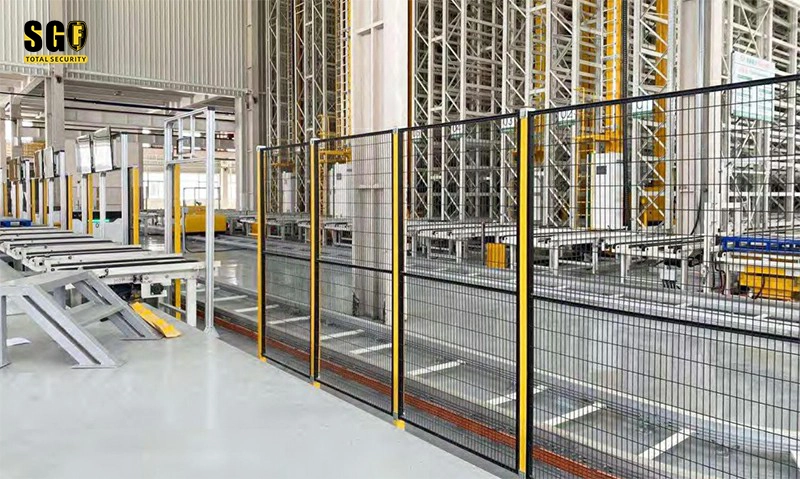
That is the practical result: chips stay where they should, the cut zone stays defined, and the manager still sees the whole line from the passage.
Send the layout, not a guess
If the cell already exists, send the cut station layout, aisle width, robot count, and the points where operators need access. Mdfence can then be matched to the boundary, the opening, and the sight line in one pass instead of being patched together after installation.
Talk to Mdfence about the guarding fence line
If the line is cutting heavy sheet, the fence should be part of the process plan, not an afterthought. Use the contact link and ask for a guarding fence check against your cell layout.