EN
EN  DE
DE  RU
RU  PT
PT  JA
JA  ES
ES  IT
IT Fence guarding for cutting-heavy light-steel panel lines
Fence guarding that keeps chip spray contained and the line of sight open
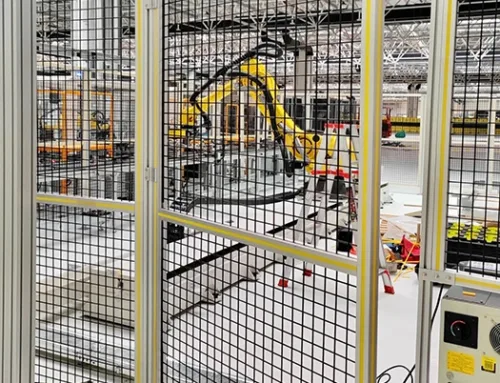
When robot cutting throws metal chips and gypsum dust across a light-steel panel line, fence guarding has to do two jobs at once: stop fast debris at the perimeter and keep supervisors able to watch eight robots without a blind corner in the cell.
Why this fence guarding setup fits a cutting line
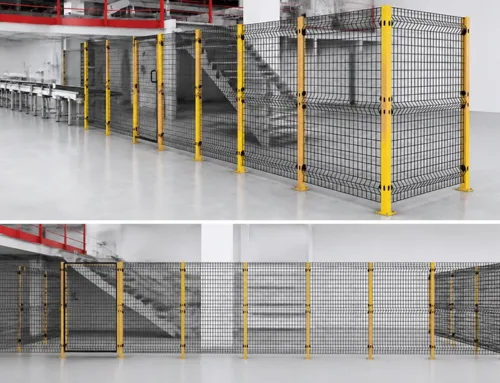
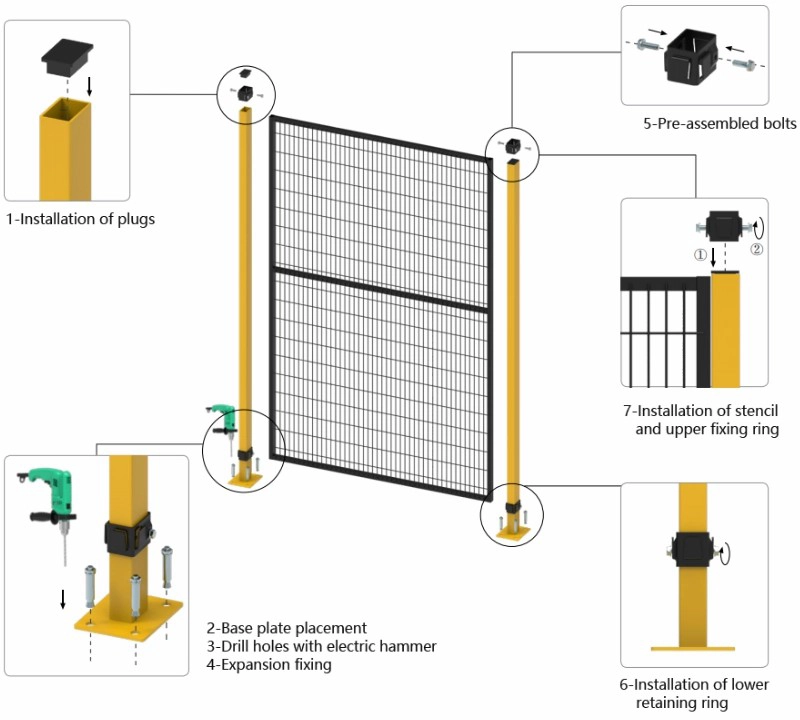
A heavy-cut light-steel panel line is not a normal perimeter job. The guarding must deal with flying chips, edge fragments, and dust while still letting production leaders see the full robot sequence from the aisle. Mdfence is built for that exact balance: narrow-aperture steel mesh, a 20x30x1.5mm rectangular tube frame, and fully welded wire-to-frame construction.
| Structure point | What it solves on the line |
|---|---|
| 20x30x1.5mm rectangular tube border | Gives the fence guarding panel a rigid perimeter that stays true under industrial handling and repeated line changes. |
| All wires fully welded to the frame | Removes weak attachment points and helps block high-speed chips from escaping through loose edges or gaps. |
| Deep black mesh with safety yellow posts | RAL 9005 mesh and RAL 1023 uprights preserve visual contrast without creating a blind zone for supervisors on the aisle. |
Three reasons the fence guarding works in a cut-and-monitor cell
1) It stops debris without turning the cell into a black box
The first problem on a cutting-heavy line is not only chip spray. It is chip spray plus lost visibility. Mdfence uses a narrow opening mesh pattern so the fast fragments generated by machine cutting have less room to travel through the guarding, while the black mesh still reads cleanly against the production floor. That makes the fence guarding useful for both containment and supervision.
2) It is built like industrial equipment, not like a light divider
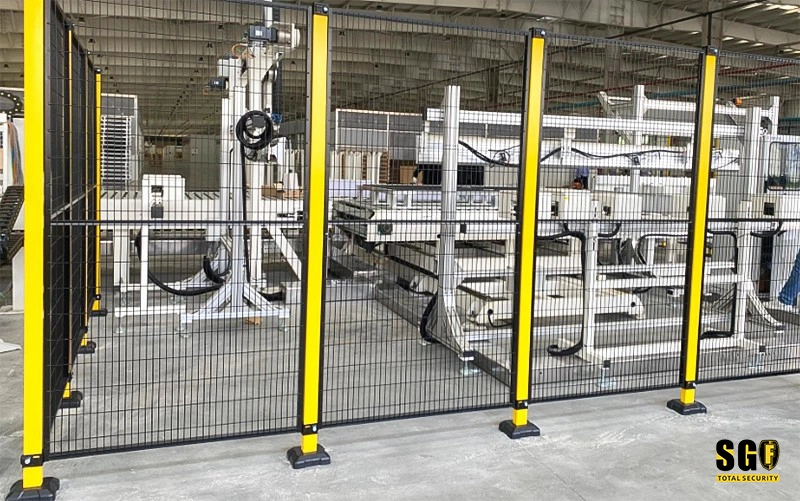
The frame is not decorative. The 20x30x1.5mm rectangular tube border gives the panel real stiffness, and the fully welded wire-to-frame construction keeps the mesh locked to the border instead of relying on weak spot fixes. For a line that sees repeated robot motion, loading, and maintenance access, that structure matters. It is the difference between temporary shielding and fence guarding that can stay in service.
3) It keeps the aisle readable for line supervisors
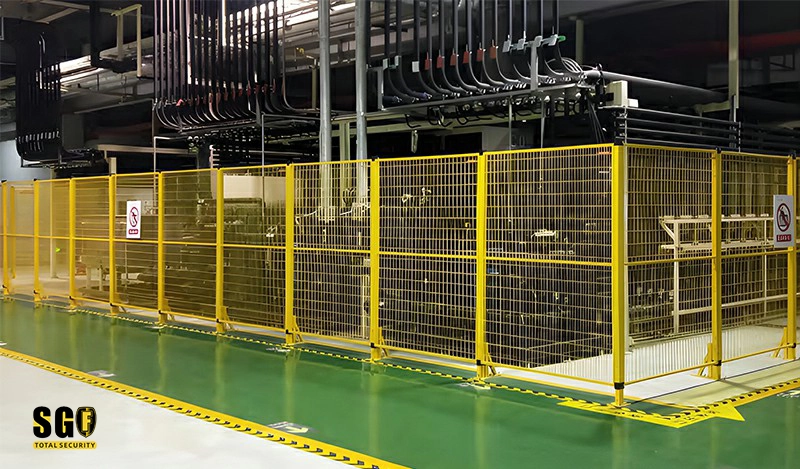
In a multi-robot panel line, visibility is a control tool. The black mesh and yellow posts create contrast without filling the aisle with visual noise. A manager standing in the passage can still see robot sequencing, operator movement, and abnormal stoppages. That is why this fence guarding is not only about protection; it is also about keeping production control fast and accurate.
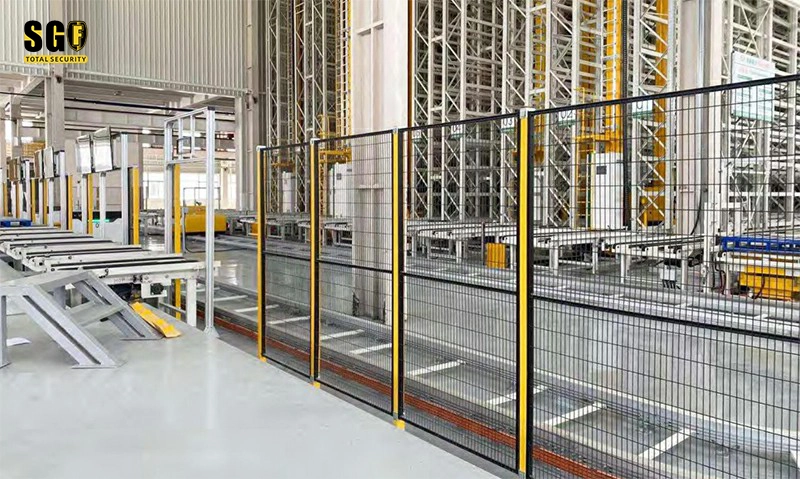
Where this fence guarding pattern is the right fit
- Robot cutting stations for light-steel panel trimming and window opening work.
- Cells that throw off metal chips, slivers, and gypsum dust during high-speed processing.
- Lines where a supervisor must monitor several robots from one aisle without losing sight of the process.
When the line needs both perimeter protection and live visual control, Mdfence gives plant teams a fence guarding layout that is simple to read, hard to breach, and practical to maintain.
What to specify before you order
For this type of application, specify the cutting zones, the aisle positions used for supervision, and the exact points where debris is most likely to escape. Then match those points to the mesh opening, welded frame, and black-yellow visibility scheme so the final fence guarding layout supports both safety and production control.
Get a fence guarding proposal for your cutting line
If your line is producing chips, dust, and blind spots at the same time, Mdfence can be matched to the cell geometry and supervisor view path so the guarding works as part of the process, not against it.