EN
EN  DE
DE  RU
RU  PT
PT  JA
JA  ES
ES  IT
IT Cold Storage Barrier Planning | FCBarrier
Cold Storage Barrier Planning: ARMORFLEX Barrier for Corrosion Control Before Low-Temperature Validation
For cold-chain and pharmaceutical warehouses, ARMORFLEX Barrier offers a polymer-based route to corrosion-free, low-maintenance forklift safety barrier design. The material logic fits wet, hygiene-sensitive areas, but FCBarrier does not currently publish a tested low-temperature-specific version. Treat −30°C impact performance as a validation requirement before making a cold-storage suitability claim.
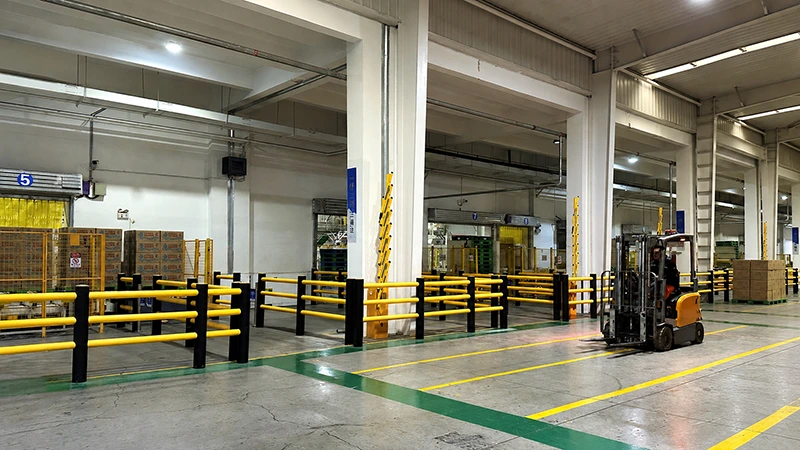
What a Cold-Chain Barrier Specification Must Separate
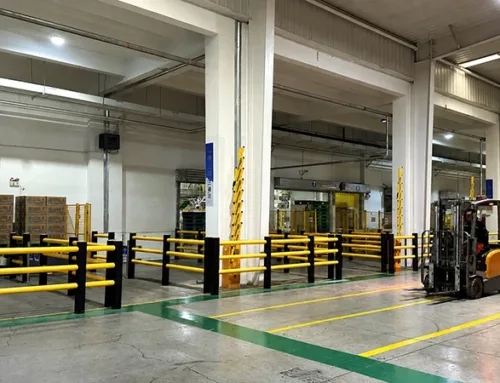
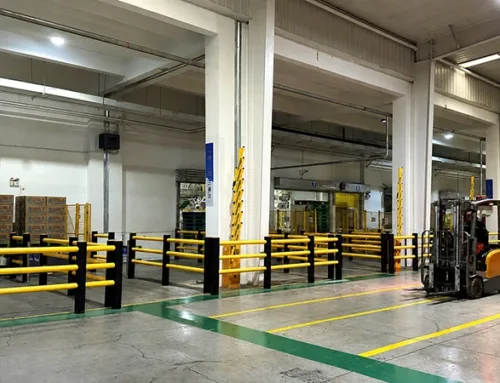
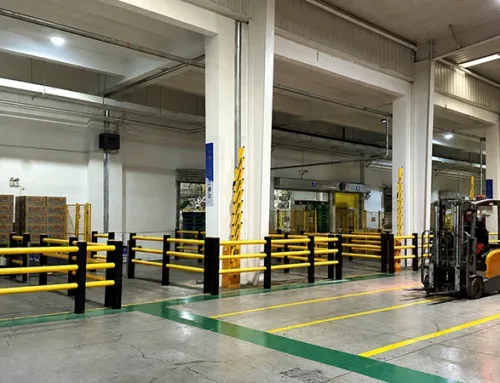
The image shows a warehouse forklift safety barrier layout and floor-mounted protection around columns and loading bays. It is installation evidence for the barrier geometry, not proof of polymer composition or low-temperature testing. Those claims must be verified separately.
| Design point | FCBarrier position and verification note |
|---|---|
| Material route | Polymer safety barrier using ARMORFLEX™ material language; the polymer route avoids routine rust and spray-coating maintenance associated with steel barrier systems. |
| Impact function | FCBarrier is described as impact resistant, energy absorbing and self-rebounding, with 80% energy absorption stated in the product profile. Confirm the selected configuration for the actual forklift risk. |
| Published impact reference | A 28,950J rated barrier reference is listed for an 8-ton forklift at 9.6 km/h. This is not a low-temperature rating and should not be converted into a −30°C performance claim. |
| Cold-chain qualification | No tested cold-temperature-specific version is published on the current FCBarrier material set. Require impact testing, installation review and material validation at the target operating temperature before approval. |
| Hygiene and corrosion | Polymer is naturally corrosion resistant, does not require spray painting and supports a low-maintenance, easy-clean design direction for food and pharmaceutical areas. Confirm the site’s cleaning chemicals and hygiene protocol. |
How ARMORFLEX Barrier Fits the Risk Review
Replace the steel maintenance cycle with a corrosion-free polymer route
In refrigerated and damp zones, a steel barrier can develop rust when coating is damaged, while repeated washdown increases the maintenance burden. A polymer safety barrier removes the steel substrate and coating system from that corrosion pathway. That makes ARMORFLEX Barrier a practical candidate for a Cold Storage Barrier concept, subject to low-temperature testing rather than an assumed rating.
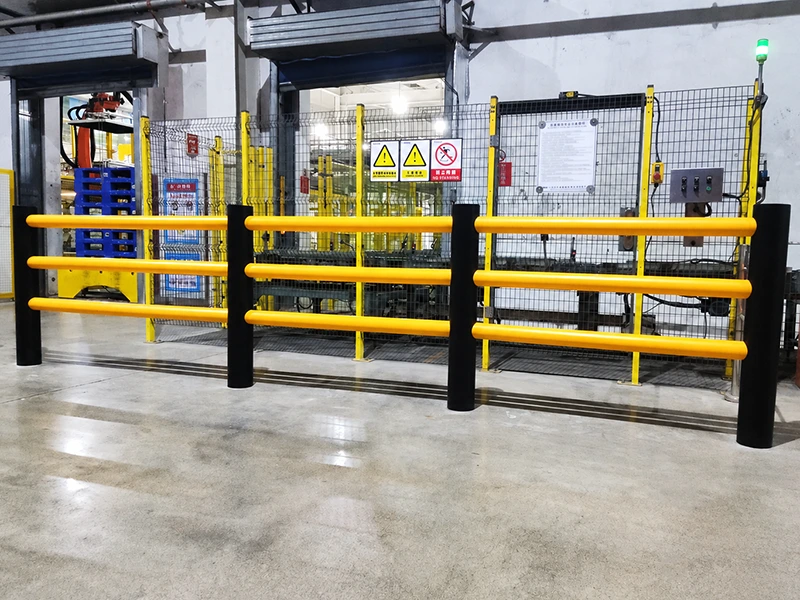
Use modular rails and anchored bases to protect people and assets
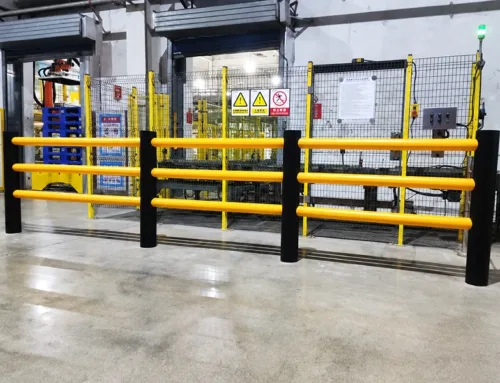
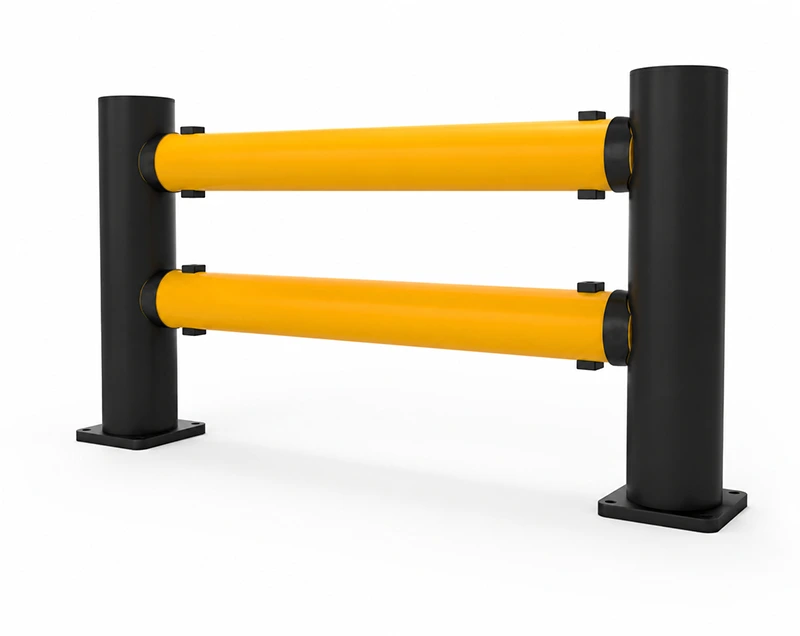
The product index shows single rail, double rail, traffic rail and column protector families, with modular barrier, removable rail and floor-anchored base terminology. The dual-rail reference image shows posts, rails and bolted base plates as an installation pattern. For a pharmaceutical plant safety review, set the pedestrian line, forklift route, racking protection and column guard positions before selecting the final configuration.
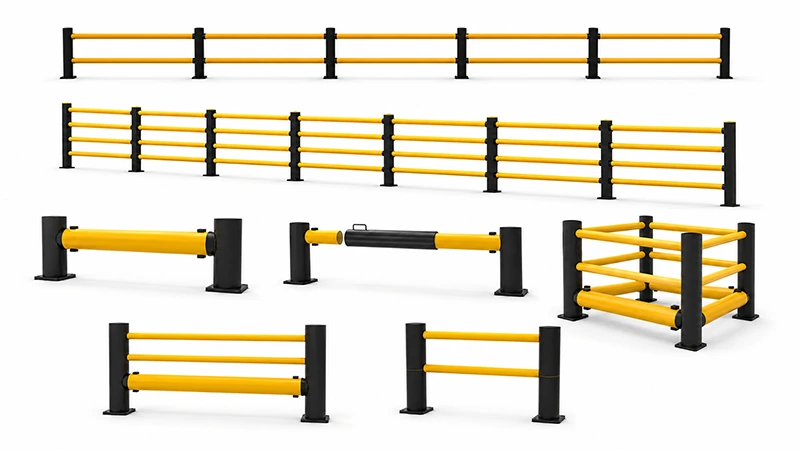
Validate impact energy and cleaning conditions together
For a forklift safety barrier in a cold-chain distribution centre, the design brief should record vehicle mass, speed, strike height, aisle geometry and anchor substrate. Pair that impact review with cleaning agents, condensation exposure and the target temperature. The modular configuration image provides product-structure evidence; it does not establish a PAS 13 certification or a −30°C impact result. Request those documents before a regulated-site specification is closed.
Where to Apply the Evaluation
- Cold-chain warehouse: review rack ends, loading dock protection, freezer-room approaches and forklift/pedestrian separation.
- Pharmaceutical warehouse: define column protector and racking protection zones, then check cleaning and corrosion requirements with the site’s quality team.
- Food and beverage facility: compare the easy-clean, corrosion-resistant polymer route with the repair and coating upkeep of a traditional steel guardrail.
- Retrofit project: use modular installation and quick-install planning to add warehouse safety barrier coverage without treating an unverified low-temperature claim as a specification.
The expected result is a clearer decision: reduce rust-related repair exposure and maintenance work through a polymer safety barrier concept, while keeping low-temperature impact performance as an explicit engineering gate.
Prepare the Verification Pack
Ask for the selected ARMORFLEX Barrier configuration, material data, target-temperature impact evidence, anchor details, cleaning-chemical compatibility and any applicable third-party certification. The current profile lists a 28,950J impact reference and self-rebounding behaviour, but it does not publish a tested cold-storage version. Document the gap and close it with test data before specifying the barrier for −30°C service.
Need a Cold-Chain Barrier Review?
Send the warehouse temperature range, forklift data, rack and column layout, washdown process and required hygiene controls. We can help turn the ARMORFLEX Barrier concept into a verification-led Flexible Safety Barrier brief.