EN
EN  DE
DE  RU
RU  PT
PT  JA
JA  ES
ES  IT
IT FOOD & BEVERAGE PLANT SAFETY
Flexible Rack Protection for Mixed-Traffic Production Areas
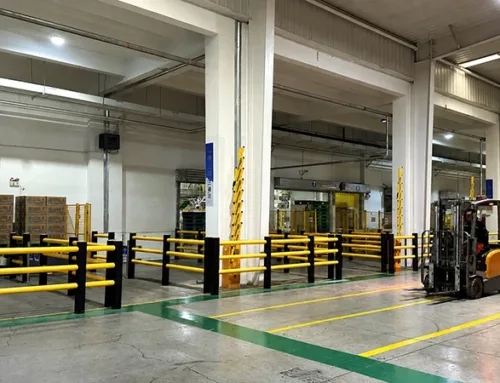
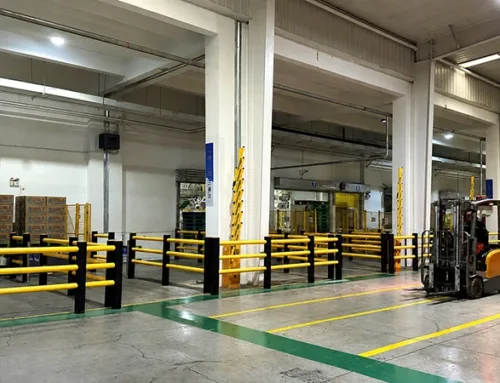
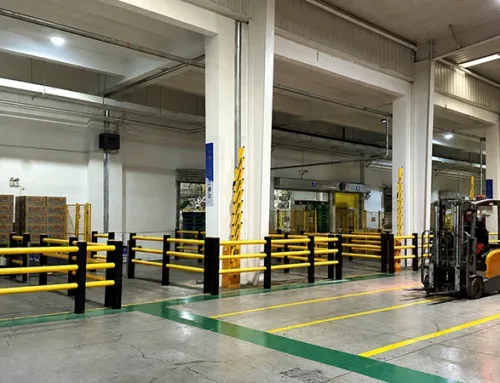
When forklifts, tow tractors, AGVs and people share food-plant aisles, training and warning signs cannot create a permanent separation line. FCBarrier Flexible Rack Protection uses an ARMORFLEX™ polymer safety barrier to absorb about 80% of impact energy, rebound after impact, and protect racking, columns, equipment and pedestrian routes without crowding tight production aisles.
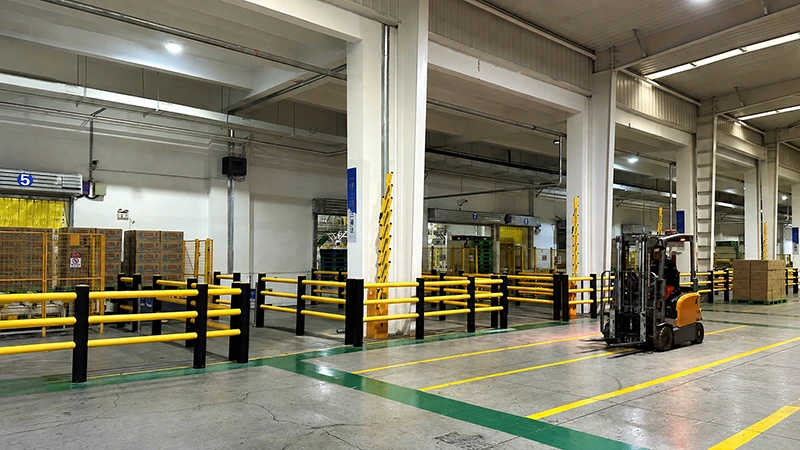
Why Food-Plant Mixed Traffic Needs More Than Warnings
Fast-moving consumer-goods and food facilities combine production lines, warehouse racking, loading areas and pedestrian access in a compact footprint. A momentary lapse in attention can put a person, machine or vehicle in the same collision path. Training, floor markings and warning signs support workplace safety, but they do not physically stop a vehicle from entering the hazard zone. A steel barrier or concrete block can create a boundary, yet a rigid impact can transfer force into anchors, floors, racks or the vehicle—and leave a damaged barrier that needs repair before the route is safe again.
| Operational requirement | FCBarrier response |
|---|---|
| Separate people, vehicles and machinery | Permanent floor-anchored barrier lines define pedestrian, equipment and vehicle boundaries. |
| Manage forklift impact protection | ARMORFLEX™ polymer is designed to absorb about 80% of impact energy and self-rebound. |
| Protect racks and columns | Flexible Rack Protection can be configured at rack ends, columns, loading bays and aisle edges. |
| Handle a high-impact traffic zone | DR190/TR190+ configurations are rated up to 28,950J, equivalent to an 8-ton forklift at 9.6 km/h, subject to the selected configuration and installation. |
| Keep compact production routes usable | A slim flexible barrier profile helps establish a buffer without taking unnecessary aisle width. |
How FCBarrier Turns a Collision Risk into a Physical Buffer
1. Absorb impact, then return to position
FCBarrier is a Flexible Safety Barrier rather than a decorative flexible bollard. Its ARMORFLEX™ polymer construction absorbs about 80% of impact energy and self-rebounds after a vehicle strike. That energy-absorbing behavior helps protect people and assets in both directions: the boundary remains visible and the damaged section is less likely to become a new obstruction after one incident.
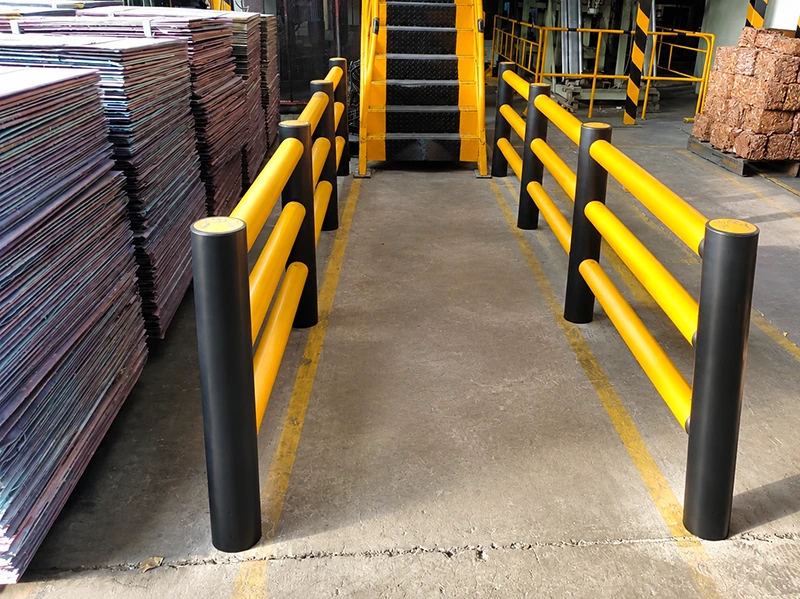
2. Match the barrier to the movement pattern
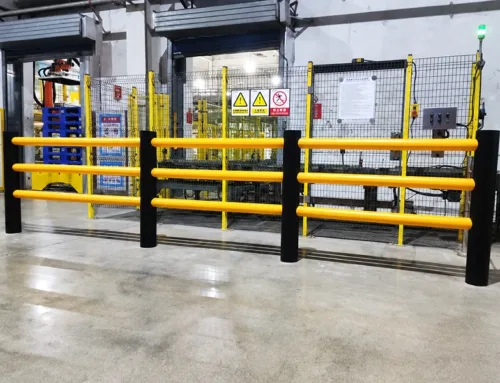
Use a Single Rail or Double Rail arrangement where the main need is rack-end and aisle-edge protection; use Traffic Rail layouts for pedestrian and vehicle segregation; and use a Column Protector or Column Guard around structural posts and equipment. The modular barrier format supports retrofit work in existing warehouses and food & beverage production areas, while mortise-and-tenon quick-install connections and removable sections simplify phased installation or access changes.
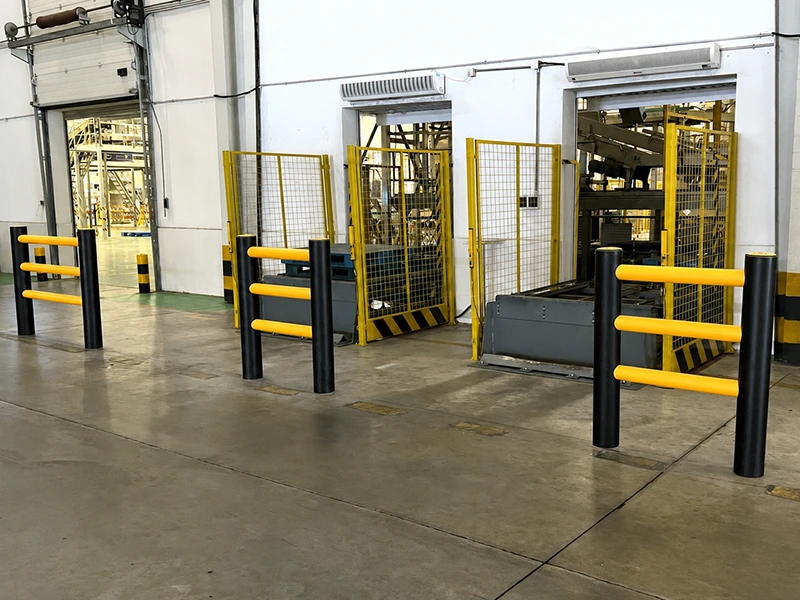
3. Use verified impact evidence for layout decisions
For higher-risk forklift routes, the top DR190 and TR190+ options are listed at up to 28,950J—about an 8-ton forklift travelling at 9.6 km/h. That figure gives a project team a defined starting point for selecting a Heavy Duty Safety Barrier, then checking vehicle mass, speed, approach angle, anchor conditions and clearance for the final layout. The result is an engineered Forklift Safety Barrier and Racking Protection System, not a warning-only control.
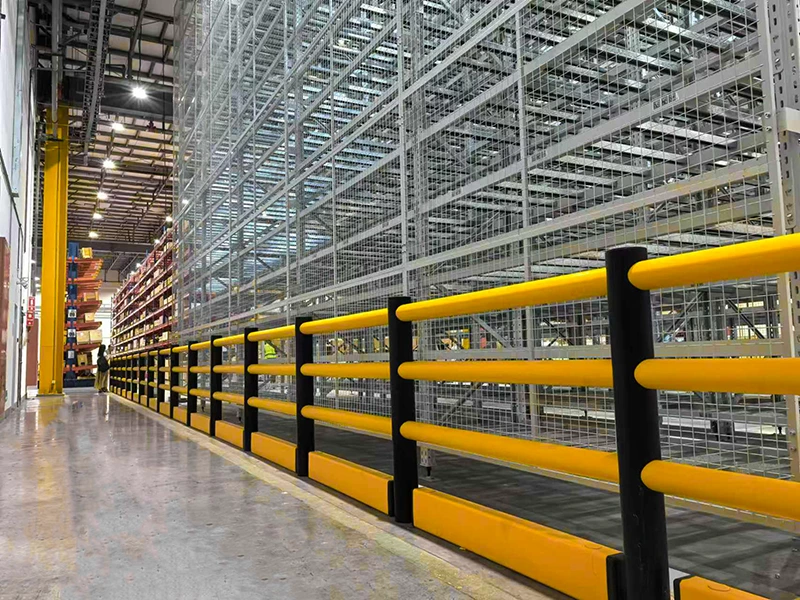
Where Flexible Rack Protection Fits in a Food Plant
- Production-line edges: separate pedestrian walkways from forklifts, tow tractors and AGVs approaching machinery.
- Warehouse racking: protect rack ends and aisle boundaries from repeated forklift movement.
- Columns and building structure: add Column Protector sections where a vehicle can sweep into a post or wall.
- Conveyor and equipment access: create a visible, physical boundary around machinery and controlled openings.
- Loading dock and retrofit projects: extend a modular Warehouse Safety Barrier through existing layouts without relying on a full rebuild.
For food & beverage safety barrier planning, the practical sequence is to map pedestrian desire lines and vehicle paths, identify rack ends, columns and machine pinch points, then select SR, DR, TR or CTR protection according to the impact exposure. A physical buffer supports pedestrian safety while helping prevent vehicle and equipment damage.
From Collision Prevention to Lower Repair Cost
Replacing a warning-only boundary with an impact-resistant, self-rebounding polymer barrier can reduce the disruption caused by routine contact. Less damage to racks, machines and building structure means fewer emergency repairs and less accident downtime. The modular, removable design also supports quick repair or replace work when a component must be isolated. For projects comparing Polymer Barrier vs Steel Barrier, review the actual traffic energy and installation conditions rather than comparing material labels alone.
Build a Safer Boundary for People and Assets
Share your plant layout, vehicle types, operating speeds and high-risk locations. Our team can help identify where FCBarrier Flexible Rack Protection, forklift safety barrier lines and column protection should be placed, and which impact rating should be reviewed for the project.