EN
EN  DE
DE  RU
RU  PT
PT  JA
JA  ES
ES  IT
IT FOOD & BEVERAGE PLANT SAFETY | FCBarrier
Flexible Safety Barrier for Mixed-Traffic Production Areas
When forklifts, tugger trains, AGVs, operators and production equipment share compact routes, a Flexible Safety Barrier creates a permanent physical boundary instead of relying on training and warning signs alone. FCBarrier uses ARMORFLEX™ polymer to absorb about 80% of impact energy and self-rebound, helping protect pedestrians, machinery and warehouse assets.
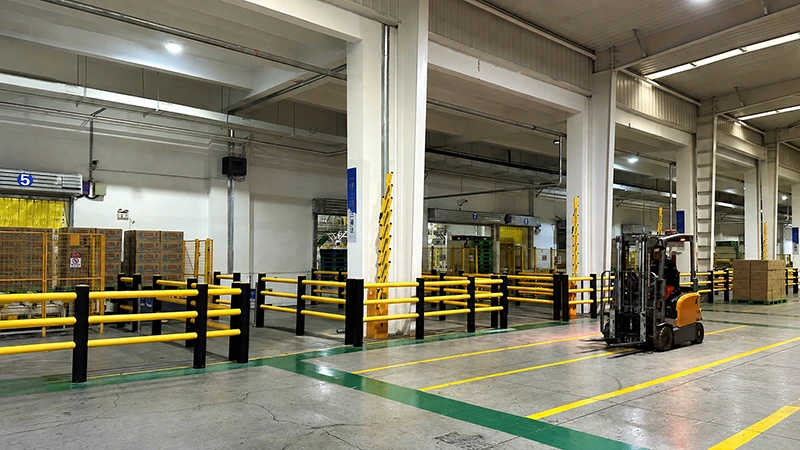
From Mixed Traffic to Defined Safety Zones
Food & beverage plants need clear separation around production lines, warehouse aisles, rack ends, columns and loading routes. The following chain connects the operating risk to the physical protection choice and the expected result.
| Operating reality | FCBarrier response and result |
|---|---|
| Forklifts, tuggers and AGVs cross paths with pedestrians and machinery. | Use a floor-anchored Flexible Safety Barrier to define pedestrian and vehicle boundaries for workplace safety. |
| Training, painted lines and warning signs depend on every person and driver reacting correctly. | A permanent physical barrier makes the boundary visible and physical, supporting forklift accident prevention rather than passive awareness alone. |
| Rigid steel barriers, steel bollards or concrete can transfer impact into floors, vehicles and the barrier itself. | ARMORFLEX™ polymer absorbs about 80% of impact energy, then self-rebounds instead of requiring routine straightening or replacement after every contact. |
| High-energy traffic at rack ends, columns and production-line edges can create repeat repair exposure. | The highest FCBarrier rating is listed at 28,950J, corresponding to an 8-ton forklift at 9.6 km/h; select DR190 or TR190+ configurations against the project load case. |
| Compact food production aisles leave little room for bulky protection. | A slim barrier profile establishes an energy-absorbing buffer without unnecessarily narrowing already tight routes, supporting pedestrian & asset protection. |
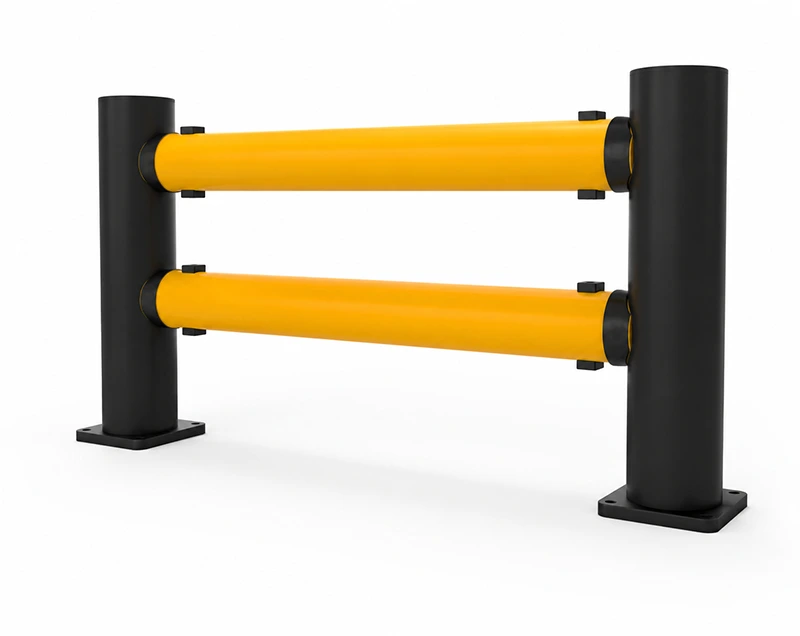
Why FCBarrier Fits Food & Beverage Safety Barriers
Absorbs impact and self-rebounds
FCBarrier is a Polymer Safety Barrier built around ARMORFLEX™ material. Its energy-absorbing response is intended for repeated industrial contact: the barrier absorbs about 80% of impact energy and self-rebounds, helping prevent vehicle and equipment damage while reducing repair cost and accident downtime. This is a different operating logic from a traditional guardrail that stays bent after impact.
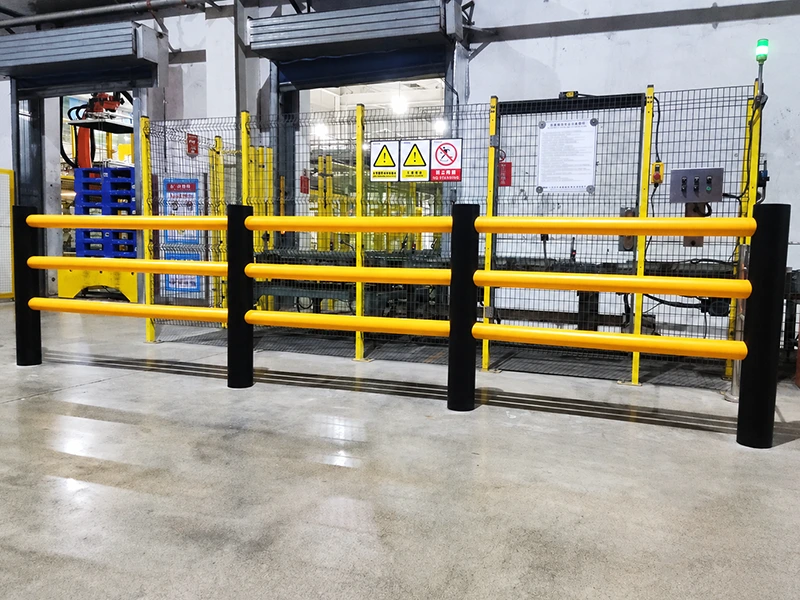
Build a physical pedestrian boundary
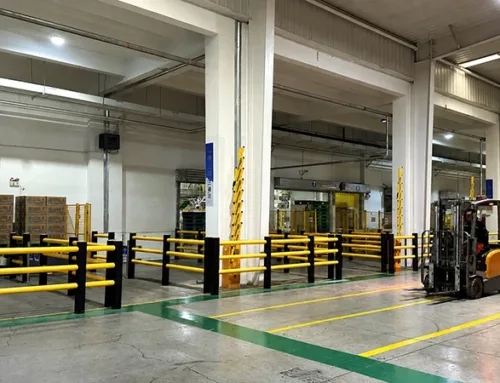
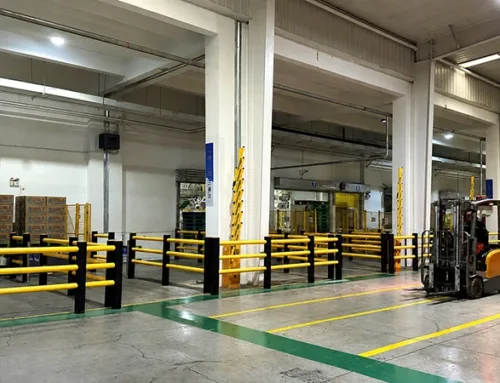
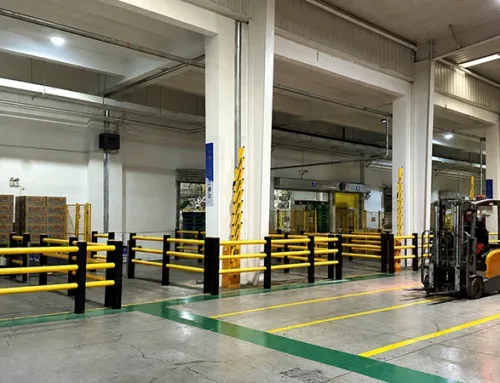
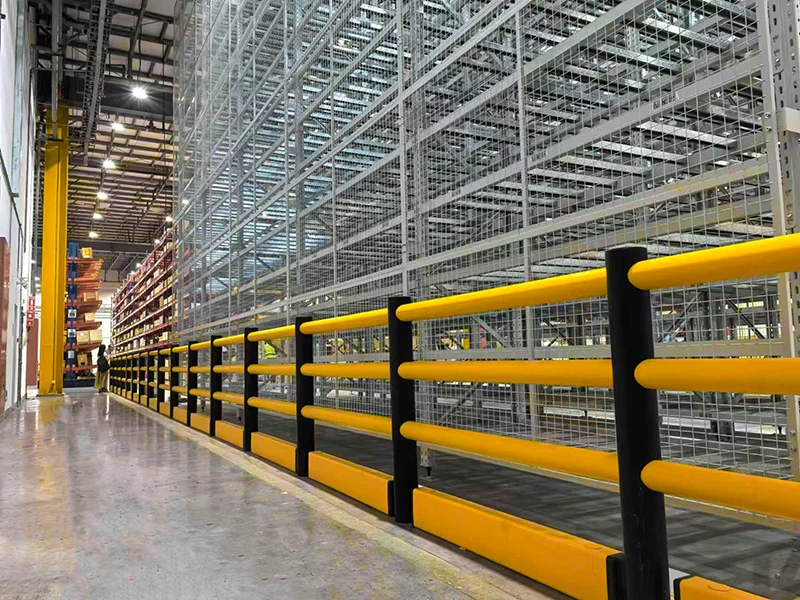
Use Single Rail or Double Rail sections for route separation, Traffic Rail configurations where vehicle movement is concentrated, and Column Protector or Column Guard sections around structural posts. In a manufacturing plant, the barrier can separate a walkway from a line-side route; in a warehouse, it can provide racking protection and loading dock protection.
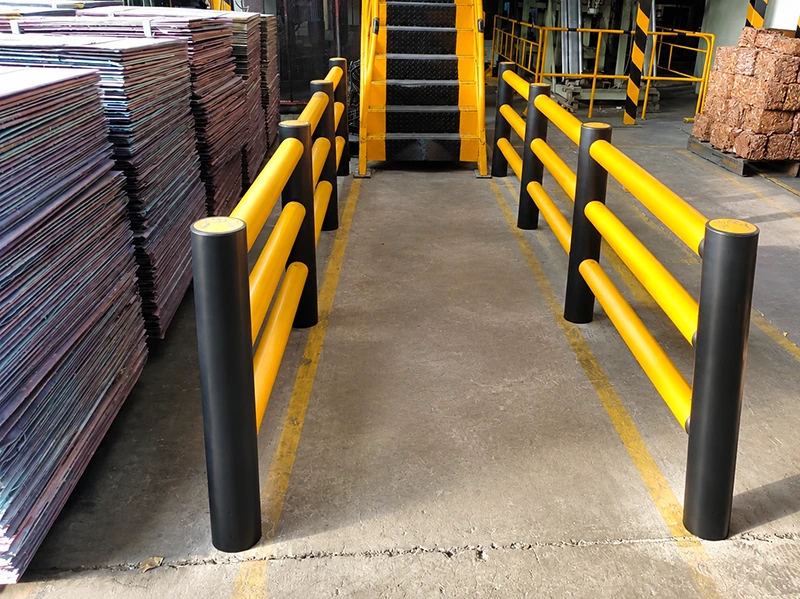
Fit high-energy zones without overbuilding
For demanding forklift safety barrier layouts, the documented 28,950J rating provides a concrete design reference: approximately an 8-ton forklift travelling at 9.6 km/h. Combine floor-anchored bases with modular installation and mortise & tenon quick-install connections to support retrofit barrier work, quick-release access and future route changes. Confirm the final DR190 or TR190+ selection with the project impact calculation.
Where to Apply a Flexible Safety Barrier
- Food & beverage production: separate pedestrian walkways from forklift, tugger and AGV routes beside production lines.
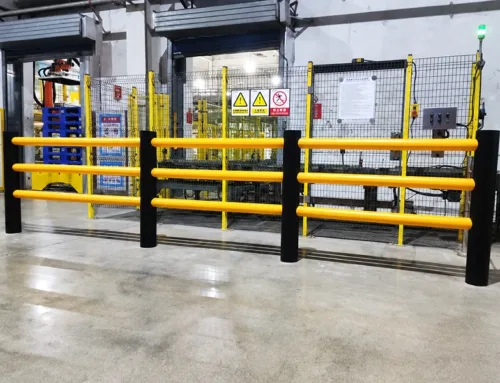
- Machinery protection: create a visible buffer around machinery access points, conveyors and service areas.
- Warehouse safety barrier layouts: protect rack ends, columns and warehouse aisles while directing vehicle movement.
- Loading dock protection: define the edge between loading activity, pedestrians and fixed assets.
- Retrofit barrier projects: add modular, easy-install protection to an existing plant without redesigning the complete floor plan.
For corrosion-sensitive or hygiene-focused operations, the polymer construction supports a corrosion-free, low-maintenance and easy-to-clean protection approach. Confirm cleaning chemicals, UV exposure and site conditions during specification; PAS 13 compliance should be treated as a certification question, not assumed without project documentation.
Specify the Protection Around the Traffic You Actually Have
Map pedestrian paths, forklift and AGV approach directions, rack ends, columns, machinery access and loading points first. Then size the Flexible Safety Barrier by impact energy, rail configuration and access requirement. Ask for a layout review covering SR, DR, TR and CTR options, floor-anchored bases, removable rail access and the relevant 28,950J design reference.
Replace Warning-Only Controls with Physical Separation
Share your plant layout, vehicle types, operating speeds and collision points. Our team can help develop an FCBarrier warehouse safety barrier or food & beverage safety barrier plan that protects people, equipment and production routes.