EN
EN  DE
DE  RU
RU  PT
PT  JA
JA  ES
ES  IT
IT FOOD & BEVERAGE PLANT SAFETY
Flexible Crash Barrier for Food Plant Forklift Zones
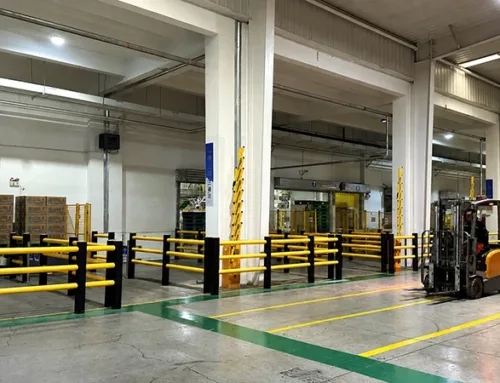
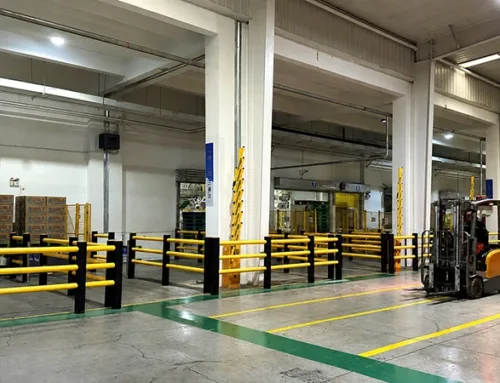
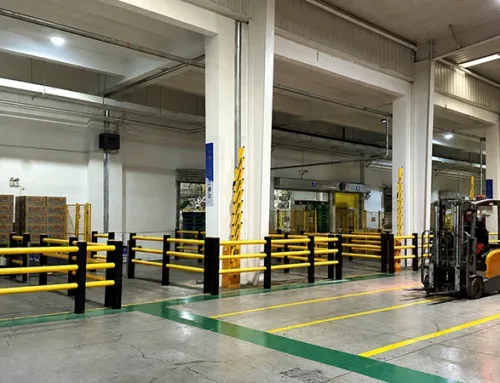
When forklifts, tow tractors, AGVs, people, and production equipment share compact food-plant routes, a Flexible Crash Barrier creates a permanent energy-absorbing boundary instead of relying on training and warning signs alone.
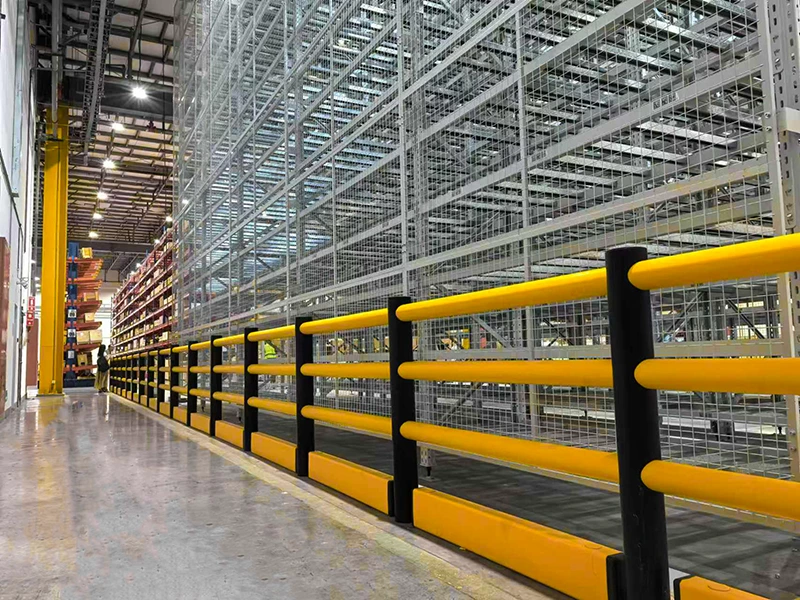
Why Mixed Traffic Needs a Physical Safety Boundary
In fast-moving food and beverage facilities, pedestrian routes, forklifts, tow tractors, AGVs, conveyors, and racking often meet at the same line-side and warehouse interfaces. Training, floor markings, and warning signs support safe behavior, but they do not physically stop a vehicle from entering a pedestrian or equipment zone. The result can be injury, rack or machine damage, repair cost, and accident downtime.
| Site risk | FCBarrier response |
|---|---|
| People and vehicles crossing the same route | Floor-anchored modular barrier lines define a visible pedestrian safety boundary. |
| Forklift impact at rack ends, columns, and loading areas | Energy-absorbing polymer protection forms a buffer before the vehicle reaches the asset. |
| Steel barriers that bend, crack, or require repainting after impact | ARMORFLEX™ material absorbs about 80% of impact energy and self-rebounds after a collision. |
| Compact food-plant aisles where bulky protection reduces clearance | The flexible barrier uses a slim section to protect people and equipment without unnecessarily narrowing the route. |
Flexible Crash Barrier Design Evidence for the Factory Floor
Absorbs Impact, Then Returns to Position
FCBarrier uses ARMORFLEX™ polymer for an impact-resistant, self-rebounding safety barrier. By absorbing about 80% of the collision energy, the system is designed to protect both people and assets while avoiding the permanent deformation associated with a conventional steel barrier. This supports low-maintenance protection and can help reduce repair cost and accident downtime.
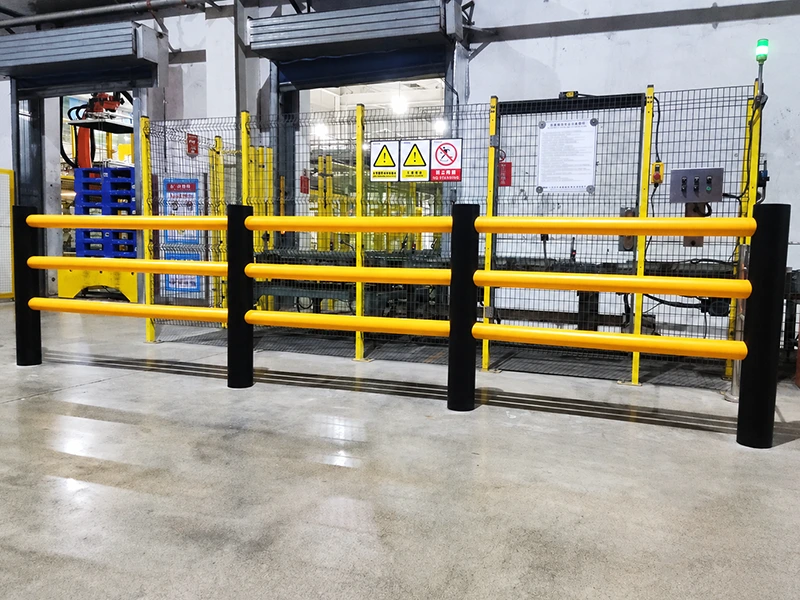
28,950J Protection at High-Exposure Points
For demanding forklift safety barrier applications, the DR190 and TR190+ configurations are rated at up to 28,950J—equivalent to an 8-ton forklift travelling at 9.6 km/h. Specify the barrier around racking ends, loading dock approaches, columns, machine edges, and pedestrian routes according to the site risk assessment. The rating is the product evidence; the final layout still depends on vehicle traffic, impact direction, anchoring, and local installation conditions.
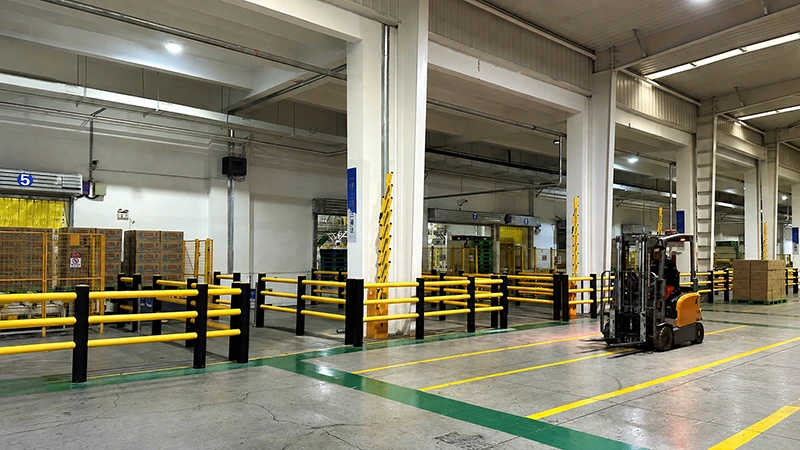
Modular Protection for People, Machines, and Routes
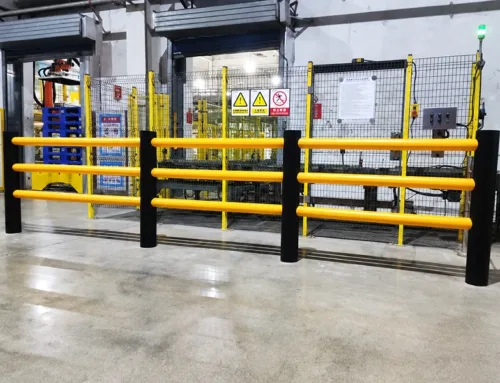
Use Single Rail, Double Rail, Traffic Rail, or Column Protector layouts to match the hazard. A modular barrier can be extended along a conveyor, machine access point, warehouse aisle, or loading bay; quick-install and removable-rail details also support retrofit work where an operating food plant cannot afford a long shutdown. The result is a defined separation line that makes pedestrian and asset protection part of the site layout—not only a training reminder.
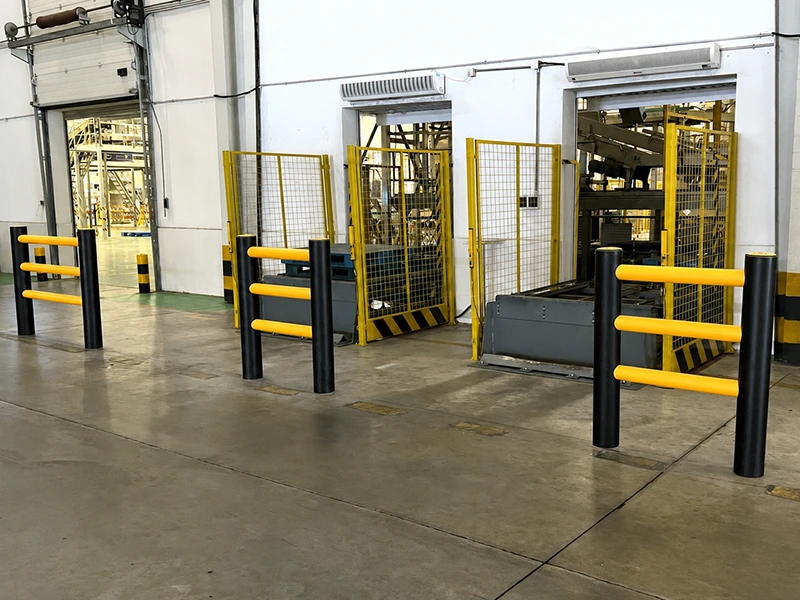
Where to Apply FCBarrier in a Food & Beverage Plant
- Forklift and AGV routes: use a Forklift Safety Barrier to keep vehicle paths away from pedestrian walkways and production-line access points.
- Racking and warehouse aisles: add Flexible Rack Protection and warehouse safety barrier sections at rack ends, corners, and turning zones.
- Columns and machine edges: use a Column Protector or Column Guard where a single structural element is exposed to repeated vehicle impact.
- Conveyors and loading docks: create a continuous boundary for machinery protection and Loading Dock Protection around transfer points.
- Existing facilities: use modular installation and retrofit barrier planning to improve Workplace Safety without redesigning the entire floor.
For food and beverage operations, polymer construction also offers a corrosion-free, easy-to-clean alternative to painted steel in areas exposed to frequent washdown or corrosive conditions, subject to the plant’s cleaning protocol and final material review.
Specify the Barrier Around the Actual Collision Risk
Start with a route map showing people, forklifts, tow tractors, AGVs, racking, columns, machines, conveyors, and loading points. Then confirm the required rail configuration, impact direction, anchoring surface, clear aisle width, and access points. FCBarrier supports a practical shift from passive warning to permanent physical separation, with Flexible Crash Barrier options for warehouse safety barrier, machinery protection, and pedestrian safety applications.
Build a Safer Mixed-Traffic Boundary
Share your plant layout, vehicle types, traffic speed, and exposed assets. Our team can help identify where an energy-absorbing Flexible Crash Barrier, Column Protector, or modular pedestrian barrier should be evaluated.