EN
EN  DE
DE  RU
RU  PT
PT  JA
JA  ES
ES  IT
IT MULTISITE MACHINE GUARDING | OSHA + ISO 14120
North American Multisite Compliance Audits: Industrial Safety Fencing That Standardizes Machine Guarding
For a multinational manufacturer, a machine guarding program must do more than separate people from moving equipment. It must create a repeatable, auditable baseline across plants. This industrial safety fencing system combines modular machine guard fencing, lockable access, and documented structural details to support OSHA machine guarding requirements and ISO 14120 alignment across global operations.
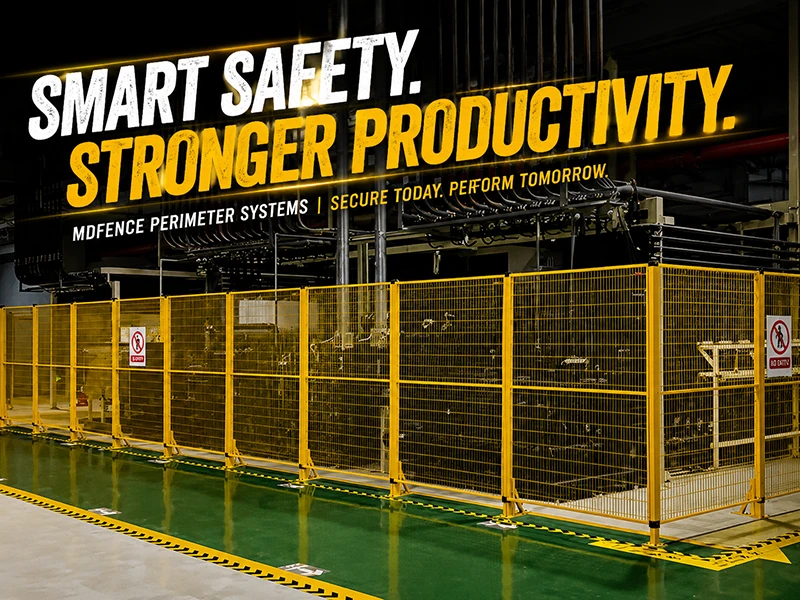
From audit exposure to a repeatable physical guarding solution
A North American-headquartered multinational can face a costly compliance review when each site interprets machine perimeter guarding differently. Older welded safety fencing may be permanently fixed, difficult to alter around new automation, and inconsistent in its gate, interlock, and anchoring details. That creates two problems at once: plant teams must explain local deviations to auditors, while engineering teams spend time rebuilding guarding layouts instead of improving production line efficiency.
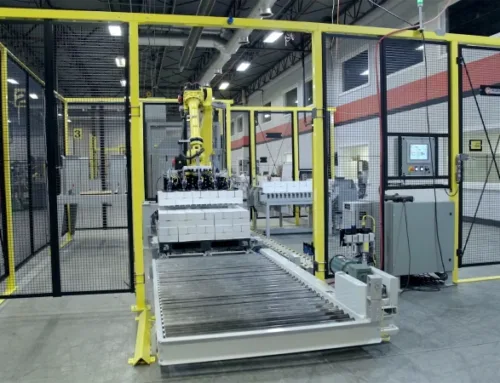
Machine Fencing is suited to this situation because the system is modular and configurable. The same basic language—mesh panel, safety fence posts, access gate, lock carrier, and anchored base—can be applied around robot cells, conveyors, CNC machine guards, palletizer safety guarding, and dedicated manufacturing lines. Standardized components support factory safety zoning while allowing each site to adapt the perimeter to its equipment and available floor space.
| Audit-relevant detail | How it supports the guarding baseline |
|---|---|
| Q235 carbon steel frame and steel mesh panels | Provides a defined physical barrier for equipment isolation and consistent machine guarding construction. |
| 1600J impact-protection reference | Supports a high impact resistance fencing specification for demanding automation and production areas. |
| Standard heights of 2000 mm and 2200 mm | Gives project teams a repeatable starting point for perimeter layouts and site review documentation. |
| 3.0 mm / 4.0 mm wire options and narrow-slit mesh | Allows the panel specification to be matched to the guarded equipment and visibility needs. |
| Floor-mounted base plates with expansion anchors | Creates a visible, inspectable connection between safety fence posts and the plant floor. |
Evidence an auditor and an engineering team can review
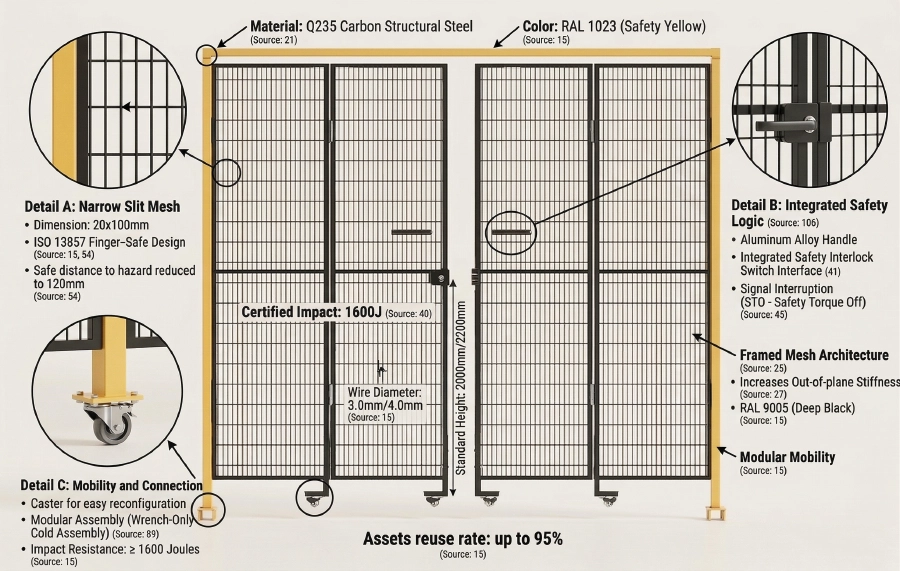
Documented panel construction, not a generic barrier
The engineering view identifies a Q235 carbon steel frame, narrow-slit mesh, standard heights, and 3.0 mm or 4.0 mm wire options. These details give a multinational engineering group a common machine guarding fence specification instead of relying on photographs or site-by-site descriptions. The yellow powder-coated steel posts also make the boundary easy to identify during a walkthrough.
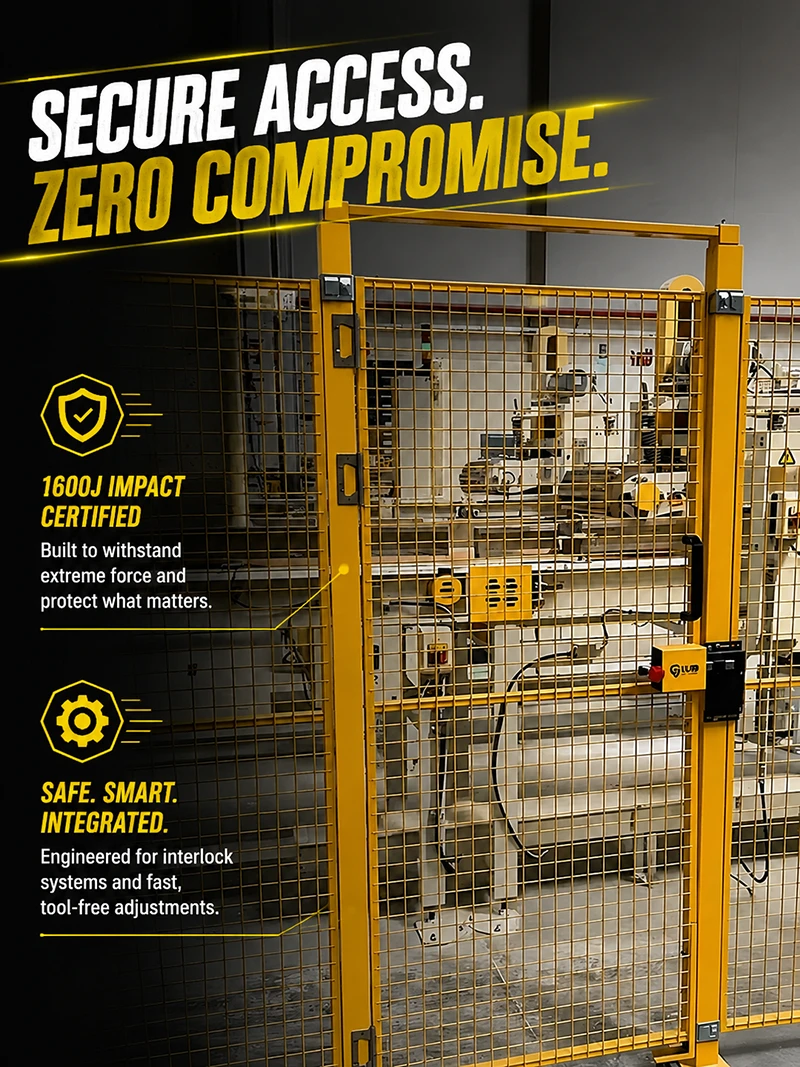
Controlled access for robot cells and automated lines
A perimeter is only useful when access points are treated as part of the safety guarding system. The gate configuration shown includes a framed mesh door, latch hardware, and an interlock mounting area. That makes it suitable for safety interlock installation with devices such as Omron D4NL or Pizzato FS series components, subject to the project risk assessment and final electrical integration. Maintenance access can therefore be planned alongside LOTO procedures rather than added as an afterthought.
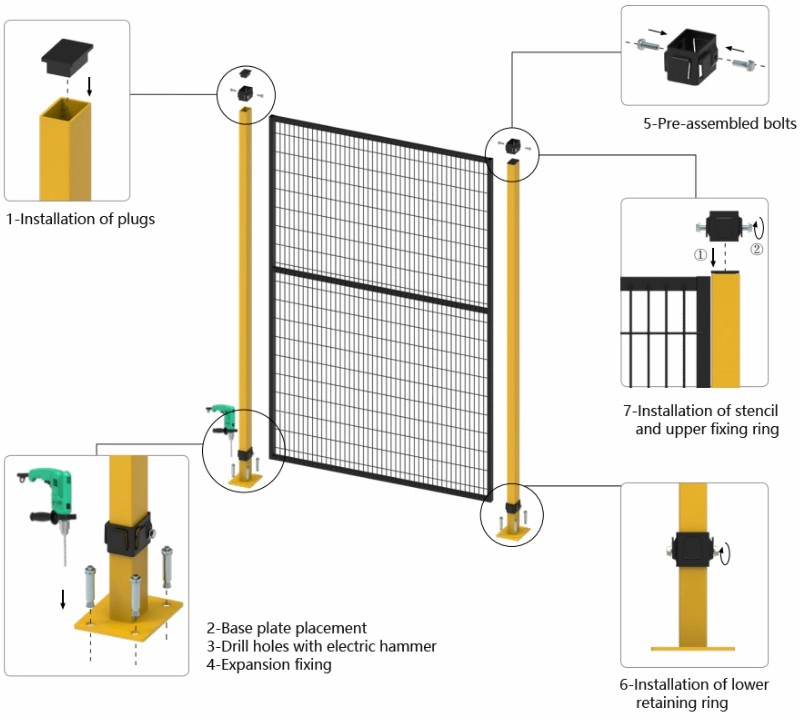
Anchoring details that make the installation inspectable
The installation diagram shows the relationship between the yellow square-tube post, upper and lower fixing rings, base flange, preassembled fasteners, and expansion anchors. This is important when sites need to demonstrate how equipment isolation is physically achieved. A clear base-plate arrangement also helps contractors install a configurable safety fence consistently and helps plant personnel identify loose or damaged connections during routine checks.
One compliance logic across different plant scenarios
- Robot cell guarding: enclose the robot, control cabinet, and conveyor while keeping a defined hinged safety door and interlock point.
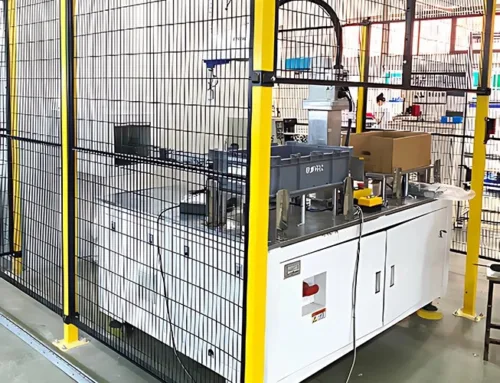
- Automation system isolation: separate high-speed mechanical assembly machines from personnel routes with modular panels and visible safety fence posts.
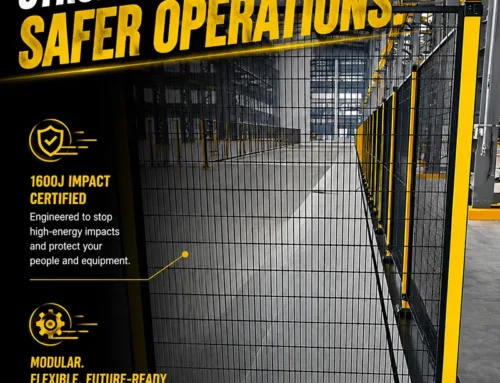
- Conveyor line safety guarding: create a continuous perimeter where material handling, maintenance access, and pedestrian movement intersect.
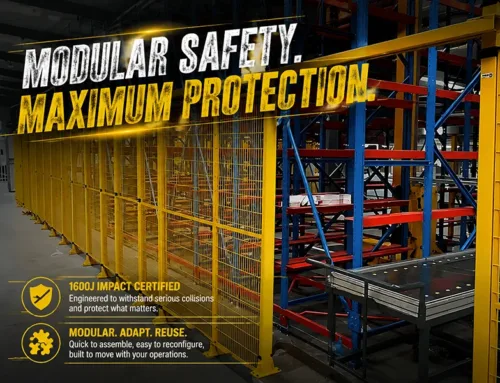
- Warehouse rack protection and smart warehouse zoning: establish physical boundaries around automated material handling areas and reduce the risk of vehicle movement injuries.
For a multinational rollout, the result is not merely a yellow fence. It is a common, documented physical guarding baseline that supports OSHA machine guarding requirements, helps meet ISO 14120 standards, and can be reviewed consistently by corporate EHS teams, local plant managers, contractors, and government inspectors.
What to standardize before the next site review
Define the guarded machine boundary, selected panel height, wire specification, gate position, interlock device, anchoring method, and inspection ownership in the project package. The system’s Q235 steel construction, 1600J impact-protection reference, 2000/2200 mm height options, mesh choices, and anchored post details give engineering teams concrete fields to standardize. Confirm final dimensions and safety functions through the site risk assessment and applicable local requirements.
Build an auditable machine guarding standard across your network
Replace inconsistent welded safety fencing details with a configurable industrial safety fence specification for robot cells, production lines, and automated material handling areas. Contact SGF to review your multi-site layout, access points, and ISO/OSHA documentation needs.