EN
EN  DE
DE  RU
RU  PT
PT  JA
JA  ES
ES  IT
IT MULTISITE INDUSTRIAL AUTOMATION SAFETY
Industrial Safety Fencing for OSHA and ISO Audit-Ready Machine Guarding
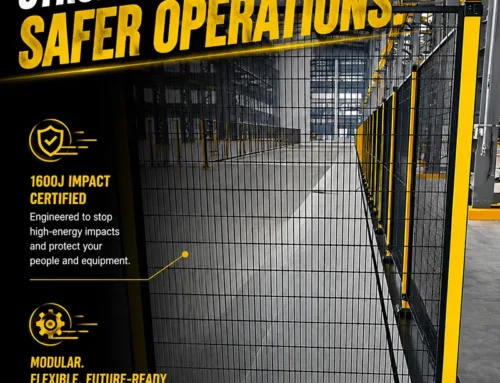
For a North American multinational, every robot cell, automated line, and overseas plant must demonstrate the same safety baseline. A configurable machine guarding fence built around ISO 14120 and OSHA machine guarding requirements helps standardize equipment isolation, factory safety zoning, and audit evidence across sites.
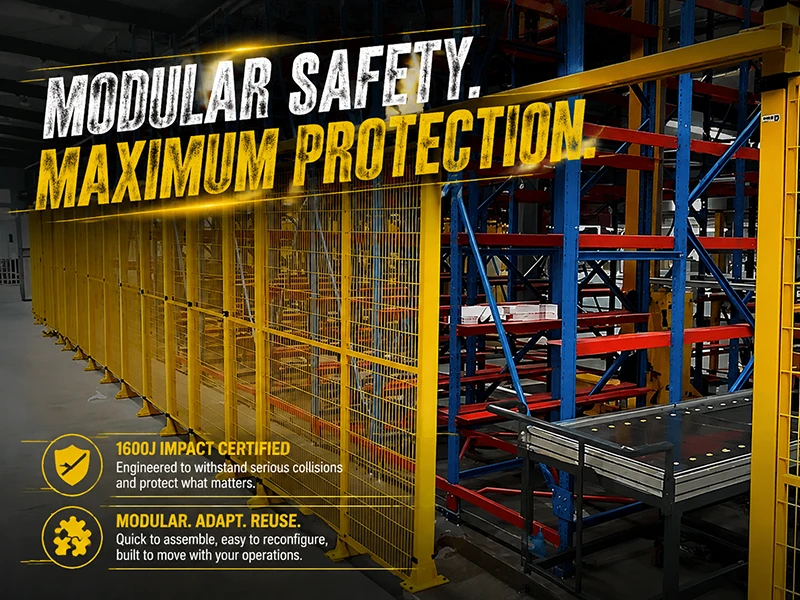
Why a common physical guarding baseline matters in a global audit
A single North American headquarters may control safety policy, while local plants operate different robot cells, conveyors, CNC machine guards, and material-handling routes. Older welded safety fencing is often modified plant by plant. That creates inconsistent access points, improvised repairs, unclear equipment isolation boundaries, and a difficult question during an OSHA review: can the same protection logic be proven at every location?
| Audit and engineering concern | Machine guarding response |
|---|---|
| Different plants use different welded safety fencing layouts | Configurable safety fence panels and modular safety barrier components create a repeatable factory safety zoning standard. |
| Access doors are added without a consistent control point | Hinged safety doors, lock hardware, and safety lock mounting carriers provide a defined interface for safety interlock installation. |
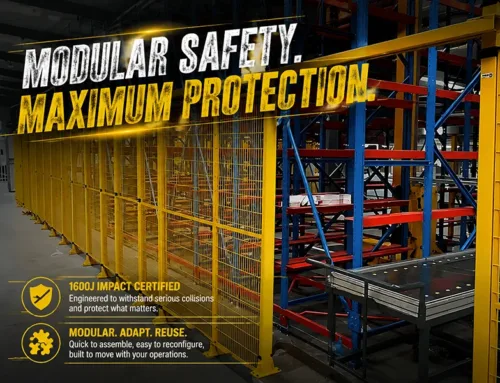
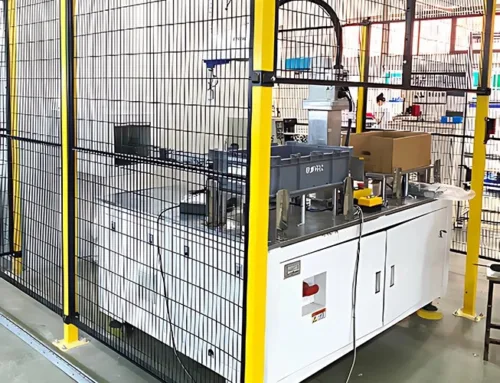
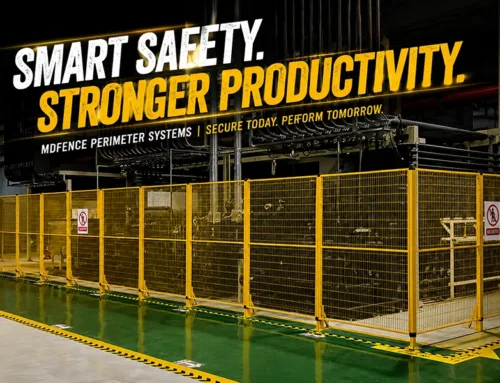
| Guards must separate people from moving automation | Wire mesh panels, framed mesh panels, floor-mounted posts, and bolted base plates form a visible machine perimeter guarding boundary. |
| Evidence must be clear to corporate and government reviewers | Documented material, dimensions, impact performance, fastening method, and gate configuration support an auditable physical guarding specification. |
Product-fit evidence for a standardized machine safety fence
Q235 steel structure and controlled welding details
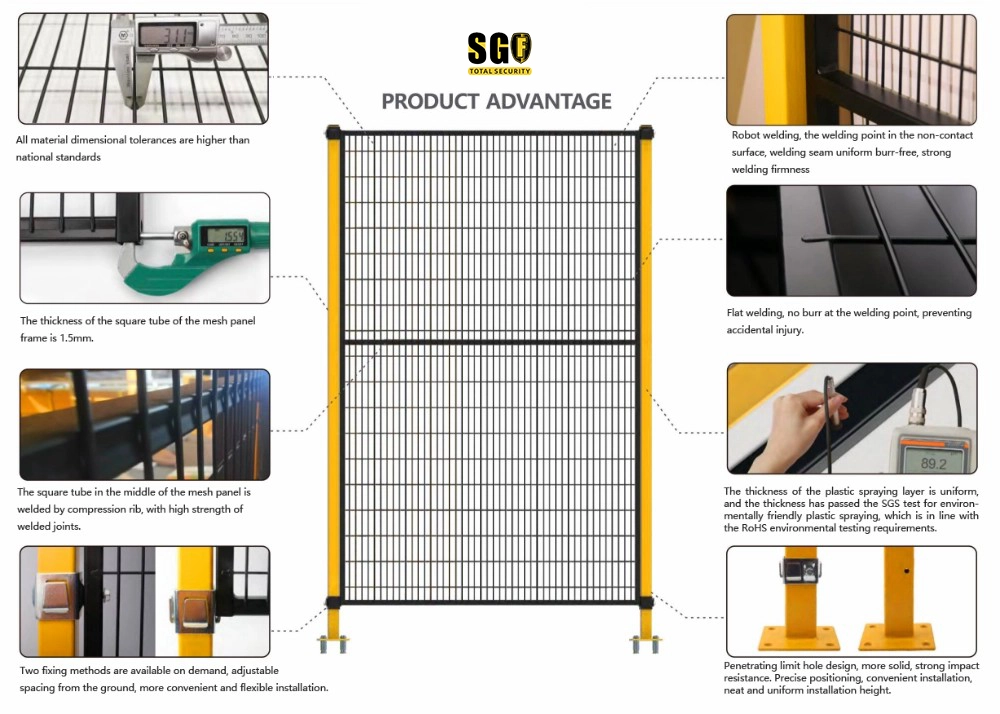
A global standard is only useful when the physical construction can be specified and checked. The system uses Q235 carbon steel components, square-tube framing, reinforced mesh sections, automated welding tooling, and flat full weld joints. The burr-free weld safety design reduces exposed sharp edges at the guard boundary, while powder-coated steel fence components provide a consistent RAL1023 yellow visual standard for plant walkways and restricted zones.
Defined dimensions and anchored installation logic
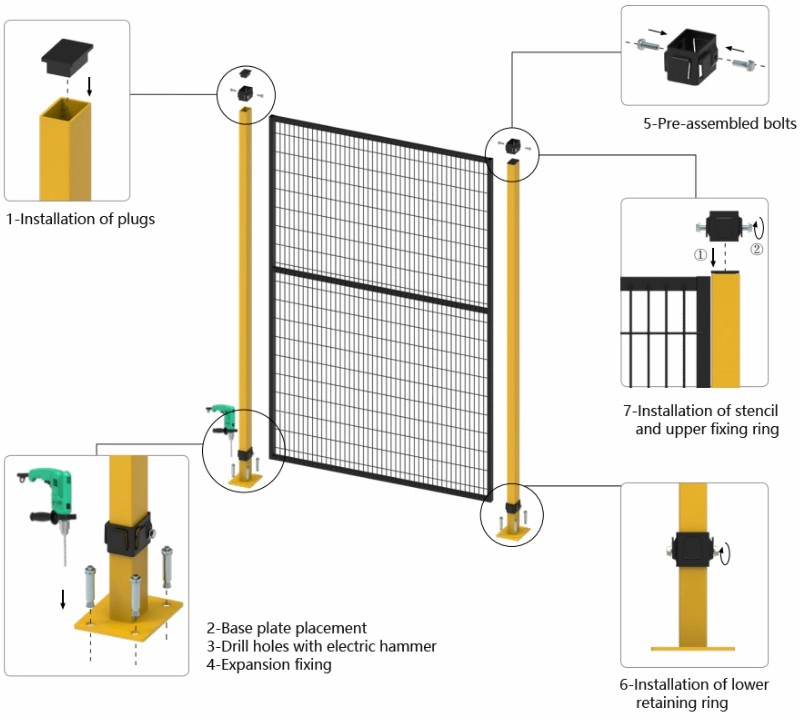
Site teams can evaluate the same installation logic across robot safety fencing, automation system isolation, conveyor line safety guarding, and dedicated manufacturing lines. The engineering reference shows standard heights of 2000 mm and 2200 mm, mesh wire options of 3.0 mm and 4.0 mm, yellow posts, upper and lower fixing rings, base plates, and expansion anchors. These details turn a general safety fence into a physical guarding solution that can be reviewed against the plant layout rather than interpreted as an informal barrier.
Interlocked access for maintenance and LOTO control
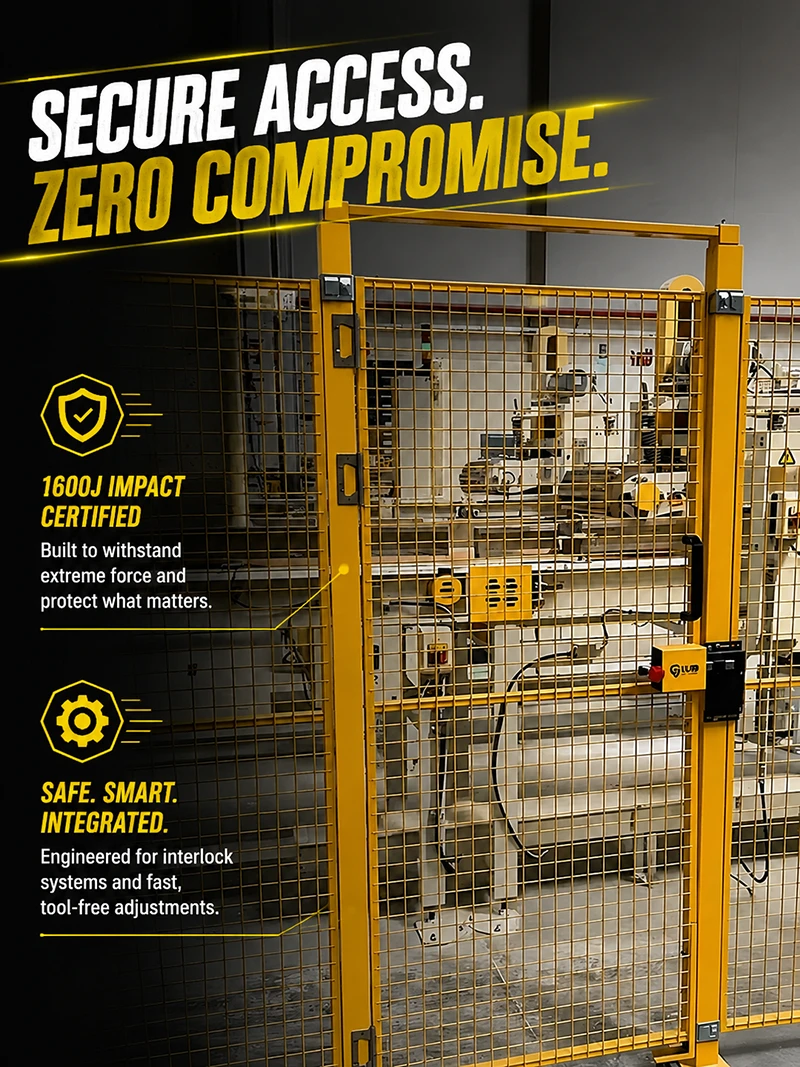
Compliance is not achieved by blocking access alone. Maintenance technicians need a controlled entry point, and the plant must define how the guard interacts with isolation procedures. A lockable machine safety gate can accept safety interlock devices such as Omron D4NL or Pizzato FS series components when specified for the application. The gate, latch, post, and surrounding mesh panel work as one safety guarding system, helping simplify LOTO procedures and reduce the risk of workplace accidents during service access.
Where the same safety standard can be deployed
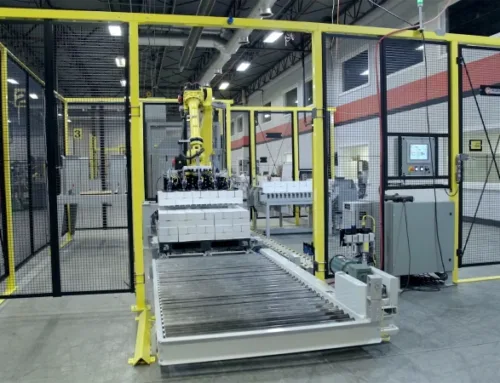
- Robot cell guarding: Enclose robot arms, control cabinets, and transfer equipment with a visible robot safety fence and controlled access gate.
- Automated material handling safety: Separate conveyors, palletizer safety guarding, forklift routes, and pedestrian lanes without losing layout visibility.
- Automotive assembly line safety: Apply machine perimeter guarding across welding shop safety zones, press shop safety fence layouts, and high-speed mechanical assembly machines.
- Warehouse and plant zoning: Use industrial perimeter guarding for equipment isolation, warehouse rack protection, and smart warehouse zoning where people and vehicles share space.
The result is a common physical language for global engineering teams: the same panel logic, gate interface, anchor method, yellow safety boundary, and inspection points can be carried from one facility to the next. That consistency helps prevent unexpected production line downtime, save engineering hours, and give corporate reviewers a clearer basis for OSHA and ISO compliance audits.
Build the audit file around the installed guard
For each project, align the layout drawing with the selected industrial safety fence panels, post spacing, mesh specification, gate type, interlock device, anchoring method, and inspection responsibility. This connects the documented requirement to visible equipment isolation on the shop floor and supports a repeatable safety fencing machine guarding standard across international sites.
Set one machine guarding standard across every site
Share your robot cell, conveyor, CNC, or production-line layout with our engineering team. We can help define a modular safety barrier and safety interlock installation plan aligned with your global OSHA and ISO review process.