EN
EN  DE
DE  RU
RU  PT
PT  JA
JA  ES
ES  IT
IT Cold Storage Pedestrian–Robot Separation
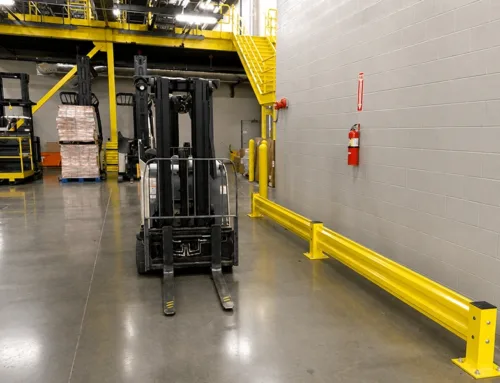
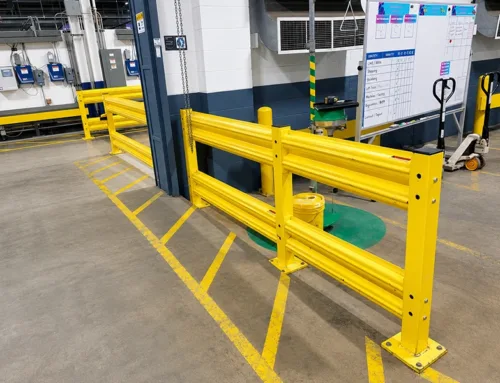
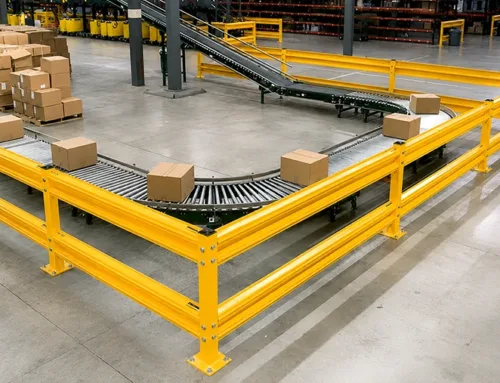
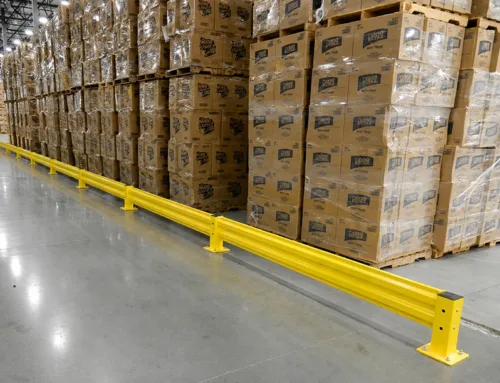
A Yellow Reflective Q235 Warehouse Guard Rail Stands in the Cold Storage Pick Aisle as the Passive Boundary Between ROLT Pallet Shuttles, Reach Trucks, and Pedestrian Pickers at –25 °C
On a –25 °C frozen pick aisle, robotic pallet movers, reach trucks, and seasonal pickers share the same floor plan. ROLT LiDAR scanners fade in freezer fog, blue-light pedestrian warnings wash into the picker’s hi-vis vest, and the new picker has only worked one shift. A bolted, 1,000 mm double-rail Q235 corrugated steel warehouse guard rail with yellow RAL 1003 powder coat, high-visibility reflective tape, and end-cap bollards becomes the physical boundary a robotic shuttle will not cross into the pedestrian lane — completing the UWB proximity and blue-light active warning stack on the layer that doesn’t depend on training, sensor battery, or the operator’s mood.
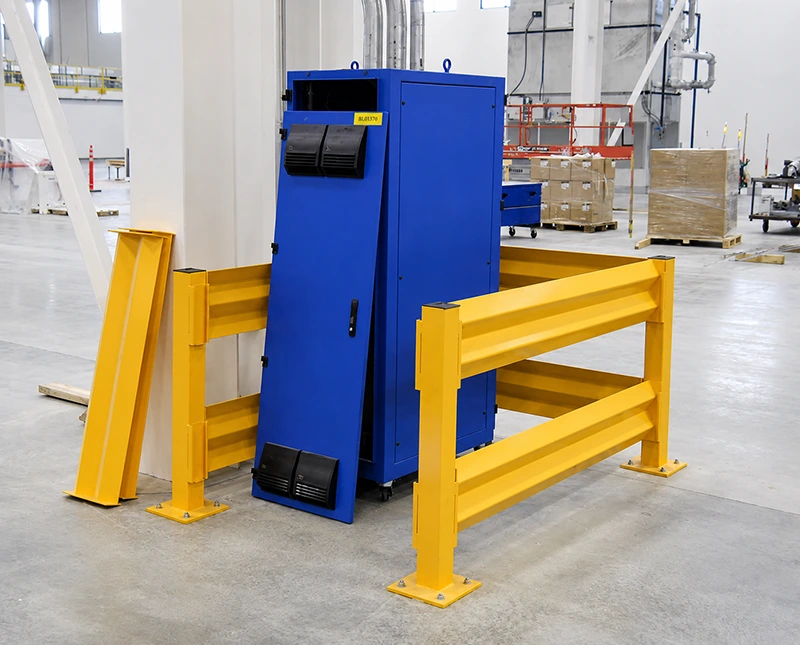
What the Cold Storage Pick-Aisle Boundary Is Specified Against
The pick aisle is where the three most collision-prone workers share floor space: a robotic pallet mover, a reach truck, and a seasonal picker. The rail is a bolted, 1,000 mm Q235 corrugated steel wall sized against a 3 tonne reach-truck side-load and a ROLT LiDAR scan on a fog-bound night shift.
| Parameter | Value |
|---|---|
| Operating temperature | –40 °C to +60 °C (cold storage freezer to ambient staging zone) |
| Standard panel height | 1,000 mm above finished floor |
| Corrugated beam profile | 2-rib / W-beam; 85 mm wave depth; 310 mm panel width |
| Plate thickness | 3 mm standard; 4 mm for higher-energy reach-truck lanes |
| Steel grade | Q235 carbon steel; hot-dip galvanized or yellow powder-coated finish |
| Post configuration | Square Q235 post; 1,500 mm standard post spacing; end-cap bollards at aisle ends |
| Base plate | Welded 160 × 160 × 16 mm base plate; 4 × M12 / M16 anchor positions |
| Reflective tape | Optional yellow-and-red reflective tape along upper rail for freezer-fog visibility |
| Surface finish | Powder-coated yellow RAL 1003 / 1023 safety coating; or hot-dip galvanized for washdown |
| Installation | Bolted to concrete via chemical anchors; no site welding, no hot-work permit |
| Module replacement | Lift-out 1,500 mm panels + 680–1,140 mm fillers for pick-aisle re-rail |
| Active-warning compatibility | Compatible with UWB proximity tags & blue-light pedestrian warning beacons |
Why the Yellow Reflective Q235 Warehouse Guard Rail Holds When Active Warnings Cut Out in Freezer Fog
ROLT LiDAR and Blue-Light Warnings Fail in Freezer Fog — the Rail Gives the Robot a Wall It Will Not Cross
On a –25 °C frozen pick aisle, a robotic low-level order picker — a ROLT pallet mover running on magnetic tape or QR-coded floor markers — reacts to anything in its lane with its on-board LiDAR safety scanner. Freezer fog, condensation, and rack-end shadows shrink that LiDAR range by 30–40 %, and a blue-light pedestrian beacon at the rack face washes into the picker’s hi-vis vest under LED freezer lighting. The bolted, double-rail Q235 corrugated steel warehouse guard rail lives below those active layers: a 1,000 mm physical wall the ROLT’s safety scanner reads as a hard stop on every cycle, regardless of fog, battery state, or how new the seasonal picker is. The 85 mm wave depth and W-beam geometry give the rail a continuous reflection surface in every direction so the robot’s planner module treats the rail as the aisle boundary even on a –30 °C night. End-cap bollards prevent the corner-cutting an unprotected cold-storage corner invites on a wet, defrost-cycle floor.
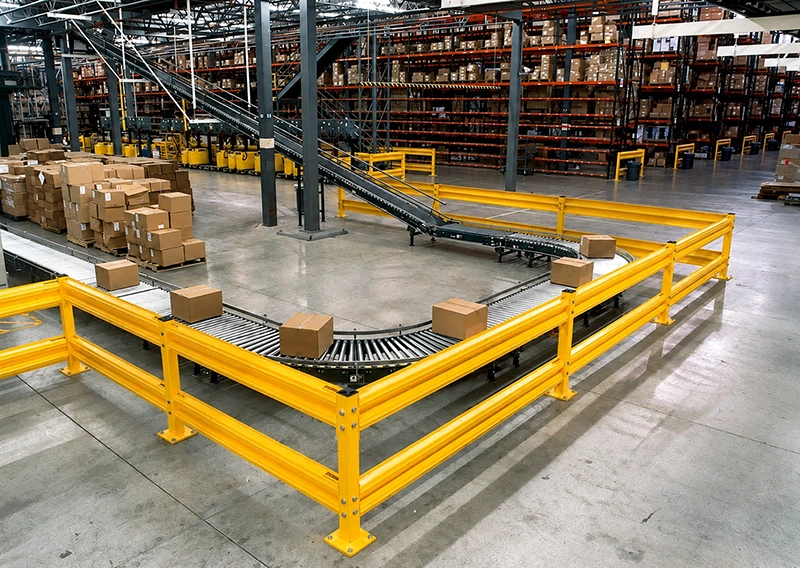
Temp Pickers Don’t Know the Robot’s Path — the Rail Paints the Boundary in a Color Both Human and Robot Can See
Cold storage pickers are the most seasonal labour in a DC — produce intake, peak freezable, holiday surge — and the same worker who hasn’t walked the aisle is the one whose first shift coincides with the first ROLT deployment. No onboarding video gets them past the moment the robot rolls within a metre of their boot. The yellow RAL 1003 powder-coat on the Q235 guard rail is the readable boundary: pedestrian lane = painted steel on your right, robot lane = open floor on your left. Reflective tape along the upper rail catches the robot’s LiDAR return at distance and the picker’s peripheral vision at the moment they step around a rack upright. End-cap bollards mark the aisle entry as pedestrian-controlled space. The rail converts an active, sensor-dependent protocol into a static, colour-dependent visual protocol that survives the language barrier, the night shift, and the picker who’s working their second shift ever.
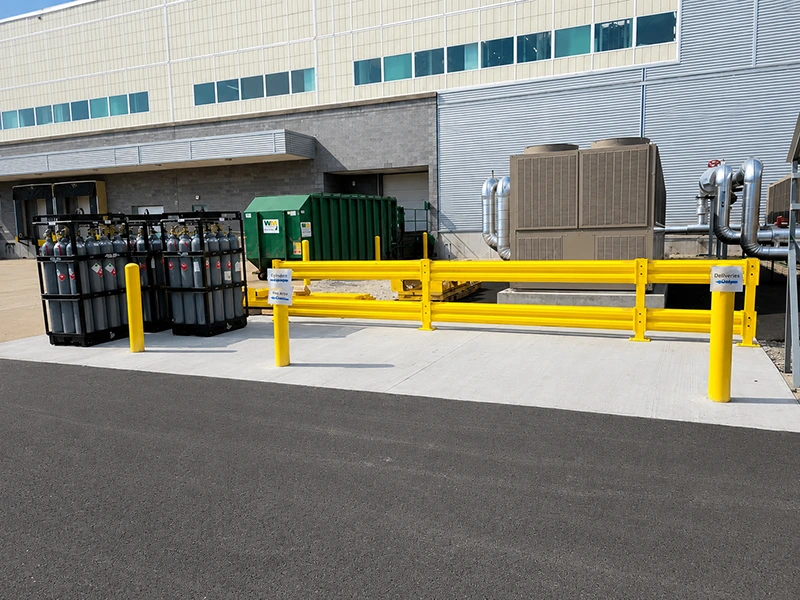
Pick Aisles Re-Draw Every Peak Season — Lift-Out Panels Re-Rail the Boundary Without Slab Re-Pour or Hot-Work Permit
A cold storage DC re-zones two to four times a year — produce in, holiday surge, frozen SKU change, ambient repack. The pick aisle lengthens by 4 metres here, shifts 600 mm there. Welded perimeter steel becomes scrap at the next re-zone, and the maintenance crew schedules a slab re-pour to re-rail. The modular Hsafety format — 1,500 mm standard panels plus 680–1,140 mm fillers — bolts through a 160 × 160 × 16 mm base plate into the insulated slab with chemical anchors. Re-rail in one shift: unbolt the existing run, drop in the new panels, torque down the anchor bolts. No site welding, no hot-work permit, no defrost pause on the freezer itself. The 4 mm Q235 plate option covers higher-energy reach-truck approaches; the hot-dip galvanized base plate handles the defrost washdown that pulls a painted rail out of service by year two. The new rail position becomes the new ROLT lane map and the new pedestrian lane — same spec, different coordinates.
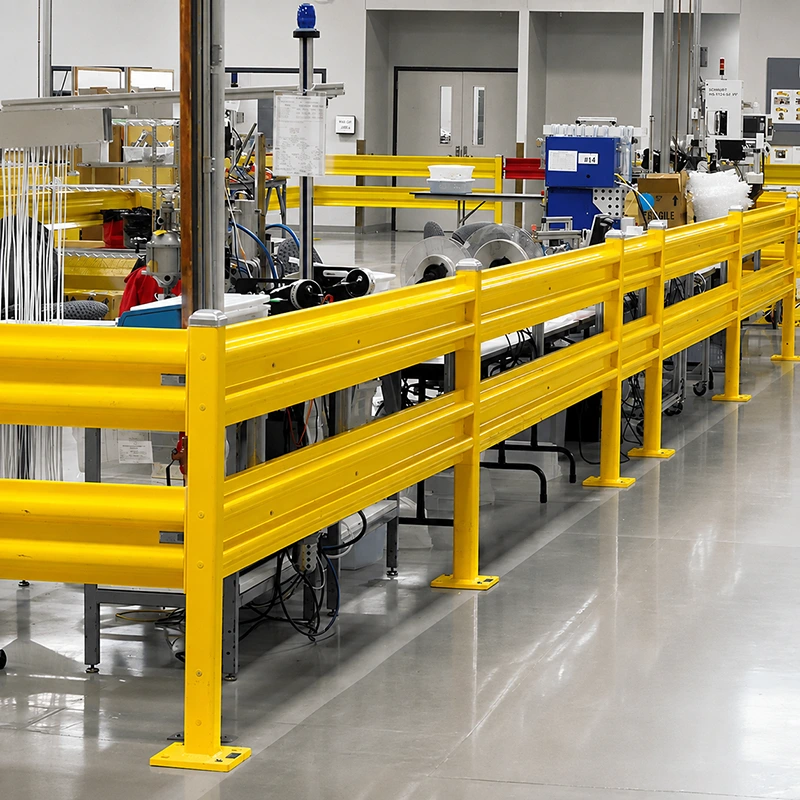
Where Else the Same Yellow Reflective Q235 Warehouse Guard Rail Pays for Itself
- Cold storage pick aisle between robotic pallet shuttles and pedestrian pickers
- Cold storage insulated sliding-door threshold between freezer and ambient staging
- Cold storage rack end on the order-picking face
- Refrigerant-line and evaporator boundary alongside the freezer corridor
- Cold storage electrical / control cabinet enclosure at the rack base
Each is a robot-or-truck compression point where active warnings degrade — fog, condensation, defrost splash, night shift, first-shift temp worker. Bolting the same double-rail Q235 warehouse guard rail into each standardises the cold storage EHS layer onto one spec the procurement team can amortise across every site and re-deploy when the aisle layout re-draws.
Download the Spec Sheet
The full spec — Q235 corrugated steel, 1,000 mm height, 3 mm / 4 mm plate, 85 mm wave depth, 1,500 mm post spacing, 160 × 160 × 16 mm base plate, optional reflective tape, RAL 1003 yellow powder coat or hot-dip galvanized finish, UWB / blue-light compatibility — is in the downloadable datasheet, with the chemical-anchor pattern and the lift-out re-rail layout.
Send Us the Cold Storage Pick-Aisle Plan View
Mark the pedestrian side and the robotic-shuttle side of each pick aisle. We’ll return a quoted rail layout — yellow reflective Q235 corrugated steel, base-plate anchor pattern, end-cap bollards, lift-out modular panels — so that on the new picker’s first shift, the pedestrian–robot boundary is a steel wall, not a sticker on the floor.