EN
EN  DE
DE  RU
RU  PT
PT  JA
JA  ES
ES  IT
IT CROSS-BORDER AUTOMATION PROJECTS / INDUSTRIAL SAFETY FENCING
Cross-Border Warehouse Rollouts: Why Mefence Frameless Safety Fence Keeps Installation Standards Consistent
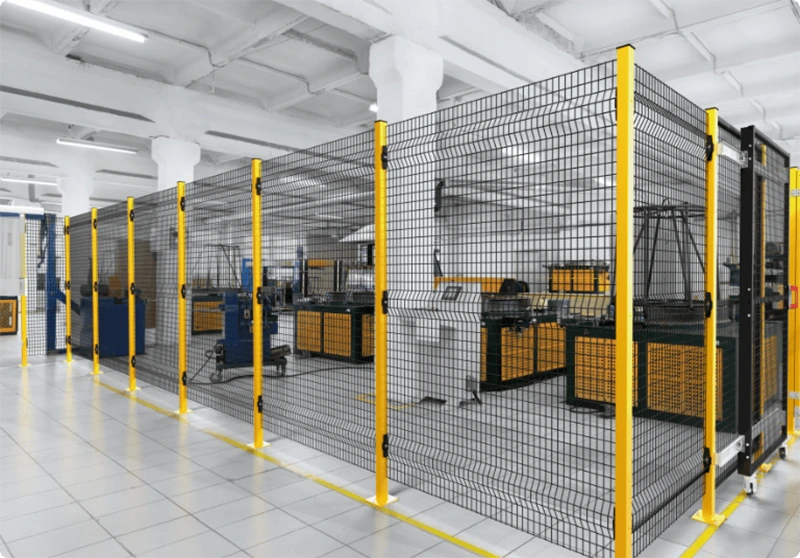
For global integrators building repeatable automation warehouses, Mefence industrial safety fencing replaces site-dependent welding with clip-fixed, on-site adaptable 3D welded mesh. The result is a consistent installation standard for warehouse zoning, pedestrian vehicle separation, and robot safety fence layouts across local teams.
Why Welding Creates Variation in Multi-Country Warehouse Projects
A global automation contractor can issue one headquarters drawing and still receive different results at each site. Welded square tube fence fabrication depends on local welder qualifications, fit-up accuracy, equipment, and inspection habits. A retrofit team may also have only a short installation window, while irregular foundations and late equipment changes make shop-fabricated framed fencing difficult to adjust. The result is rework, additional training, and uncertainty about whether the final machine guarding perimeter matches the approved layout.
| Project requirement | Mefence design response |
|---|---|
| Consistent installation by mixed-skill local crews | Plastic clip fixing and self-tapping screws remove the site welding step; the process can be taught from English technical documents and training. |
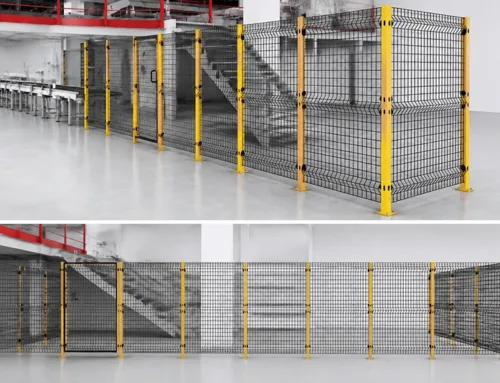
| Irregular dimensions or late layout changes | Frameless welded wire mesh supports on-site cutting, with panel widths from 200–1400 mm and heights from 200–3000 mm. |
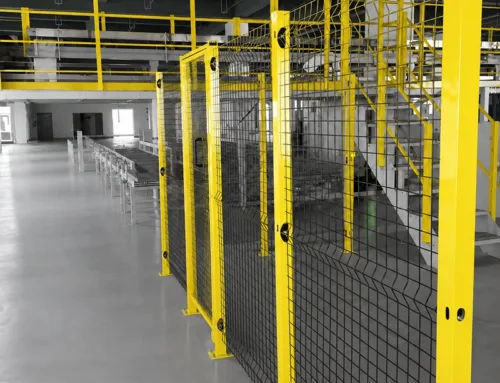
| Visible separation without a blind wall | Black mesh and yellow posts define the boundary while keeping equipment, AGV routes, and access points visible. |
| Cable routing around automated equipment | Multiple horizontal T-shaped ridges create usable routing space; the profile can also accept wood slat inserts where visual shielding is required. |
How Mefence Turns the Standard into a Repeatable Installation
1. Clip-fixed assembly, not local welding skill
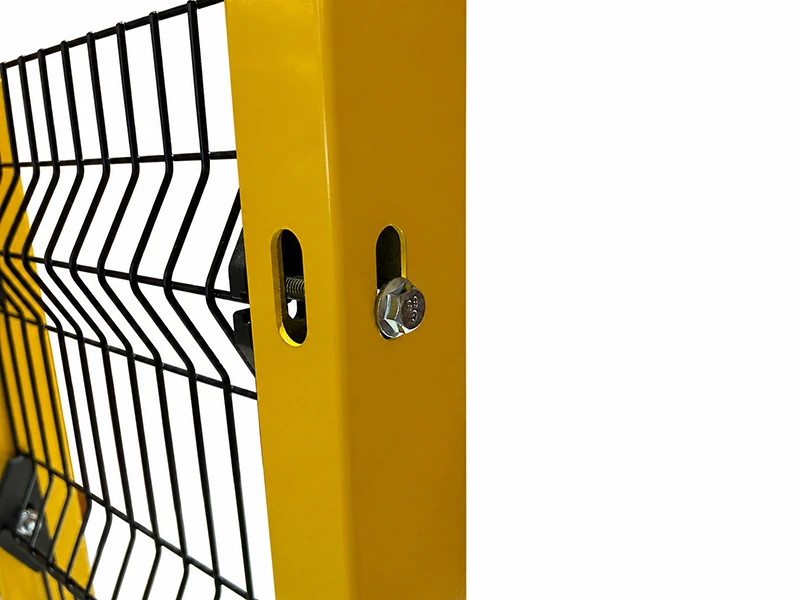
The connection method is the first control point. Mefence uses plastic clips and self-tapping screws to secure the welded mesh panel to the post. The installation crew follows the same sequence instead of measuring, tacking, welding, and grinding each joint. The documented installation method describes one-person, three-step assembly and a 50%+ reduction in installation time. That lowers dependence on whether a local contractor has an experienced welder available.
2. Frameless 3D mesh adapts to the actual site
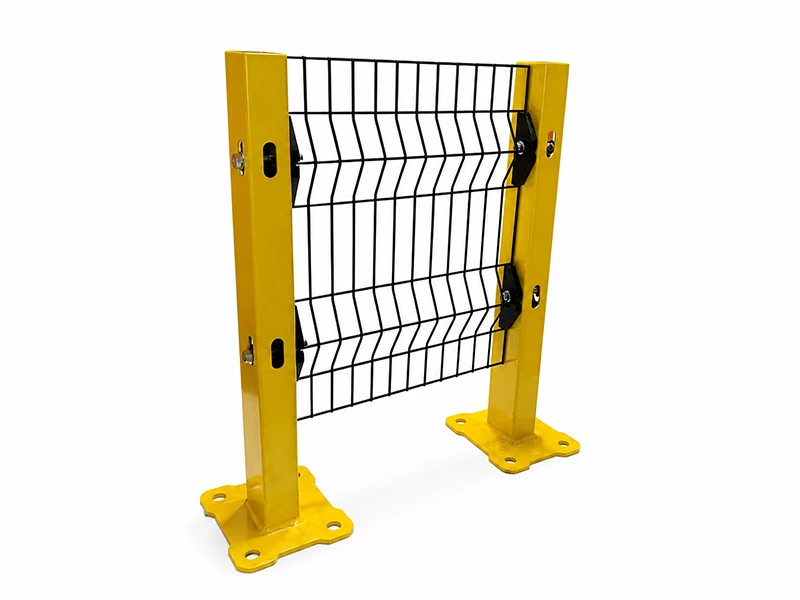
The folded mesh panel uses a frameless design with repeated T-shaped ridges rather than a perimeter tube frame. This keeps the system suitable for area demarcation, workshop isolation, and automated equipment guarding where dimensions can move during commissioning. Q235 carbon steel wire, 3 mm or 4 mm wire diameter, and 20×100 mm or 50×50 mm mesh openings provide a defined technical basis for procurement. The standard yellow-black safety fence finish also makes the boundary easy to read in a busy warehouse.
3. Base-plate fixing supports local floor conditions
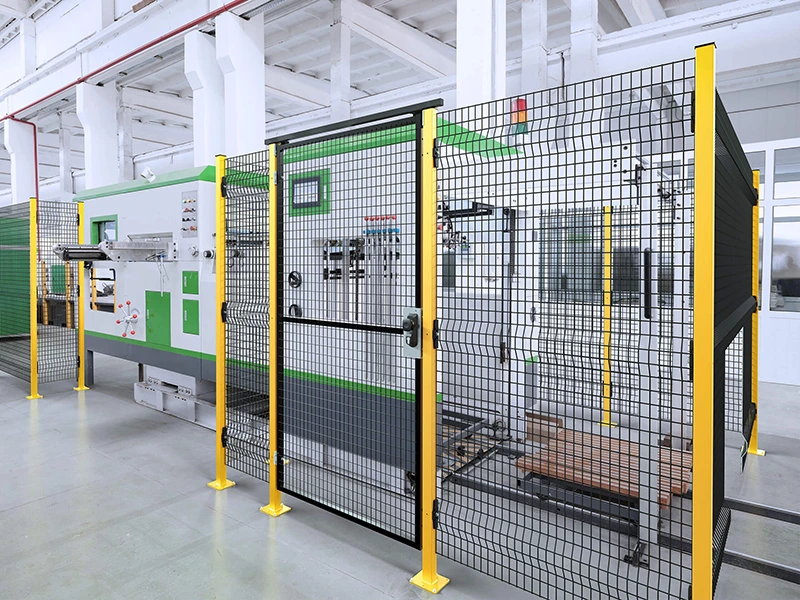
Standard post options are 40×60 mm and 60×60 mm. Base plate posts and expansion bolts provide a defined floor-fixing route, while slotted post holes help crews align connections during installation. The 140 mm ground clearance leaves a controlled gap below the panel for practical cleaning and floor transitions. In a warehouse, the same modular logic can form forklift path barriers, AGV lane separation, access gates, or a robot safety fence around automated equipment without fabricating a new framed assembly for every zone.
Where the Same Standard Works Across Sites
- Warehouse zoning: mark storage areas, work aisles, and controlled access points without turning the layout into a permanent wall.
- Pedestrian vehicle separation: define forklift paths and AGV/AMR lanes so traffic flow is visible and crossings are intentional.
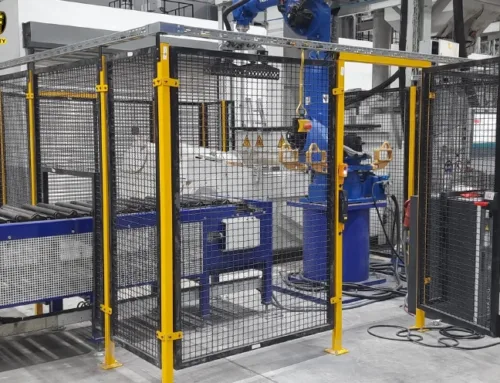
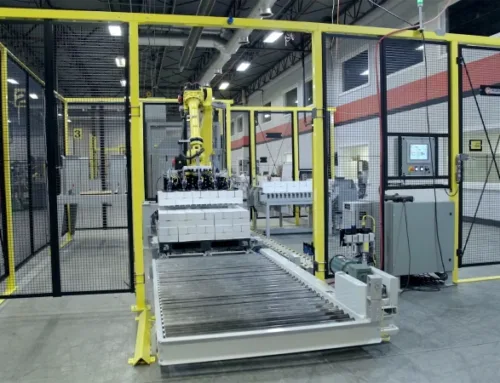
- Robot workstation enclosure: create a modular machine guarding perimeter around automated equipment and conveyor sections.
- Retrofit and expansion: cut panels on site, reuse modules, and reconfigure the fence when equipment or aisle dimensions change.
- Cable management fence: use the raised 3D profile for line-side routing and add wood slat inserts when visual shielding is needed.
Mefence is intended for non-high-impact demarcation, traffic control, and machine-guarding perimeters. It is not a certified anti-collision barrier. Where direct impact containment is the design requirement, the higher-spec Machine Fence line should be evaluated instead.
What the Integrator Can Standardize
A repeatable cross-border package should define the panel range, 3 mm or 4 mm wire diameter, mesh opening, 40×60 mm or 60×60 mm post selection, base-plate fixing, clip sequence, access-gate position, and any cable or wood-slat requirement. Mefence gives the engineering team those fixed points while leaving room for on-site cutting and modular reconfiguration. Pair the English installation document with a short crew briefing, and quality consistency is controlled by the structure and method—not by the availability of a particular local welding team.
Build the Next Warehouse to the Same Installation Standard
Share the site dimensions, traffic-flow plan, equipment perimeter, and local floor conditions. SGF can help map Mefence frameless safety fence modules, gate access, and clip-fixed installation details for a repeatable multi-country rollout.