EN
EN  DE
DE  RU
RU  PT
PT  JA
JA  ES
ES  IT
IT Industrial Automation Safety
Build a Clear, Configurable Boundary Around Automated Equipment
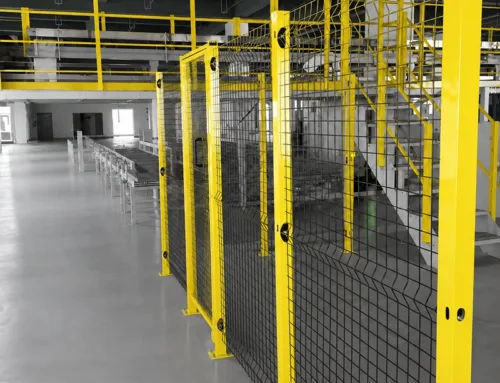
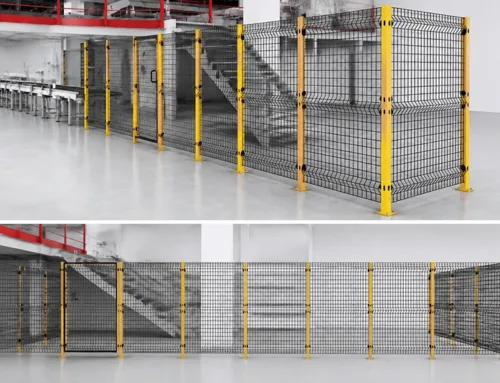
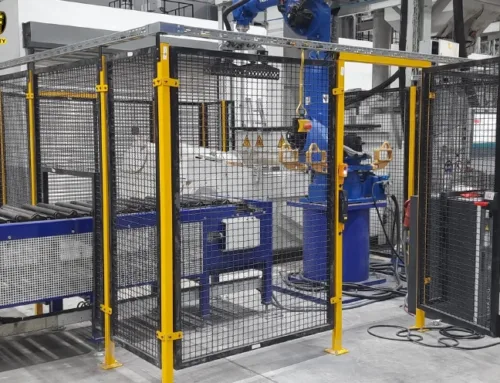
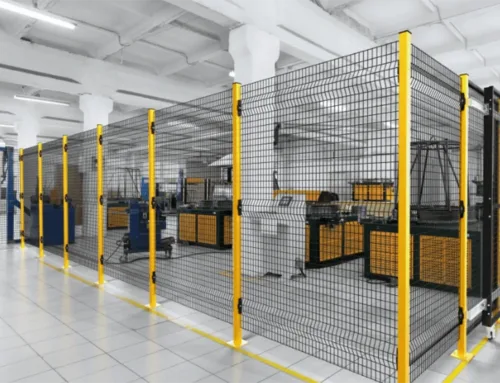
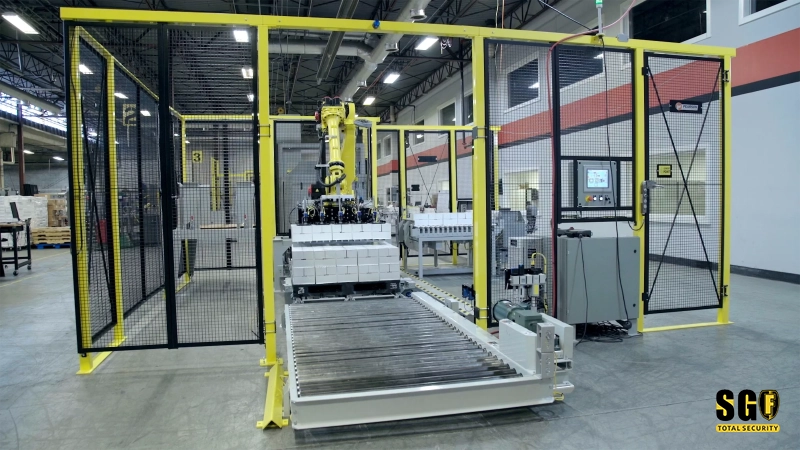
Mdfence combines Q235 carbon steel posts, framed wire mesh panels, configurable access doors, and safety-switch mounting interfaces to support machine guarding around robots, conveyors, CNC equipment, and automated production lines.
Mdfence Technical Reference
The following values represent recurring standard or project configurations. Final selection should be confirmed against the hazard assessment, layout, applicable standards, door requirements, and site conditions.
| Parameter | Reference configuration |
|---|---|
| Structural material | Q235 carbon structural steel for common posts and load-bearing frames |
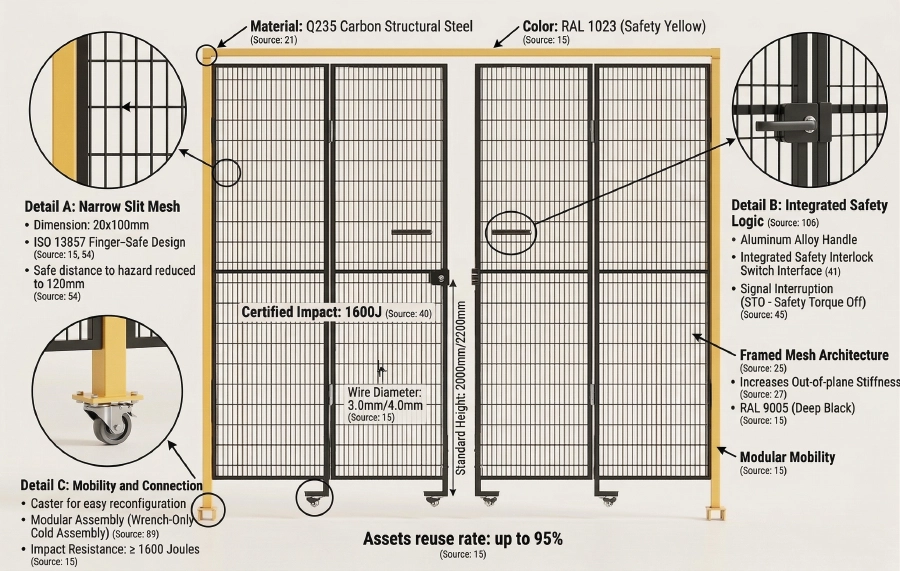
| Framed mesh panel | Typical 20 x 30 x 1.5 mm tubular steel frame with 3.0 mm or 4.0 mm welded wire |
| Mesh opening | Common 20 x 100 mm opening; alternative project configurations require separate safety-distance review |
| Post sections | Common 40 x 60 mm or 60 x 60 mm square tube posts |
| Typical heights | Common 2,000 mm and 2,200 mm; other heights can be project-specific |
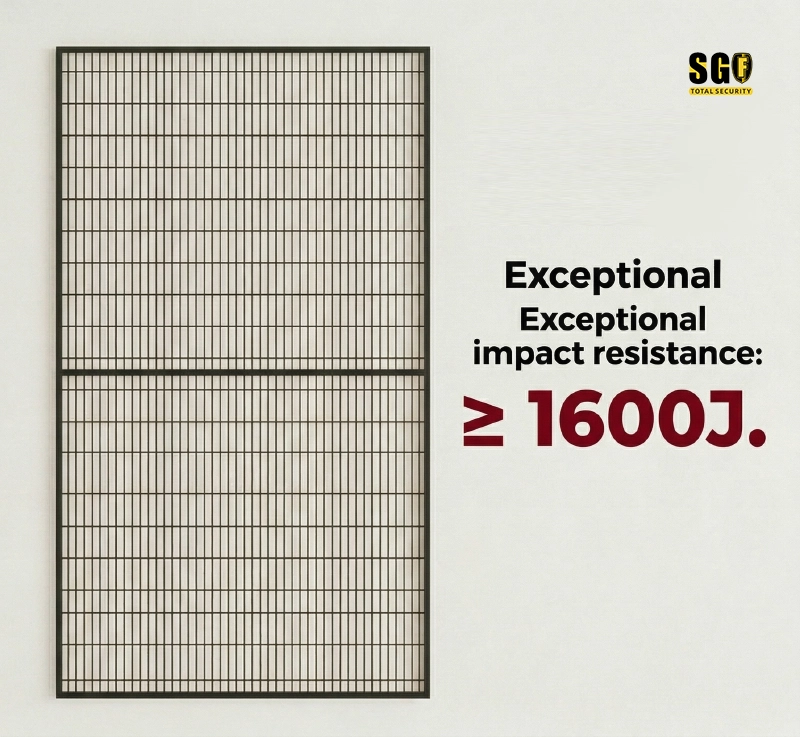
| Impact reference | A documented standard-system indicator of at least 1,600 J; applicability must be confirmed for the selected configuration |
| Surface treatment | Electrostatic powder coating; coating performance and environmental suitability should be confirmed for each application |
| Ground anchoring | Welded base plates with project-specified M10 or equivalent expansion anchors for concrete floors |
Three Engineering Details That Matter in Machine Guarding
Framed Panels Transfer Loads More Predictably
The rectangular tubular frame gives each panel a defined load path. Welded wire transfers point impact into the frame, while connection clips and steel posts carry the load toward the anchored base. This is more controlled than relying on a flexible, frameless mesh sheet. The documented 1,600 J reference applies only where the tested or specified configuration matches the project design.
Modular Connections Support Maintenance and Reconfiguration
Panels attach to posts with steel connection clips and M8 fasteners, allowing damaged sections to be removed with standard tools. The system is assembled without on-site welding between panels and posts, although concrete drilling for anchors may still be required. This approach supports line changes, equipment access, and future extensions without treating the guard as permanent construction waste.
Access Hardware Can Be Matched to the Safety Circuit
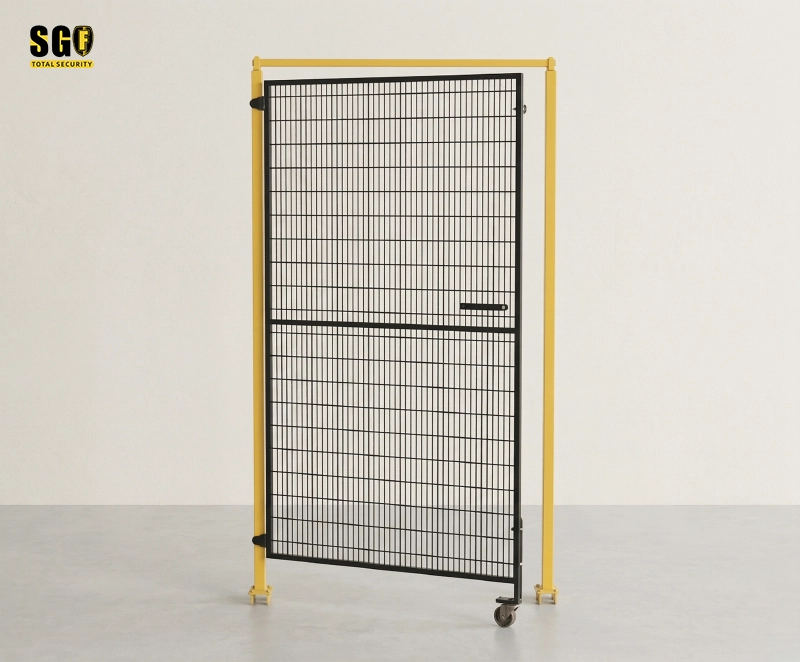
Hinged doors, sliding gates, folding doors, padlock hasps, and mounting carriers can be selected according to traffic and control requirements. Mdfence can provide mounting interfaces for devices such as Omron D4NL and Pizzato FS series switches. The switch, PLC, and safety circuit remain project-level electrical responsibilities; the fence provides the stable physical access boundary and alignment surface.
Where Mdfence Fits
- Robot cell guarding for six-axis robots, control cabinets, tooling, and workstations
- Conveyor line safety guarding with tunnel-style openings or light-curtain interfaces
- CNC machine guards and metalworking equipment isolation where cutting fluid and splash exposure must be considered
- Automated packaging, palletizing, and material-handling zones requiring controlled personnel access
- Smart warehouse equipment zones, nonconforming-product areas, and forklift-adjacent boundaries
- Flexible manufacturing lines that may need to be dismantled, extended, or repositioned
For each application, the mesh opening, guard height, door type, access route, impact exposure, safety-switch arrangement, and anchoring method should be selected through a documented risk assessment. A 20 x 100 mm mesh and a 120 mm installation distance may be suitable as a project reference, but neither value should be applied without checking the hazard geometry and applicable safety-distance requirements.
Get the Mdfence Specification Package
Request the current product drawings, 3D layout information, door and lock-interface options, finish details, and project BOM support for your machine guarding application.
Plan the Guard Before the Equipment Arrives
Share your equipment footprint, hazard zones, conveyor openings, access frequency, door width, floor condition, and preferred safety-switch arrangement. SGF can help align the Mdfence configuration with the physical layout and project requirements before fabrication.