EN
EN  DE
DE  RU
RU  PT
PT  JA
JA  ES
ES  IT
IT ROI-led safety planning for EMS and general manufacturing
Low-Margin EMS ROI: Mefence Industrial Safety Fencing for AGV Lane Separation
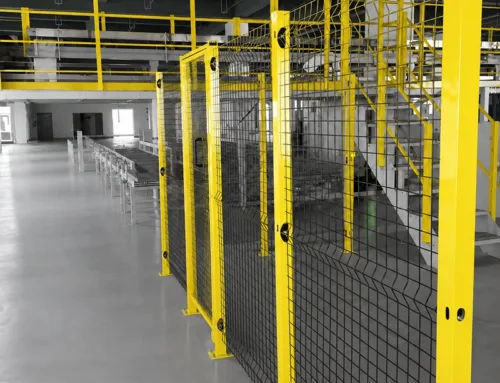
When every facility purchase must earn its place in the budget, Mefence provides a frameless safety fence for warehouse zoning, pedestrian vehicle separation, and non-high-impact machine guarding. Factory-direct pricing of about $10–32 per meter can cover roughly 3–5 times the area of a $105–213-per-meter European or American branded system, while keeping the layout visible, modular, and quick to install.
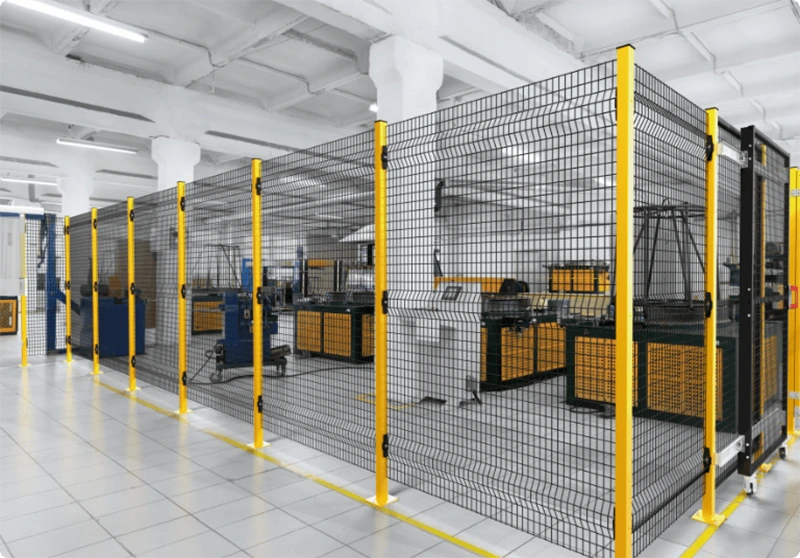
Where the ROI Case Starts: Demarcation, Not Over-Specification
EMS, contract manufacturing, and general manufacturing plants often need a visible boundary around AGV routes, forklifts, robot workstations, storage areas, or retrofit zones. The old choices are usually a welded square-tube fence, a traditional framed fence, chain link, or temporary barrier tape. Welding and custom fabrication consume installation time; framed systems are harder to adapt when equipment moves; tape and rope do not create a durable workplace safety barrier. The result is a facility that either spends too much on every meter or postpones area demarcation altogether.
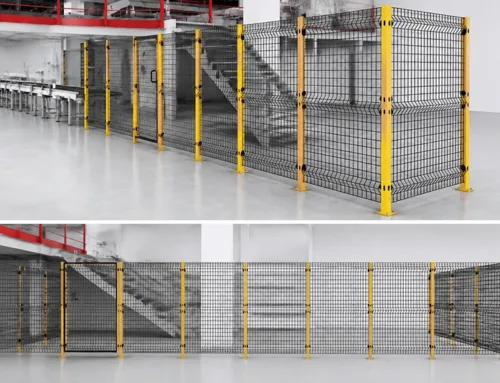
Mefence is designed for this specific middle ground. It is a frameless 3D safety fence made from welded wire mesh for area separation and traffic control, not a certified anti-collision guard. Where a project requires direct impact containment, the higher-spec Machine Fence line is the appropriate route. For ordinary pedestrian vehicle separation and hazard zone separation, buying the right level of protection is the foundation of a defensible ROI.
| Mefence item | Documented specification or planning value |
|---|---|
| Material and finish | Q235 carbon steel with electrostatic powder coating; standard yellow and black safety fence, with custom colors available |
| Mesh and panel range | 3 mm or 4 mm wire; 20×100 mm or 50×50 mm mesh opening; panel width 200–1400 mm and height 200–3000 mm |
| Posts and clearance | 40×60 mm or 60×60 mm posts; 140 mm ground clearance |
| Installation | Plastic clip and self-tapping screw connection, with base-plate posts and expansion-bolt floor fixing options |
| Layout adaptation | On-site cutting, modular reuse, and reconfiguration for irregular dimensions or relocated equipment |
How the Frameless Fence Converts Budget into Usable Safety
1. Enclose the equipment without blocking access flow
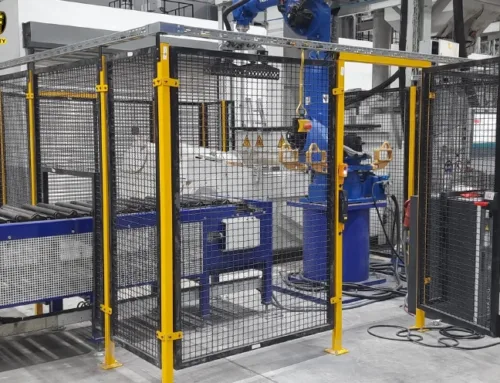
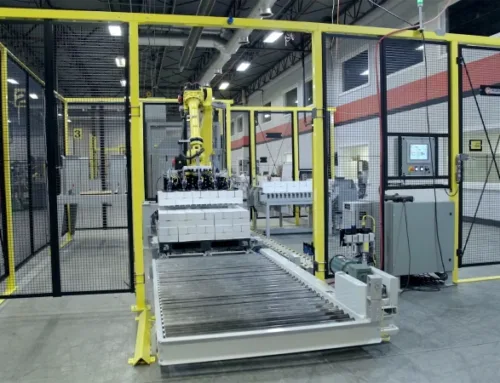
A robot safety fence should show where the automated equipment guarding zone begins, while still allowing operators and maintenance teams to understand the access point. The black welded mesh and yellow posts make the boundary readable. A single gate can define controlled entry instead of leaving staff to cross an unmarked robot cell or conveyor edge. For a non-high-impact perimeter, that is a more useful intervention than building a solid wall around every machine.
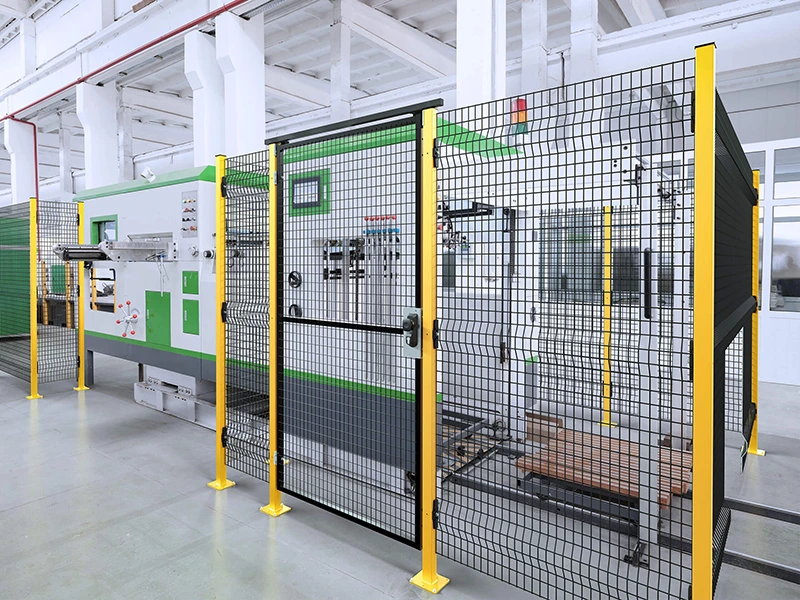
2. Install around real factory dimensions, not idealized drawings
Retrofit projects rarely provide a perfectly regular footprint. The Mefence frameless design removes the perimeter frame and uses a 3D welded mesh panel with clip fixing. The slotted post connection helps position panels during assembly, while on-site cutting accommodates corners, short returns, and equipment relocation. The documented installation method is one-person, three-step assembly with 50%+ installation-time savings. That reduces welding work, contractor hours, and the cost of reopening a production area.
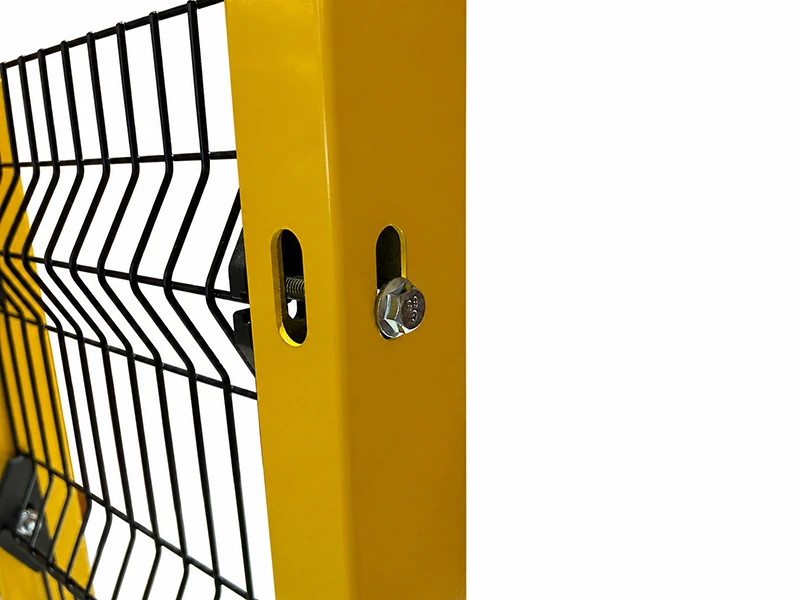
3. Use the 3D profile for cable management and future changes
The horizontal T-shaped ridges in the bending fence are functional space, not decoration. Cables can be routed through the raised mesh profile rather than hanging outside the fence, and wood slat inserts can provide visual shielding where a work area needs privacy. A modular reconfigurable fence can therefore support AGV lane separation, workshop isolation, and line-side cable management in the same project. Its slim profile also helps maximize floor space where aisles and turning paths are already tight.
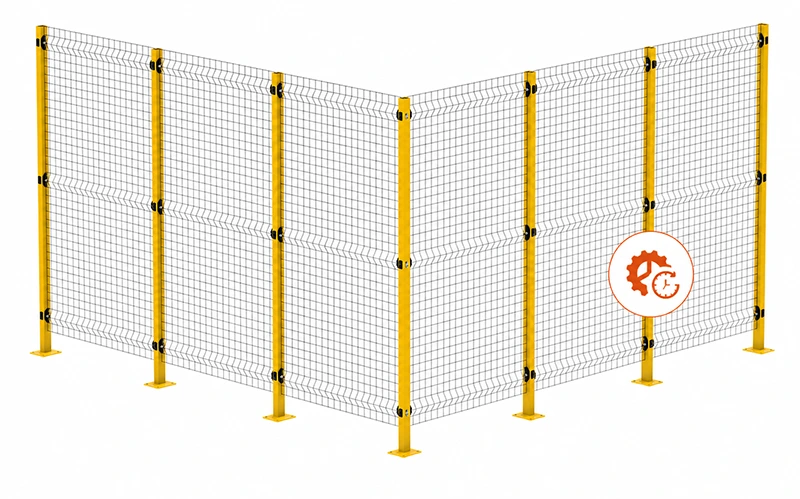
Applications That Make the Cost Comparison Practical
- Warehouse zoning: separate storage areas, tool cribs, and forklift paths without turning the whole facility into a fixed construction project.
- Pedestrian vehicle separation: define walking routes and AGV/AMR lanes so traffic flow planning is visible at floor level.
- Automated equipment guarding: create a clear perimeter around robot workstations, conveyors, and line-side machinery where direct impact containment is not the design requirement.
- Workshop isolation: use base-plate posts and expansion bolts for a quick retrofit partition, then relocate or reuse modules when the layout changes.
At approximately $10–32 per meter factory-direct, the purchasing team can compare the complete installed boundary rather than the unit price alone. Against the stated $105–213-per-meter range for European and American branded fencing, the same capital budget can cover substantially more area. The correct comparison is not “cheap fence versus premium fence”; it is “right-sized demarcation for ordinary risk, with Machine Fence reserved for high-impact risk.”
Specify the Fence Before Requesting a Quote
Send the aisle or equipment perimeter dimensions, required panel height, mesh opening, wire diameter, floor condition, gate positions, and any cable-routing or visual-shielding needs. The Mefence range supports 20×100 mm or 50×50 mm openings, 3 mm or 4 mm wire, 200–1400 mm panel widths, and 200–3000 mm panel heights. This information lets the supplier separate pedestrian-vehicle separation from machine guarding requirements and avoid paying for impact performance that the area does not need.
Build More Usable Safety Area from the Same Facility Budget
Mefence gives low-margin manufacturers a practical route to industrial safety fencing: visible yellow-black boundaries, Q235 powder-coated steel, cold-work clip fixing, on-site cutting, and reusable modules. Share your floor plan and target zones with SGF to compare a Mefence demarcation layout with a higher-spec Machine Fence where impact risk requires it.