EN
EN  DE
DE  RU
RU  PT
PT  JA
JA  ES
ES  IT
IT Mefence | Industrial Safety Fencing for Automated Warehouses
Robot Warehouse Risk Control: Make Industrial Safety Fencing Auditable
In an automated fulfillment center, pedestrian-vehicle separation is more than a layout decision. Mefence industrial safety fencing creates visible warehouse zoning around AGV and forklift routes, supports access control and monitoring, and can be reconfigured as safety audits evolve—while staying clear about where a machine fence or fire-rated system is required.
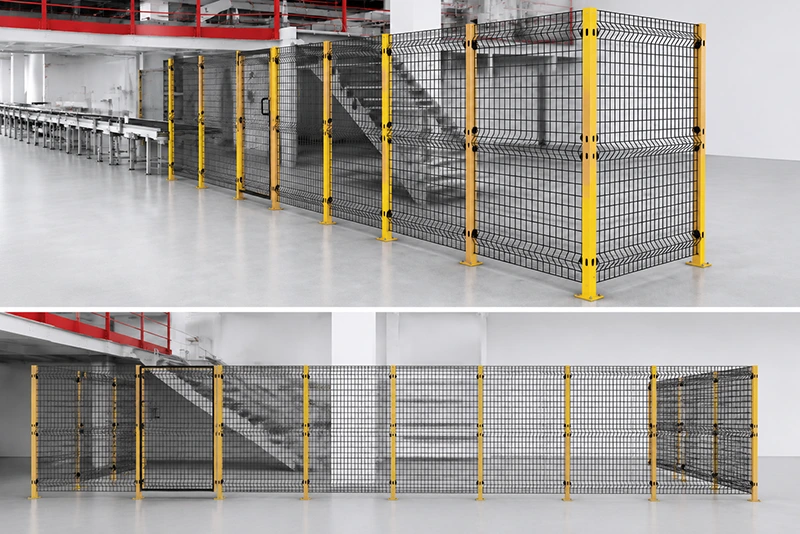
What an auditor can see, verify, and trace
A safety barrier is useful in an audit only when its purpose is visible and its installation can be explained. The Mefence configuration below links physical evidence to common warehouse control points instead of presenting a generic machine guarding checklist.
| Mefence selection point | How it supports warehouse control |
|---|---|
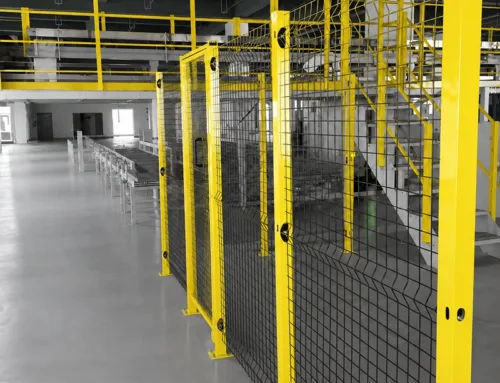
| Yellow-black safety fence appearance | High-visibility area demarcation helps employees identify restricted zones, pedestrian paths, and forklift path barriers during routine operations. |
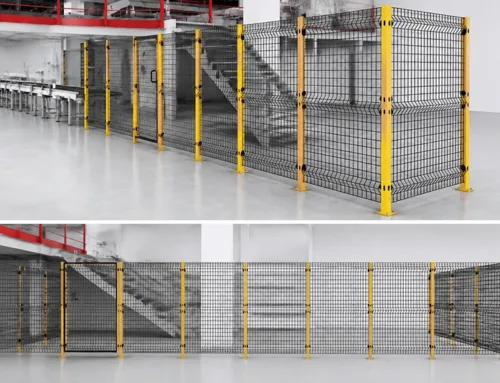
| 3D welded mesh and frameless design | The visible wire mesh supports line-of-sight checks around automated equipment without adding a bulky frame border. |
| Wire diameter 3 mm or 4 mm; mesh opening 20×100 or 50×50 | The project can be specified around the required visibility and separation objective rather than defaulting to barrier tape or rope barriers. |
| Panel width 200–1400 mm; height 200–3000 mm | Modular dimensions help fit corners, aisle edges, equipment perimeters, and changing warehouse zoning plans. |
| 40×60 or 60×60 posts with base plates | Bolt-down positioning provides a documented installation point and makes a future relocation or layout revision practical. |
Why Mefence fits a risk-controlled robot warehouse
1. Replace temporary warnings with defined separation
Barrier tape, rope barriers, and ad hoc welded square tube fences often communicate a warning without defining a repeatable route. Mefence uses black welded wire mesh panels and yellow steel posts to create a clear workplace safety barrier. That visual boundary helps separate pedestrians from AGV and forklift traffic, protect equipment from routine contact, and prevent unauthorized access to a hazard zone.
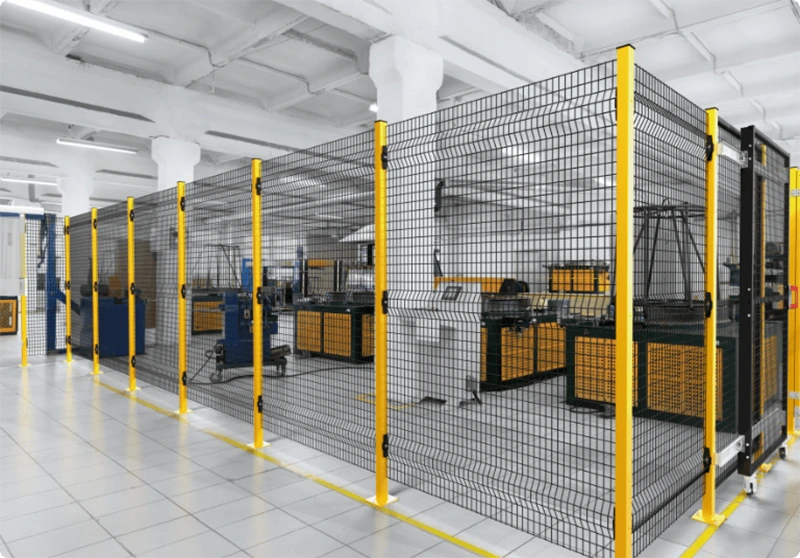
2. Use the structure as installation evidence
The product uses a Q235 carbon steel wire mesh panel with powder-coated steel components. Clip fixing, self-tapping screws, expansion bolts, and base plate posts give the installation team identifiable connection points. The frameless safety fence can also be cut on site where the layout requires adjustment, reducing dependence on welding and supporting fast area setup. The result is a modular, relocatable barrier that can be recorded, inspected, and reconfigured without rebuilding the whole zone.
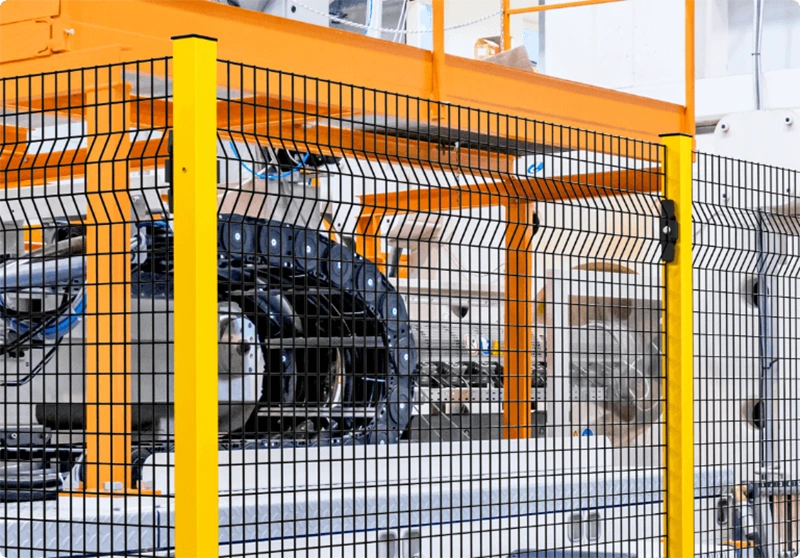
3. Connect access points with monitoring and control
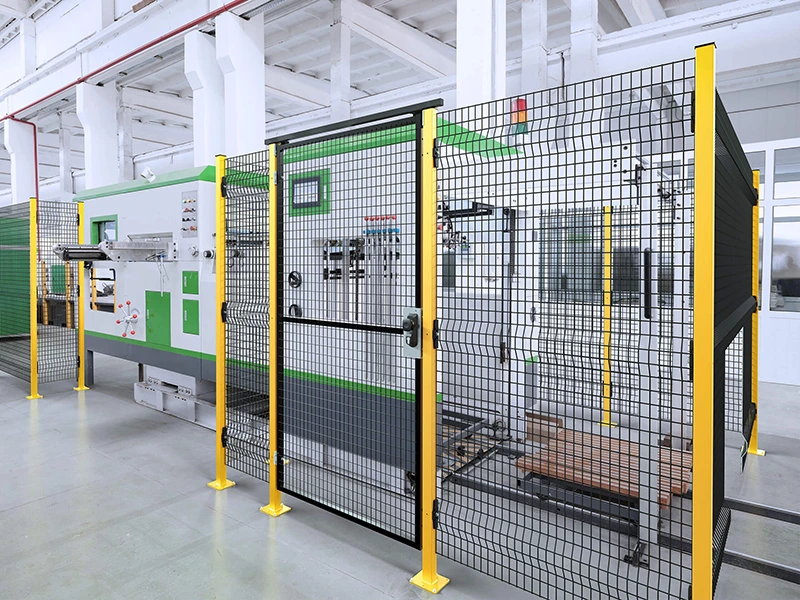
A robot cell safety layout is incomplete if people can enter through an uncontrolled opening or if cables cross the intended route. Mefence can be configured with a door, lock, and cable management fence details so access points are easier to identify and inspection records can refer to a physical gate location. The mesh remains visually open for patrols and camera views, while the boundary gives operations teams a stable reference for access rules and emergency-route reviews.
Where this industrial safety fencing is a practical fit
- AGV and forklift safety: pedestrian vehicle separation, forklift path barriers, and traffic flow planning around fulfillment aisles.
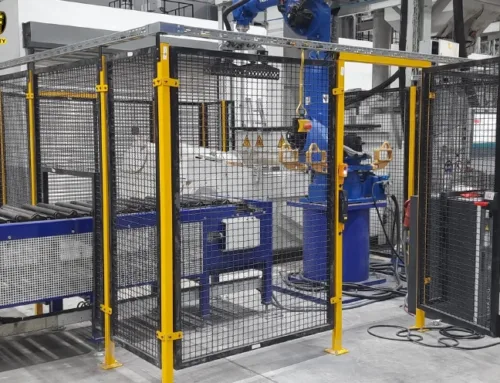
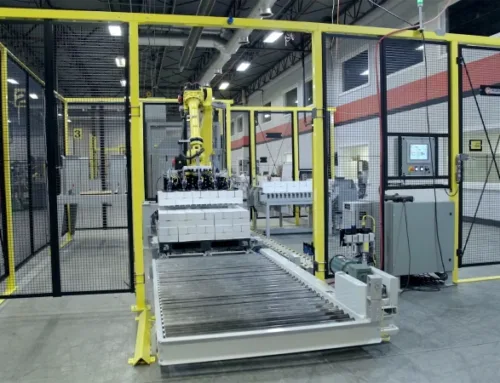
- Automated equipment: robotic workstation enclosure, automated equipment guarding, conveyor belt isolation, and machine guarding where the primary need is area demarcation.
- Warehouse zoning: warehouse partition, storage area separation, tool crib enclosure, and material segregation with a visible modular boundary.
- Changeable operations: temporary partition, workshop isolation, and site demarcation where a relocatable reusable fence is preferable to permanent welded construction.
Mefence is intended for regional division and personnel guidance. It does not replace a certified Machine Fence for high-impact guarding, nor does it replace a fire-rated or fire-compartment system. Defining that boundary early makes procurement, safety review, and insurance communication more precise.
Specify the evidence before you specify the fence
Start with the warehouse map: mark AGV lanes, forklift paths, pedestrian crossings, access gates, monitoring points, cable routes, and emergency clearances. Then confirm panel height, mesh opening, wire diameter, post section, base fixing, color, and whether on-site cutting is needed. This creates a traceable selection record tied to the actual risk-control layout—not a product name alone.
Turn warehouse zoning into a reviewable safety record
Share your robot cell, AGV lane, or forklift separation plan with SGF. We can help distinguish where Mefence industrial safety fencing fits and where a higher-impact Machine Fence or separate fire-control system is the correct specification.