EN
 DE
 RU
 PT
 JA
 ES
 IT
Machine guards create a safer working environment

Preventing injuries and accidents
Machine guards act as a physical barrier to protect workers from moving parts, rotating machinery, and other dangerous components. They are designed to prevent materials from accidental contact, entanglement, or ejection, thereby reducing the risk of serious injury or even death. By providing a protective barrier, machine guards minimize the possibility of accidents caused by human error or equipment failure.
Restricted access to hazardous areas
There are certain areas in industrial environments where risks are inherent, such as equipment maintenance areas or areas where machinery is operated. Machine guards help to limit access to these hazardous areas by ensuring that only authorized personnel with the necessary training and protective equipment are allowed to enter. By preventing unauthorized access, machine guards significantly reduce the likelihood of accidents or injuries caused by people who are unfamiliar with the equipment or lack proper safety knowledge.
Compliance with safety regulations
Industrial environments are governed by strict safety regulations and standards. Machine guards play a vital role in meeting these compliance requirements. Regulators mandate the use of machine guards to reduce risk and protect workers. By implementing appropriate machine-guarding measures, organizations demonstrate their commitment to creating a safe working environment and avoiding potential legal consequences or penalties.
Promoting a culture of safety
Machine guards not only protect workers physically, they also help to foster a culture of safety awareness within the organization. When employees witness the implementation and enforcement of safety measures such as machine guarding, the importance of following safety protocols is emphasized. This, in turn, encourages a mindset of vigilance and responsibility, allowing individuals to actively prioritize safety in their daily work practices.
Conclusion
In an industrial environment, the safety of workers is of paramount importance. Protecting workers from potential injury and preventing access to hazardous areas are key aspects of maintaining a safe working environment. Machine guards help to enhance the safety of industrial environments. Preventing injuries and accidents, limiting access to hazardous areas, complying with safety regulations, and promoting a culture of safety play a vital role in minimizing risk and creating a safer workplace.
Black-Ice Skid Between 23:00 and 05:00 No Operator Reports: Reading a 4 mm Q235 Warehouse Guard Rail with a 160×160×16 mm Base Plate the Next Morning
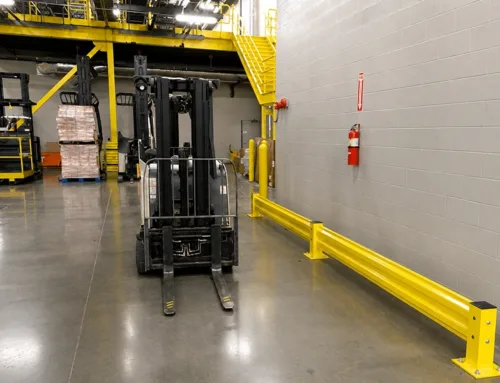
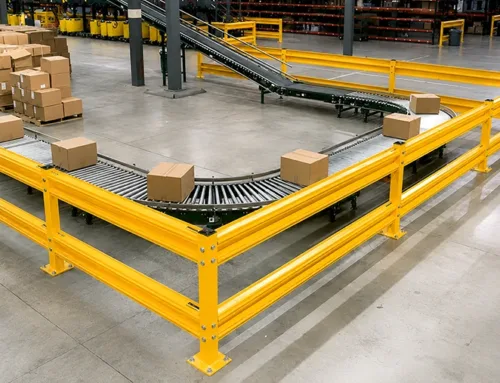
On a −6 °C ambient dock apron between 23:00 and 05:00, a counter-balanced forklift skids 1.2 m past the floor-mark, finds the rail instead of the rack, and walks away without filing a near-miss entry. A 4 mm Q235 corrugated steel warehouse guard rail with a custom 160×160×16 mm base plate is the only forensic read the 5 a.m. EHS walk-around has on what actually happened.
Frozen Loading Bay Floors and Skid-Out Forklifts: Heavy Duty Warehouse Guard Rails as the Last Physical Line of Defense for Racks, Columns, and Precision Equipment
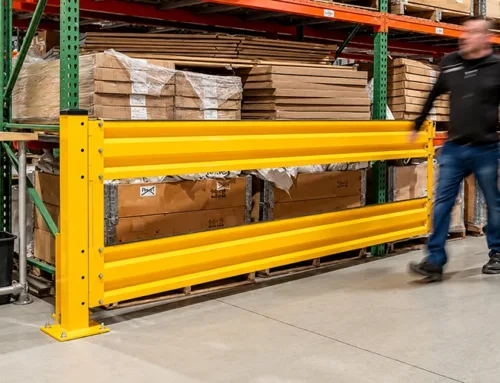
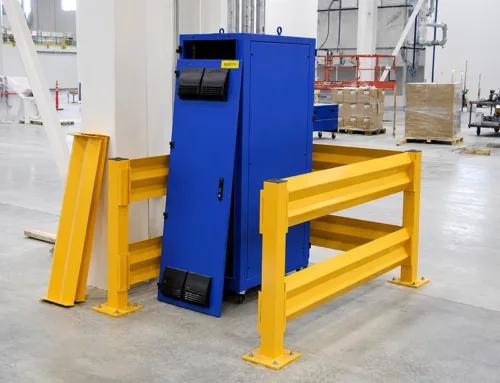
On a -8 °C dock apron a 2.5 t counterbalanced truck slides straight into rack upright A12. A 4 mm Q235 heavy duty warehouse guard rail with a custom 160×160×16 mm base plate from technical case 15176 is the last physical line of defense around racks, columns and precision equipment when the bay floor turns to ice.
Cold Storage Robots and Pickers Share an Aisle at –25 °C — and a Yellow Reflective Q235 Warehouse Guard Rail Is the Passive Boundary Neither Will Cross
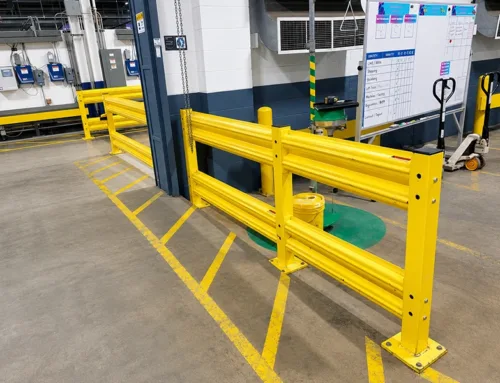
ROLT robotic pallet shuttles, reach trucks, and seasonal pedestrian pickers share the same –25 °C cold storage pick aisle. A bolted, yellow, reflective Q235 warehouse guard rail with end-cap bollards forms the physical boundary a robotic shuttle will not cross into the pedestrian lane — completing the UWB proximity and blue-light active warning stack on the layer that does not depend on training, sensor battery, or the operator's mood.