EN
 DE
 RU
 PT
 JA
 ES
 IT
What is the classification of machine guards?
Machine guards are physical barriers, devices, or shields that are installed on machines to protect operators and other personnel from injury, damage, or interference from machine components. Machine guards can be classified in different ways depending on the nature of the hazard, the type of machine, and the level of protection required. In this article, we will discuss some of the common types of machine guards.

-
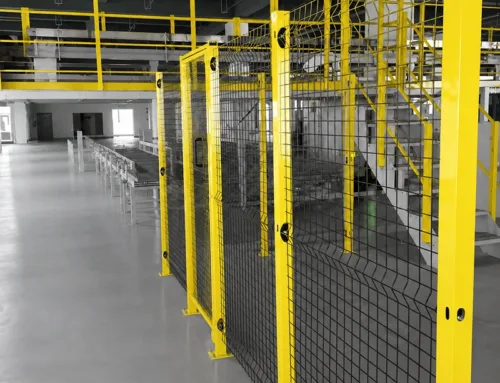
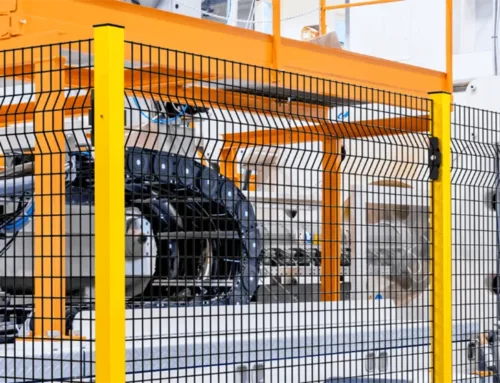
- Fixed guards are permanent barriers that are securely mounted on the machine or its frame to prevent access to the hazardous areas of the machine. Fixed guards are often used in situations where the hazard is constantly present, and access to the hazard area is not required during normal operation. Examples of fixed guards include fences, walls, and enclosures.
- Interlocked guards are designed to prevent access to the hazardous area of the machine when the machine is in operation. Interlocked guards use electrical, mechanical, or pneumatic devices to prevent the guard from being opened when the machine is in operation. This type of guard is often used on machines that require frequent access to the hazardous area.
- Adjustable guards are designed to be moved or adjusted to accommodate different sizes of workpieces or to allow access to different parts of the machine. Adjustable guards are often used on machines that require frequent changes in tooling or workpiece size.
- Self-adjusting guards Self-adjusting guards are designed to move or adjust automatically to accommodate different sizes of workpieces or to allow access to different parts of the machine. Self-adjusting guards are often used on machines that require frequent changes in tooling or workpiece size, and where it is not practical to use adjustable guards.
- Pullback guards are designed to move away from the point of operation when the machine is in operation. Pullback guards use a spring or other mechanism to pull the guard back from the hazard area. Pullback guards are often used on machines with rotating or reciprocating parts.
- Barrier guards are designed to prevent access to the hazardous area of the machine by creating a physical barrier between the operator and the hazard. Barrier guards are often used on machines with moving parts, such as conveyors and assembly lines.
- Two-hand controls Two-hand controls require the operator to use both hands to activate the machine. This type of guard is often used on machines that require manual feeding or where the operator needs to be in close proximity to the machine during operation.
- Presence-sensing devices use sensors to detect the presence of an operator in the hazardous area of the machine. If the sensor detects the operator’s presence, the machine will stop or slow down to prevent injury. Presence-sensing devices are often used on machines with automatic feeding or where the operator needs to be in close proximity to the machine during operation.
In conclusion, machine guards are essential for ensuring the safety of operators and other personnel who work with or around machines. The choice of the appropriate type of machine guard will depend on the nature of the hazard, the type of machine, and the level of protection required. By selecting the appropriate machine guard, employers can reduce the risk of accidents and injuries in the workplace, and ensure the safety of their employees.
Money Welded to the Floor: Mefence Frameless Industrial Safety Fence Re-Zones a Packaging Plant in One Weekend
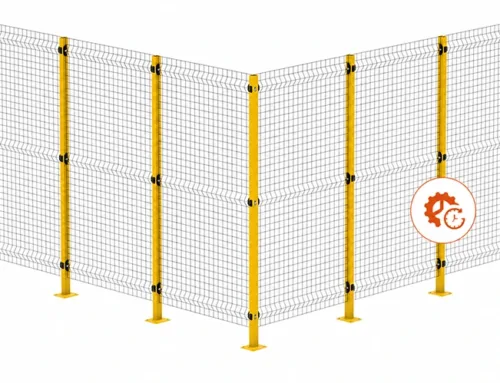
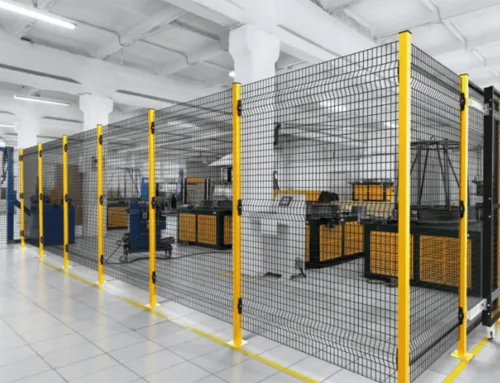
A packaging plant on a 14-day order book redraws its zones faster than a welded perimeter can be justified. Mefence frameless industrial safety fence is a Q235 welded mesh boundary with 3-4 mm wire, 20x100 or 50x50 mm mesh openings and clip-and-screw fixing on base plate posts with slotted mounting holes - unclip the panels, cut the last bay on site, re-bolt them into the new layout. Built for warehouse zoning, storage area separation, pedestrian vehicle separation, forklift path barrier and AGV lane control, with strike points routed to the impact-rated Machine Fence line.
Mesh Opening Over Panel Thickness: Frameless 3D Industrial Safety Fence for Robot Palletizer Cells
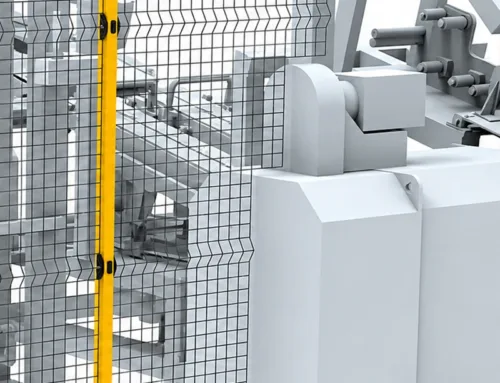
An end-of-line palletizer needs a boundary that keeps people out without taking the sightline with it. Mefence frameless 3D industrial safety fence is a Q235 welded mesh boundary with 20 x 100 mm or 50 x 50 mm openings, clip and self-tapping screw fixing on base plate posts, on-site cut panels and T-shaped ridges that carry interlock, sensor and camera cable — built for robotic workstation enclosure, AGV lane separation and warehouse zoning, with impact-rated strike points on the Machine Fence line.
Open-Mesh Frameless Safety Fencing for Robot Palletizing Cells: Sightline, Camera and AGV LiDAR Without a Solid Panel Wall
Solid panel walls around an end-of-line palletizer keep people out and blind everyone else: the operator cannot see the cycle, the camera sees a grey rectangle, and the AGV map has a new hard surface in it. Mefence frameless 3D safety fencing is a Q235 welded mesh boundary with 20x100 or 50x50 mm openings, clip and self-tapping screw fixing on base plate posts, on-site cut panels and a T-shaped ridge that carries interlock and camera cable — built for robotic workstation enclosure, AGV lane separation and warehouse zoning, with strike points routed to the impact-rated Machine Fence line.