EN
EN  DE
DE  RU
RU  PT
PT  JA
JA  ES
ES  IT
IT Equipment isolation fence
Alfence Equipment isolation fence for robot loading cells
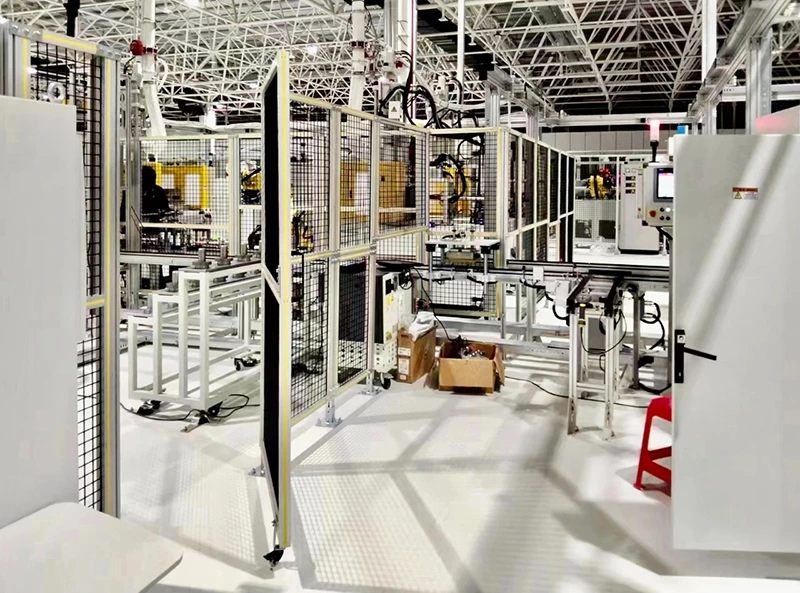
Equipment isolation fence for robot loading cells keeps sensors, emergency stops, and interlocks off the painted steel post: no drilling, no chips, no rust, and fewer nuisance Safe Torque Off trips when the cell talks to CELOS or a Siemens PLC.
Why this integration problem keeps stopping the line
In a robot loading unit, the fence is no longer just a barrier. It becomes the mounting surface for the safety light curtain, gate switch, emergency stop, cable routes, and the controller inputs that decide whether the machine can keep running. If the job is done by drilling a painted steel upright, the result is usually iron chips, coating damage, and early corrosion. If the gate sags, the interlock tongue moves out of position and the PLC can misread the door state, which is how a healthy cell ends up in an unnecessary Safe Torque Off stop.
| What matters | Why Alfence fits |
|---|---|
| Mounting method | T-slot aluminum posts let you mount sensors, E-stops, and cable runs without drilling the coated upright, so there are no chips to clean up and no broken paint edge to rust later. |
| Safety hardware | Safety locks can be paired with safety switches, and the Schmersal AJM150 is a fit for a 40×40 post with 1500 N locking force. |
| Door behavior | Heavy hinged doors stay aligned better than light sag-prone doors, so the interlock tongue keeps its position and the PLC does not see a false open state. |
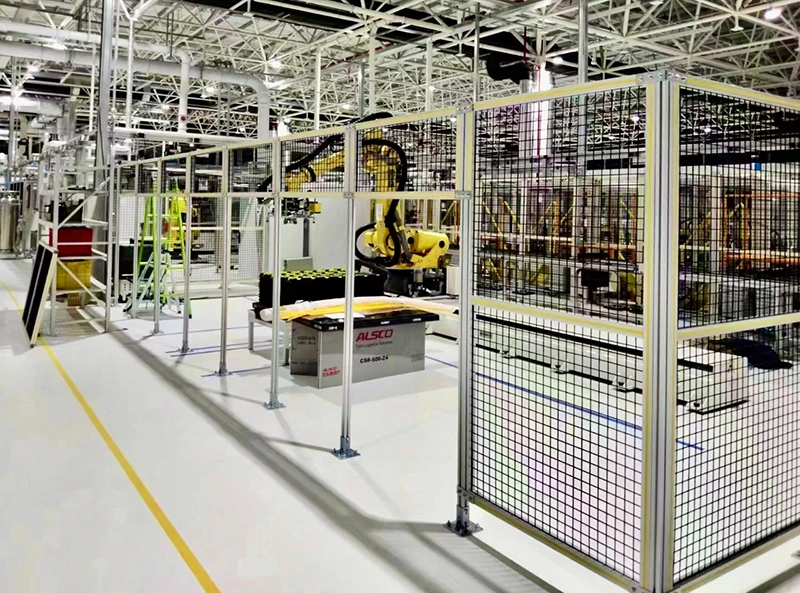
| Mesh and distance | When a mesh layout is preferred, the 20×100 mm grid supports a tighter layout near the hazard boundary while still respecting the 120 mm safety-distance logic. |
| Rebuild value | The modular safety fence format supports retrofit guarding, quick modular install, and later reconfiguration without on-site welding labor. |
Where Alfence solves the problem
No drilling on painted steel posts
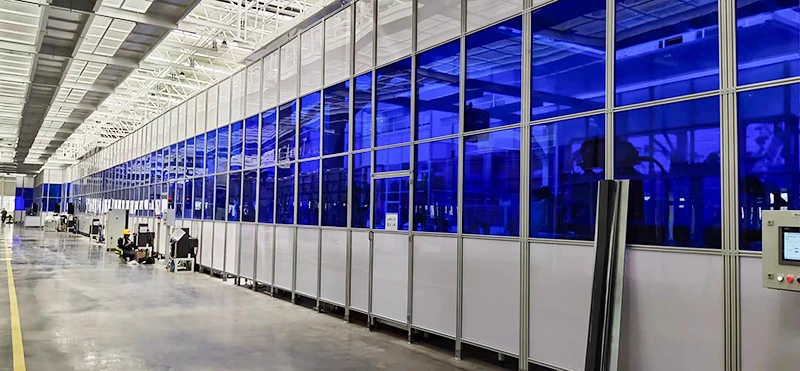
Alfence uses an aluminum profile safety fence structure with a modular frame and T-slot aluminum post. That gives the integrator a clean place to fix sensors, emergency stops, cable clips, and light-curtain brackets without punching holes through a spray-coated steel upright. The result is simple: no iron filings, no coating break, no fast-rising rust spot, and less rework during indoor plant installation or retrofit guarding.
Interlock hardware that belongs on the fence
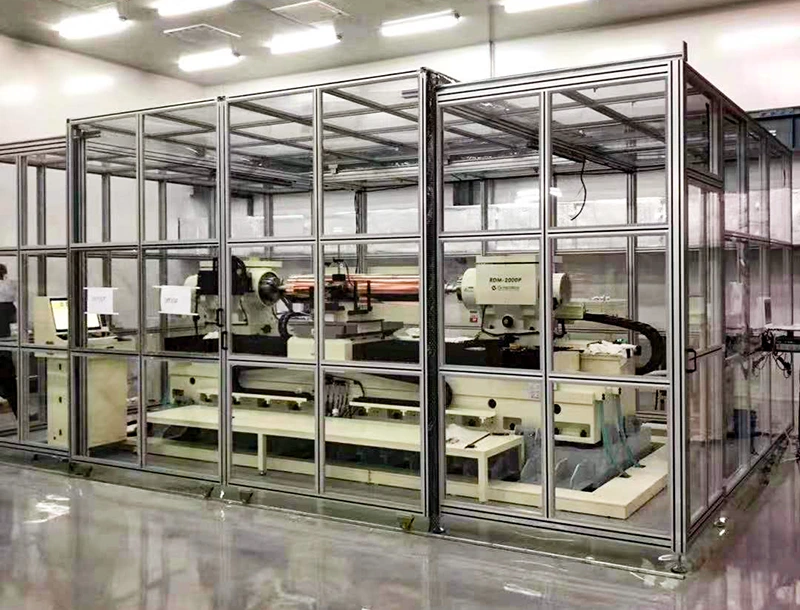
For robot cell guarding and machine guarding around a loading station, the fence should carry the safety logic instead of fighting it. Alfence supports safety interlock switch mounting on the guard itself, and the AJM150 lock offers 1500 N locking force on a 40×40 frame. That matters when the gate is opened and closed all day: the switch stays where it should, the controller sees a clean signal, and the line does not keep stopping for a false door event.
Heavy hinged doors stay aligned
A sagging gate is a control problem, not just a mechanical one. If the latch drops even a little, the interlock tongue can drift and trigger a stop that looks like a safety fault. Alfence uses a heavy-duty hinged door structure that resists that drop. With anchored posts and a bolt-free assembly format, the gate geometry stays stable, the lock engagement stays repeatable, and the perimeter guarding keeps the process running instead of forcing a restart.
Where to use it
- Robot loading cells that need light curtains, gate switches, and emergency stops to reach CELOS or a Siemens PLC without nuisance shutdowns.
- Retrofit guarding on painted steel structures where drilling, welding, and corrosion are all unacceptable.
- Machine tool guarding, conveyor guarding, and assembly line separation in indoor automation islands.
- Reconfigurable perimeter guarding for line changes, where reusable components reduce repurchase and rebuild cost.
That is why Alfence works as a modular safety fence, machine guarding system, and perimeter guarding solution at the same time: it protects the cell, supports the controls, and stays easy to reconfigure when the process changes.
Specification baselines
If you are defining the retrofit package, start with a 40×40 mm T-slot post, a safety interlock switch on the gate, AJM150-compatible locking hardware, and a hinged access door sized for the actual robot loading path. If the cell needs a mesh layout, the 20×100 mm grid and 120 mm safety-distance logic help keep the fence close without turning the opening into a risk zone.
Need a layout that avoids false stops?
Send the cell footprint, door width, controller brand, and the devices that must land on the fence. SGF can map the equipment isolation fence so the safety switches, cable routes, and gate geometry work together instead of fighting the PLC.