EN
EN  DE
DE  RU
RU  PT
PT  JA
JA  ES
ES  IT
IT Machine guard fencing for hygienic food and pharma lines
Machine guard fencing for hygienic food and pharma lines
When a food, beverage, or pharma line needs a clean perimeter, steel fences create rust, loose scale, and wipe-down trouble. Alfence uses an aluminum profile safety fence structure plus a 185°C / 15 min powder coat to deliver corrosion-resistant machine guarding that stays easier to clean, easier to inspect, and easier to reconfigure.
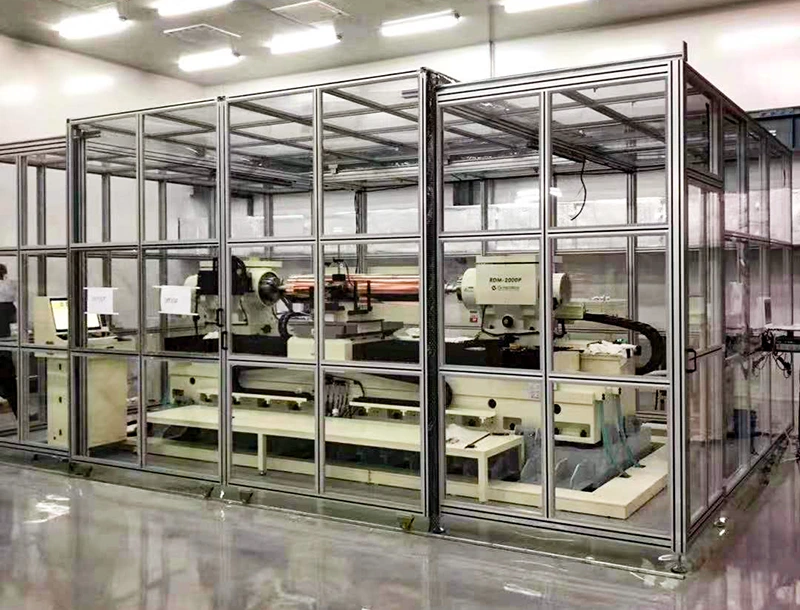
Why hygienic production teams move away from steel fence panels
Food, beverage, and pharma sites do not just need a barrier. They need machine guarding that survives wipe-downs, resists corrosion in humid rooms, and does not shed particles into the product zone. Welded steel fence panels can rust, then shed flakes. Stainless steel can solve part of the problem, but it raises cost and may still need special surface treatment. Alfence is built around aluminum alloy profiles, smooth surfaces, and modular panels so the perimeter stays practical for daily cleaning and line changes.
For layouts that follow EN ISO 14120 and EN ISO 13857 thinking, the slim post-and-panel system helps preserve floor space while keeping separation around the hazard. The result is not a decorative fence. It is a machine guard fencing system for real production traffic, washdown routines, and maintenance access.
| Item | Alfence specification | Why it matters |
|---|---|---|
| Base material | Aluminum alloy profile | Corrosion resistant, light, and easier to keep clean than rust-prone steel |
| Surface finish | Powder coating cured at 185°C for 15 min | Creates a smoother exterior that supports daily wipe-downs and reduces exposed metal |
| Structure | Modular frame, post-and-panel system, bolt-free assembly | Fast retrofit work, less onsite labor, and easier future reconfiguration |
| Typical posts | 40×40 mm or 45×45 mm posts; up to 2200 mm post length | Matches different height and span requirements without changing the full concept |
| Panel options | Steel wire mesh, transparent PC, acrylic, or tinted panel options | Use transparent panels where inspection and washdown visibility matter most |
| Door options | Sliding, hinged, or folding safety door; single door up to 1500 mm, double sliding door up to 6000 mm | Lets operators and maintenance teams pass through without breaking the entire perimeter |
| Mounting | Expansion bolt, foot connector, floor-mounted installation | Keeps the system stable around existing equipment and concrete floors |
| Project note | Indoor rated; outdoor or high-humidity use can add project-specific corrosion treatment | Helps match the fence to the real exposure level instead of forcing one default build |
Where the product structure supports the clean-production brief
Aluminum base metal resists rust and flaking
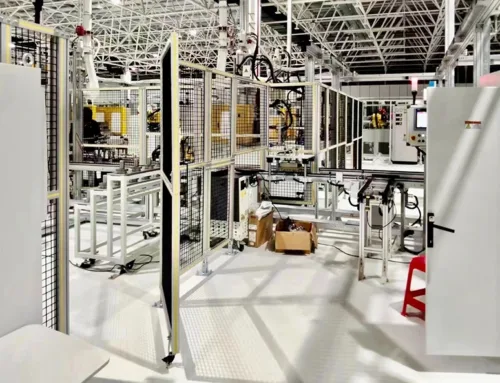
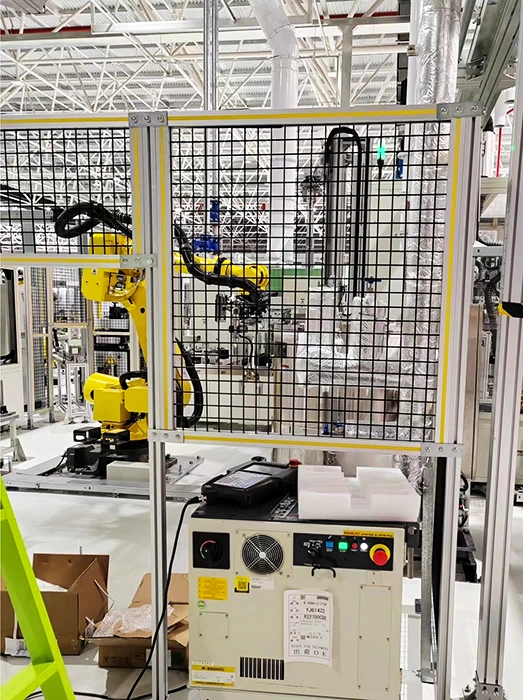
The left image shows a modular fence frame with aluminum profile members and welded wire mesh. That structure matters in hygiene-sensitive lines because the corrosion problem starts with the metal itself. Alfence uses an aluminum alloy base, then adds powder coating, so the perimeter is not depending on bare steel to survive moisture, cleaning agents, or constant traffic. In food and beverage plants, that means less rust maintenance. In pharma and cleanroom-adjacent zones, it means fewer loose particles and less risk that the fence becomes the dirty part of the room.
It is also a practical retrofit choice. If a site is replacing welded steel fence panels, the modular frame can keep the machine guard fencing concept while changing the material system to something easier to maintain.
Smooth faces and transparent panels make cleaning faster
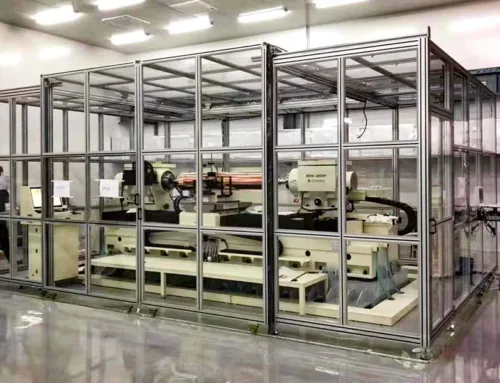
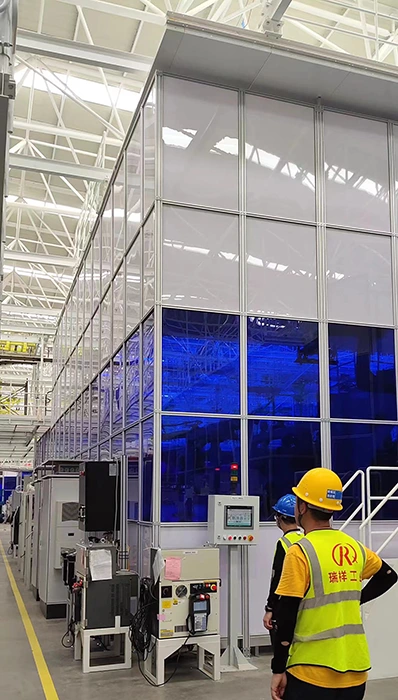
The middle image shows an aluminum-framed enclosure with transparent panels around automated equipment. That visual is important for hygienic areas because smooth panel faces are easier to wipe than rough chain-link or old welded steel surfaces. When operators need to inspect a line, transparent panel options support visibility without opening the entire guard. That is useful in food packaging, secondary pharma packing, and cleanroom guarding where keeping the perimeter closed is part of the hygiene routine.
Alfence also avoids unnecessary clutter at the perimeter. Fewer exposed crevices means fewer dust traps. For teams who need to rinse, wipe, or sanitize around the boundary, the cleaner surface geometry is often the difference between a fence that looks tidy and a fence that actually fits the cleaning SOP.
Retrofit-friendly doors and floor anchors reduce shutdown time
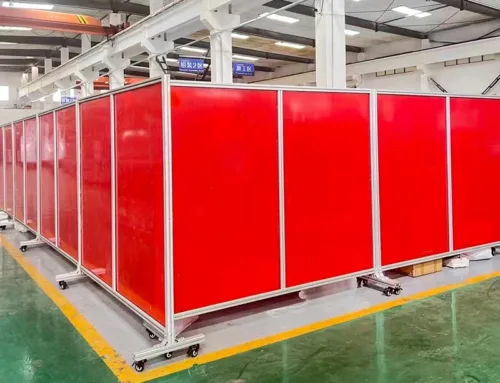
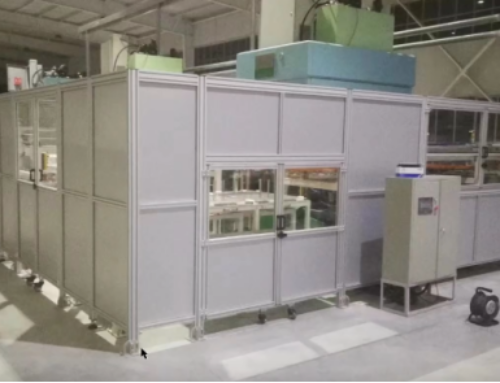
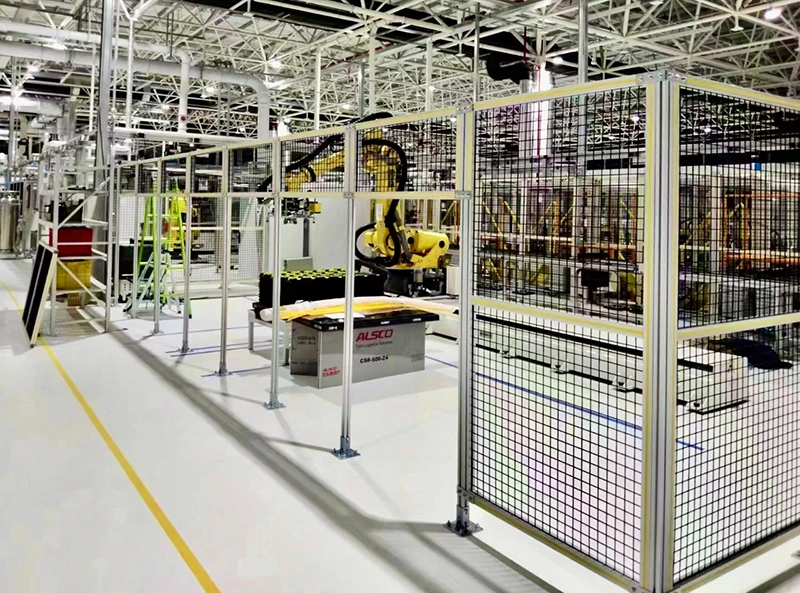
The right image shows anchored posts and a stable floor-mounted layout. That is the part many hygienic plants care about most during an upgrade: how to install the new machine guarding without dragging the line into a long shutdown. Alfence uses expansion bolts, foot connectors, and modular posts, so the fence can be installed around existing equipment rather than forcing a full room rebuild. Hinged, sliding, and folding safety doors are available, with single doors up to 1500 mm and double sliding doors up to 6000 mm for wider transfer points.
If a process changes later, the panels can be removed and reconfigured. That makes the system suitable for plants that keep adding new packaging stations, inspection cells, or washdown-adjacent zones over time.
Where Alfence fits best
- Food and beverage filling, packaging, and transfer lines that need a corrosion-resistant perimeter.
- Pharma secondary packaging, inspection, and material-handling areas where cleanability matters.
- Cleanroom guarding and utility zones that need visibility, access control, and a smooth exterior.
- Indoor high-humidity projects where the base specification is indoor-rated and project-specific corrosion treatment can be added.
In short, Alfence is for sites that want machine guard fencing, not just a barrier. It gives hygienic plants a cleaner material choice, a faster installation path, and a structure that can be adapted when the line changes.
What to specify before you order
Send the line width, target height, door type, washdown exposure level, and whether your zone needs mesh or transparent panels. If the application is food, beverage, or pharma, the usual starting point is an aluminum profile safety fence with powder-coated finish, floor-mounted posts, and access doors sized for maintenance traffic. That keeps the machine guarding layout aligned with cleaning, inspection, and future reconfiguration from day one.
Need a machine guard fencing layout for a hygienic line?
Tell us your product zone, aisle width, cleaning method, and whether the perimeter needs mesh, transparent panels, or a mixed build. We will map a modular safety fence plan that matches the space, the exposure, and the maintenance route.