EN
EN  DE
DE  RU
RU  PT
PT  JA
JA  ES
ES  IT
IT Food & beverage, pharma, cleanroom-adjacent production zones
Machine guard fencing in hygiene-sensitive plants has a different job from ordinary machine guarding. It must stay corrosion-resistant, avoid rust flakes, wipe clean fast, and still support frequent line changes without turning maintenance into a shutdown event.
Why stainless steel is not always the right answer
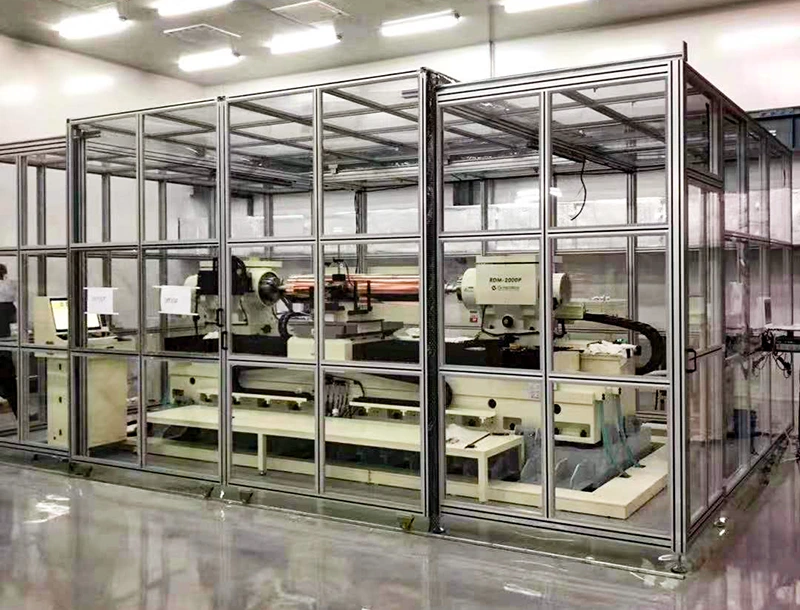
Food, beverage, and pharmaceutical buyers usually start with the same pain points. Ordinary welded steel fences rust. Rust means flakes. Flakes mean cleaning risk, product contamination concerns, and more time spent on inspection. Stainless steel solves part of that problem, but the cost rises quickly, and some projects still need surface treatment if they sit in humid or splash-prone zones.
That is why Alfence uses an aluminum alloy base with powder coating as a practical middle ground. Aluminum is corrosion resistant by nature, and the 185℃ / 15 min powder-coating cure adds a second barrier. The result is a machine guarding surface that does not shed rust, stays visually tidy, and is easier to wipe down between production runs.
What makes Alfence work in clean and washdown-adjacent areas
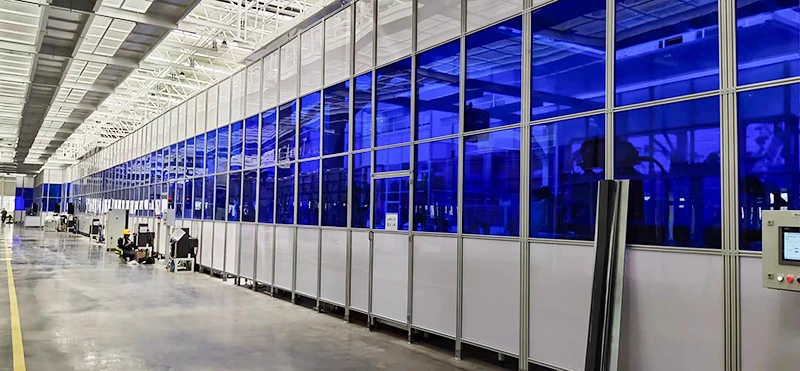
Smooth, sealed-looking surfaces that are easier to clean
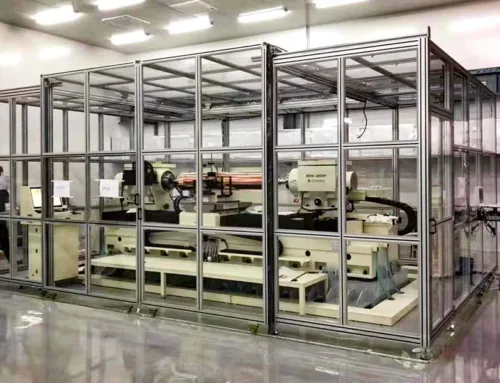
The blue transparent panel option is useful when operators need visibility without opening the guard. For food and pharma buyers, that matters because a cleaner visual line usually means fewer hidden corners where dust, residue, or cleaning water can sit. It also helps when a line has to be checked quickly without breaking the barrier.
Modular frame logic for reconfiguration
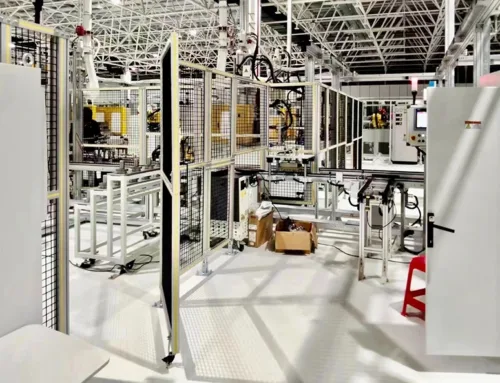
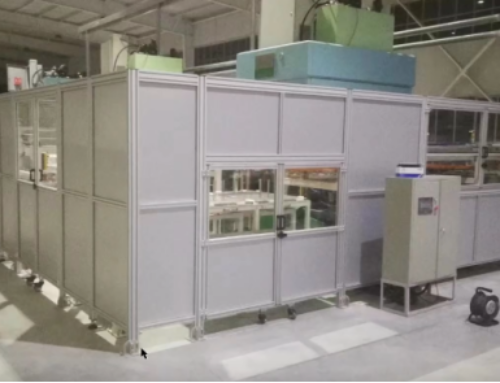
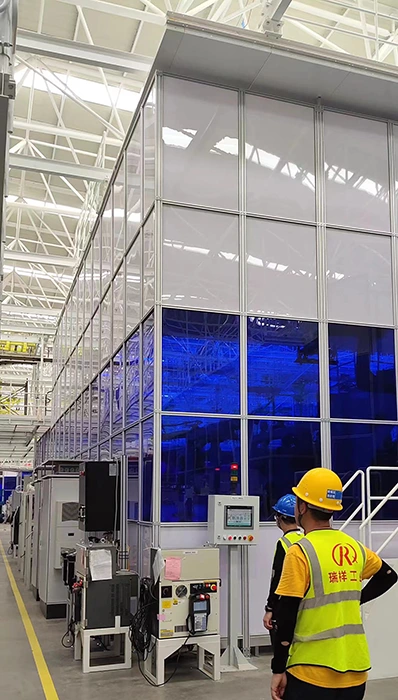
Alfence is built as a post-and-panel system, not a welded-on structure. That means modular frames, T-slot aluminum posts, removable panels, and bolt-free assembly logic for rework. When the line changes, the fence changes with it instead of forcing a full rebuild. That is the practical side of machine guarding in plants that keep upgrading process steps.
Floor-fixed installation without on-site welding
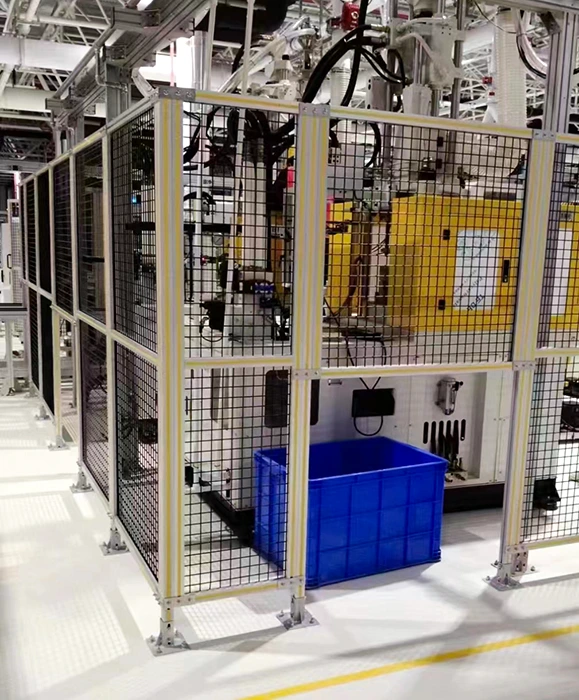
The anchored-post image shows the installation logic clearly: expansion bolts, foot connectors, and floor-mounted stability. That avoids on-site welding labor and keeps the project cleaner during retrofit guarding. For indoor plant installation, the fence can be installed faster and reworked later without reintroducing sparks, slag, or paint touch-up work.
Parameters that help the fence fit real equipment layouts
Alfence supports 40×40 mm and 45×45 mm post options, 20×100 mm mesh grid layouts, and common heights of 1000, 1800, and 2000 mm. A denser mesh can support a closer-to-hazard layout, often around the 120 mm safety distance referenced in EN ISO 13857. Door sizes can also be configured, including single doors up to 1500 mm and double sliding doors up to 6000 mm, so access does not become the bottleneck.
Where this machine guard fencing fits best
For food and beverage lines, pharma packaging areas, cleanroom guarding, and other hygiene-sensitive indoor plants, the target is simple: protect the equipment, keep the barrier easy to clean, and avoid material failure that creates contamination risk. The same logic also works in retrofit guarding projects where an old welded steel fence is being replaced with a lighter modular safety fence.
For more demanding humidity or outdoor-adjacent projects, the design should be specified with additional anti-corrosion surface treatment. Alfence is positioned as an indoor system first, but it can be adapted per project when the environment requires extra protection.
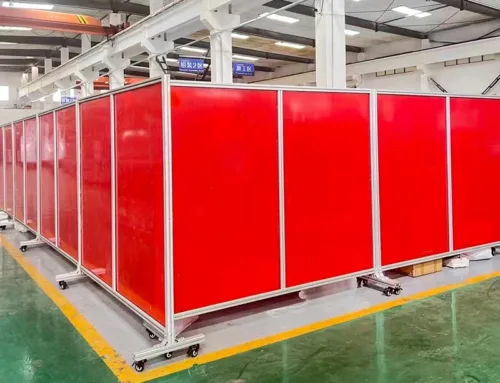
Optional safety accessories such as safety interlock switches, safety light curtains, sliding or hinged safety doors, magnetic handles, and caster-based movable sections can be added where the process needs tighter control. That is why the same product family can serve assembly separation, machine tool guarding, and clean production perimeter control without changing the base concept.
What to specify before you request a quote
When those inputs are known, Alfence can be matched to the actual process instead of being treated as a generic perimeter fence.
If your line needs machine guard fencing that stays clean, resists corrosion, and still supports fast reconfiguration, ask for an Alfence layout proposal with door size, post height, and panel type confirmed for your plant.