EN
EN  DE
DE  RU
RU  PT
PT  JA
JA  ES
ES  IT
IT Warehouse forklift zones | Flexible Safety Barrier
Flexible Safety Barrier for Warehouse Forklift Zones
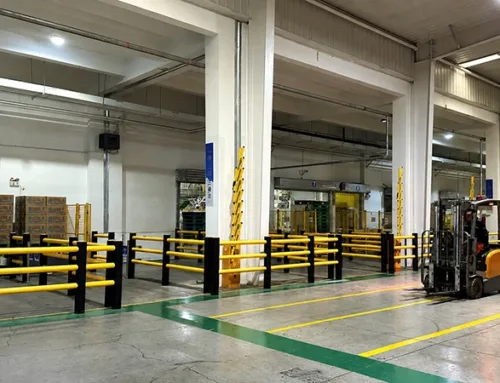
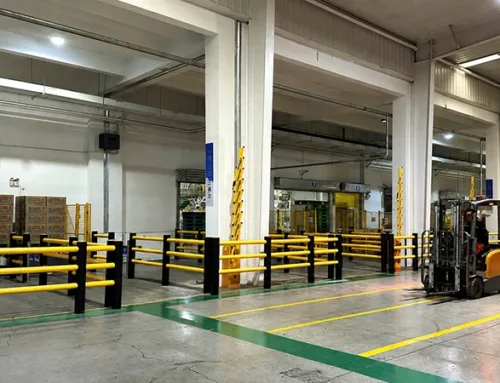
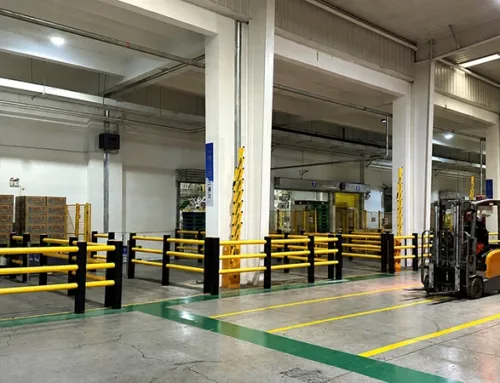
When forklifts, AGVs, pedestrians, racking, and equipment share the same aisle, the highest-risk incidents are impact incidents. FCBarrier creates a permanent physical separation line, then absorbs crash energy at the point of contact so people and assets stay protected.
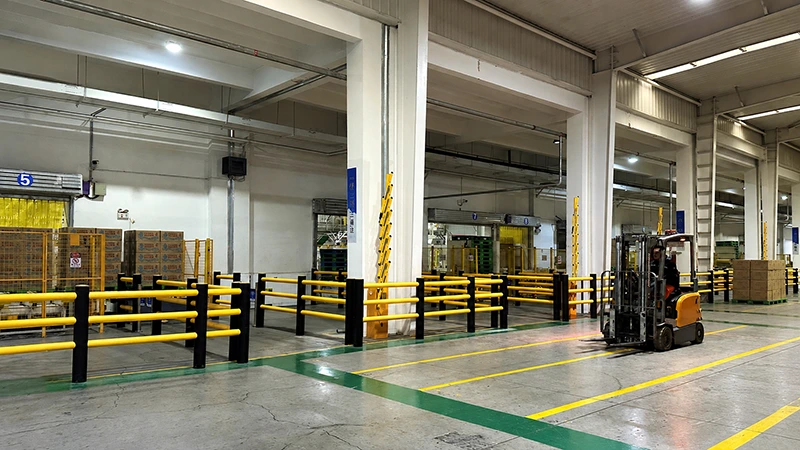
Why warehouse transport accidents keep happening
In mixed-traffic warehouses, the problem is not only operator behavior. The layout itself often lets vehicles and pedestrians cross the same route. That is why forklift strikes, AGV impacts, rack damage, and column damage repeat in the same aisles. A flexible safety barrier is useful here because it turns a procedural rule into a physical control layer.
| Key point | FCBarrier response |
|---|---|
| Common risk | Forklift, AGV, and pedestrian collision in warehouse aisles |
| Old approach | Training, floor markings, warning signs, and PPE alone |
| Typical weakness | People forget; marks fade; signs do not stop impact |
| FCBarrier material | ARMORFLEX™ polymer safety barrier |
| Energy behavior | Absorbs about 80% of impact energy and rebounds |
| Impact rating | Up to 28,950J, based on an 8-ton forklift at 9.6 km/h |
| Installation logic | Floor-anchored, modular, and suitable for retrofits |
Why FCBarrier fits warehouse safety barrier projects
1) Physical segregation that does not depend on perfect compliance
Training and PPE are important, but they are management controls. FCBarrier adds an engineering control: a permanent barrier between people and vehicle routes. That is the difference between reminding operators and actually separating paths.
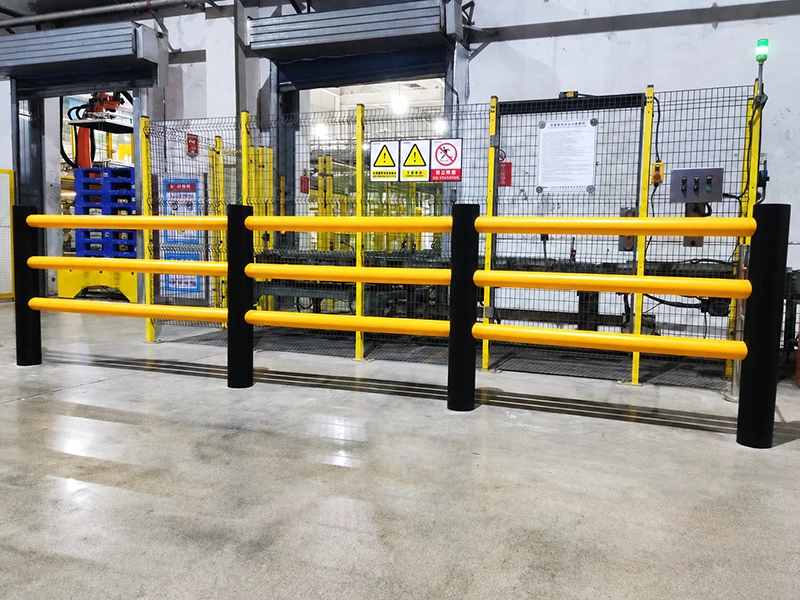
2) ARMORFLEX™ polymer absorbs impact instead of failing like rigid steel
Rigid steel barrier systems can bend after the first hit, lose their geometry, and leave a gap that no longer protects the aisle. FCBarrier is built to take impact, absorb energy, and rebound, so the separation line stays functional after repeated strikes.
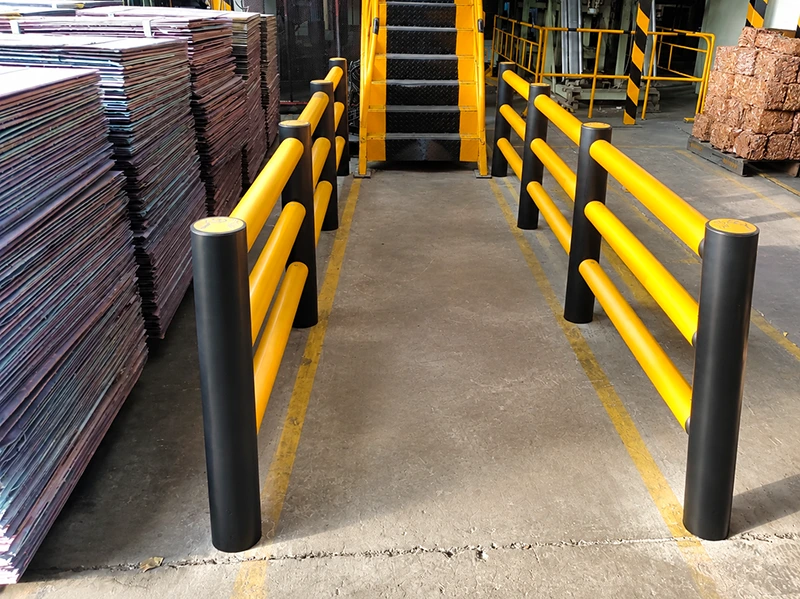
3) Modular structure for racking ends, columns, corners, and walkways
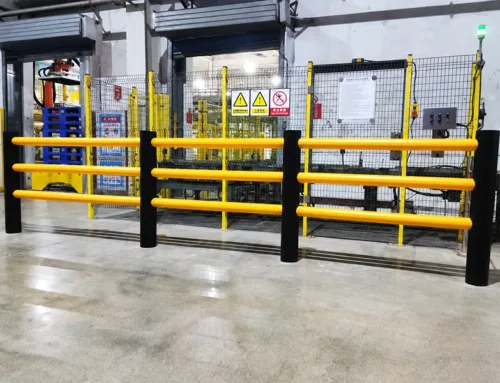
Warehouse safety barrier planning is rarely one size fits all. FCBarrier can be deployed as a pedestrian barrier, rack protection system, column protector, or corner barrier. That lets you protect the places that are hit most often: rack ends, exposed uprights, transfer points, and aisle crossings.
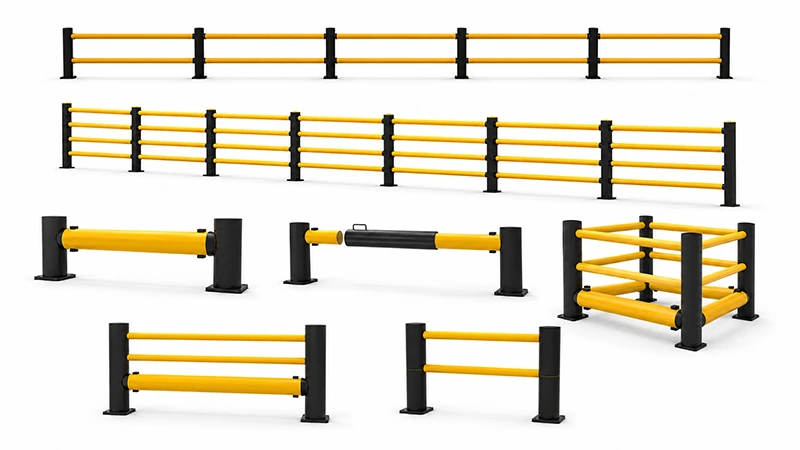
Typical warehouse applications
- Forklift safety barrier between pedestrian walkways and vehicle aisles
- Racking protection at rack ends and impact-prone storage lanes
- Column protector use around exposed structural uprights
- Loading dock protection at handoff zones and staging areas
- Retrofit barrier upgrades for existing warehouses and logistics centres
For mixed-traffic facilities, the result is simple: fewer impact events, lower repair cost, less downtime, and clearer traffic discipline across the whole site.
What the structure and parameters prove
FCBarrier is not a decorative fence. It is a heavy-duty safety barrier built for industrial impact protection. The key proof points are the ARMORFLEX™ polymer material, the self-rebounding behavior, the 28,950J rated barrier level, and the floor-anchored modular base that supports quick installation and future reconfiguration.
Turn warehouse traffic control into asset protection
If your site still relies on paint, signs, and PPE to control forklift collision risk, FCBarrier gives you a permanent flexible safety barrier layer that protects people first and keeps racking, columns, and equipment out of the impact path.