EN
EN  DE
DE  RU
RU  PT
PT  JA
JA  ES
ES  IT
IT WAREHOUSE SAFETY | POLYMER SAFETY BARRIER
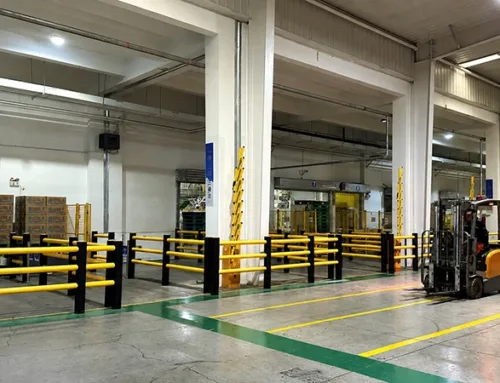
When forklifts, AGVs, and people share the same aisle, a Polymer Safety Barrier turns a high-risk warehouse layout into a physically separated route system. FCBarrier uses ARMORFLEX™ impact-absorbing structure to protect pedestrians, racking, columns, and loading zones without relying on warning signs alone.
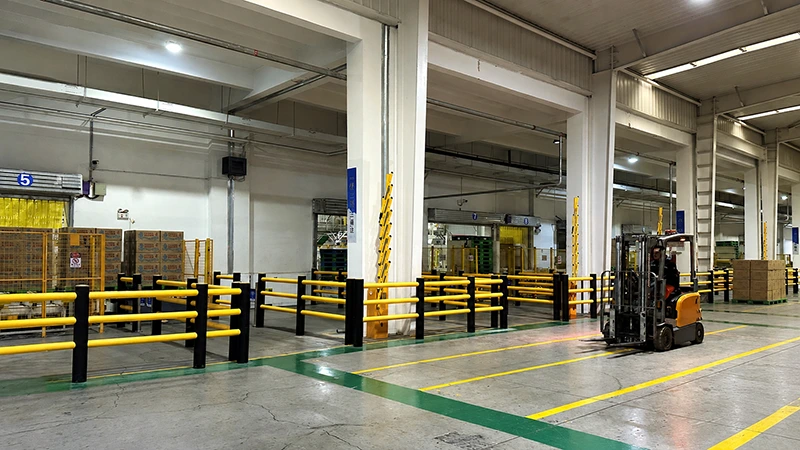
Why warehouse forklift zones need a Polymer Safety Barrier
The main risk is not abstract: material-handling collisions are the default failure mode in mixed traffic warehouses. Steel barriers can bend after one severe hit and lose their protective line. A Polymer Safety Barrier keeps the separation line stable after impact, so the protection function remains in place for the next shift.
| Warehouse problem | FCBarrier response |
|---|---|
| Forklifts and AGVs crossing pedestrian routes | Permanently separates people and vehicles with fixed floor-anchored routing |
| Racking, columns, and corners getting struck first | Places impact-absorbing protection at high-risk edges and narrow aisle points |
| Steel barriers deform and stay bent after impact | ARMORFLEX™ polymer absorbs about 80% of the energy and rebounds |
| Stop-gap controls depend on training and PPE | Provides an engineering-control layer that does not rely on perfect human behavior |
| Need coverage for typical forklift impacts | Highest configuration is rated to 28,950J, matching heavy warehouse collision energy |
Why FCBarrier fits mixed-traffic warehouses
1. Build permanent pedestrian and vehicle separation
FCBarrier is used as a physical boundary between walking paths and material-handling routes. In warehouses, that matters because the collision happens where the route design allows contact in the first place. By creating a clear barrier line, the aisle layout stops depending on signage alone.
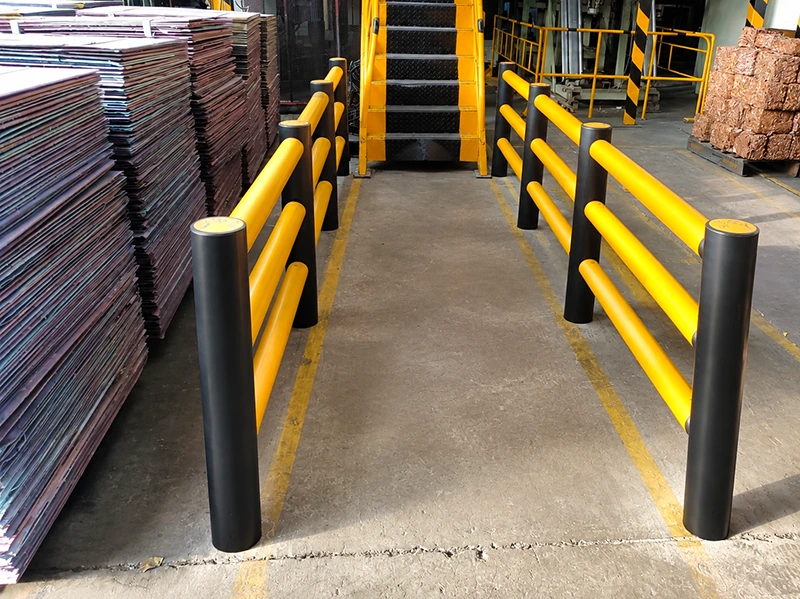
2. Absorb impact instead of becoming a failed barrier
ARMORFLEX™ polymer is designed for impact resistance and self-rebounding performance. That means the barrier can absorb collision energy, return to shape, and continue protecting the same location. Compared with a rigid steel guardrail, the line does not lose function after the first hit.
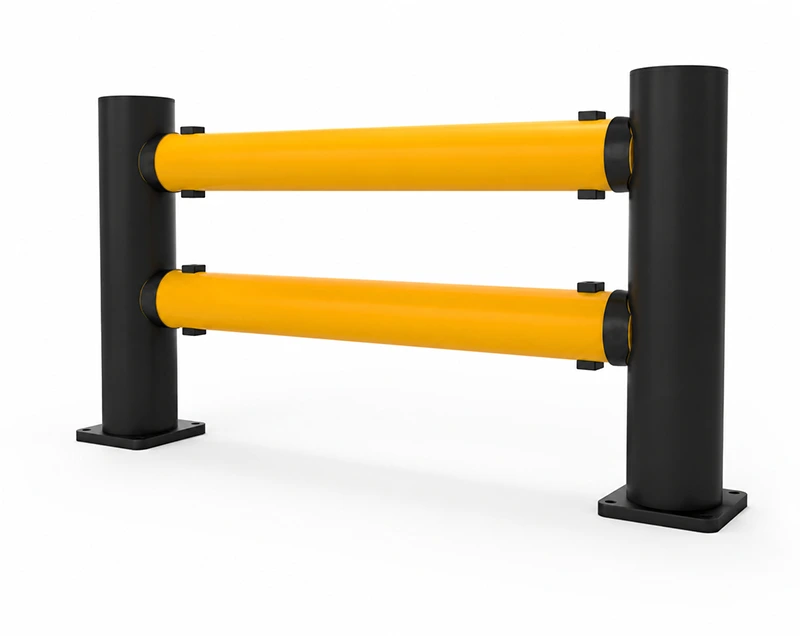
3. Cover common warehouse collision points
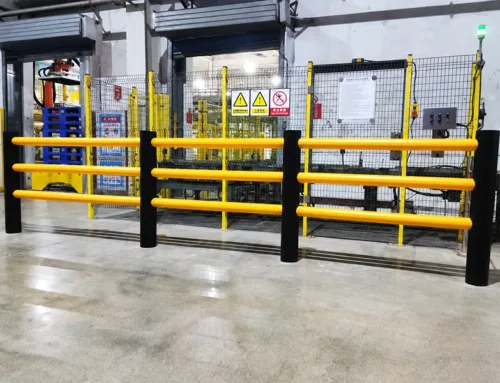
FCBarrier is suitable for warehouse safety barrier runs, racking protection, loading dock protection, machinery protection, and column guard applications. The modular base-plate structure supports straight runs, turns, and protected end zones where forklifts often clip the first obstacle.
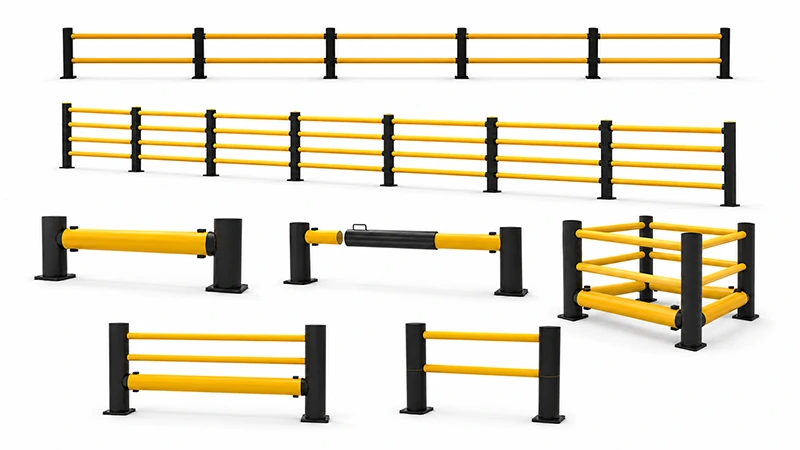
Where to deploy Polymer Safety Barrier protection
- Warehouse Safety Barrier along pedestrian walkways
- Racking Protection at aisle ends and vulnerable rack faces
- Column Protector positions around structural posts and corners
- Loading Dock Protection where trucks and forklifts converge
- Machinery Protection around equipment zones and access points
- Retrofit Barrier upgrades for existing warehouses that need stronger segregation
In practice, the result is simple: fewer vehicle-to-asset collisions, fewer repair cycles, less downtime, and a safer traffic pattern for mixed warehouse operations.
What the specification means for buyers
FCBarrier is not positioned as decorative fencing. It is a flexible crash barrier built for industrial safety barrier use, with floor-anchored installation, modular replacement, corrosion-free behavior, and a high-impact-rated upper configuration. For operations teams, that means the protection line stays functional after impact and is easier to maintain than a permanently bent steel solution.
Need a Polymer Safety Barrier plan for your warehouse?
If your site has forklift traffic, pedestrian access, or repeated rack damage, FCBarrier can be laid out as a route-separation and asset-protection system. Share your aisle layout, impact points, and traffic flow, and we can help match the barrier type to the risk zone.