EN
EN  DE
DE  RU
RU  PT
PT  JA
JA  ES
ES  IT
IT Machine Fencing
guarding fence
guarding fence for cleanroom and high-end manufacturing sites where dust, sparks, odor, and hot-work permits can slow every install.

guarding fence
guarding fence
| Installation method | All-bolted modular assembly with high-strength clamp rings |
| Labor requirement | Two workers can complete on-site assembly with only hand tools |
| Installation speed | About 40% faster than traditional welded guarding |
| Work method | Pure cold work, with no welding dust, sparks, or odor |
| Relocation value | More than 95% asset reuse after disassembly and move |
| Target environments | Medical cleanrooms, ISO 13485 environments, photonics lines, and live factory retrofits |
Why guarding fence fits live sites
01. It avoids hot-work bottlenecks

When a line is already running inside a medical or high-end manufacturing facility, the main problem is not just protection. It is construction control. Traditional welded guards create dust, sparks, smell, and paperwork. In regulated spaces, that means hot-work permits, extra supervision, and the real risk of stopping production. Guarding fence solves that by staying fully in the cold-installation lane. The fence is built from bolts and clamp rings, so the job can move forward without ignition risk or contamination from welding residue.
02. It fits inside clean production windows

For teams working in ISO 13485 environments or photonics plants, the schedule is usually tight and the tolerance for mess is even tighter. Guarding fence is designed so two installers can work with an ordinary wrench, then complete the module-by-module assembly without hot cutting or on-site welding. That is why it cuts install time by about 40% versus a welded barrier. Less time on site means less disruption to the client, fewer shut-down requests, and less pressure on the contractor to rush the handover.
03. It turns relocation into reuse
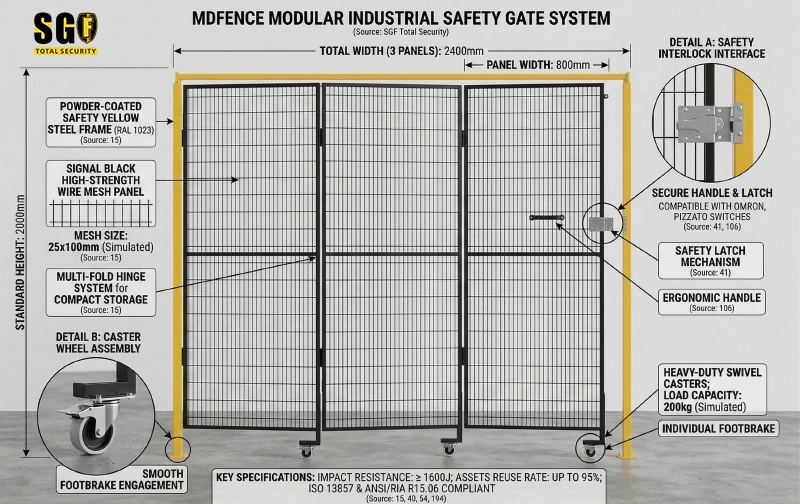
Many machine guarding projects fail the cost test because they are treated like one-time consumables. Once the line changes, the old fence is scrapped and a new one is ordered. Guarding fence changes that logic. The modular bolted structure can be dismantled, moved, and rebuilt with a reuse rate above 95%, so the asset keeps its value after the line layout changes. For factories that reconfigure often, that means less waste, lower replacement spend, and a much cleaner total cost of ownership.
Where guarding fence is most useful
- Live retrofits in medical production areas where dust control and permit control matter at the same time.
- High-end manufacturing and photonics plants that cannot accept sparks, odor, or long shutdown windows.
- Factories that expect line changes, because the fence can be reused instead of discarded after every move.
In short, the product is a fit when the customer needs guarding, but the site cannot tolerate traditional welding-based construction. That is the exact situation where the structure, the installation method, and the asset recovery value all work together.
guarding fence
If the project team is comparing options, the right question is not only how strong the barrier is. It is whether the system can be installed cleanly, moved later, and reused without turning into scrap. Guarding fence answers those questions with a bolted modular structure, cold work installation, and high reuse value.
guarding fence
For facilities that need machine protection without hot-work delays, guarding fence is built for the job.