JA
JA  EN
EN  DE
DE  RU
RU  PT
PT  ES
ES  IT
IT 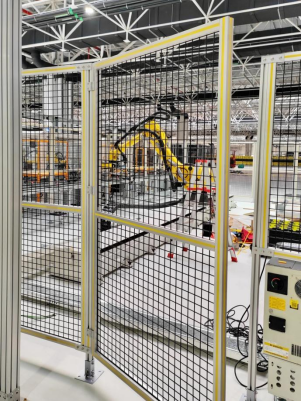
A Plant Manager’s Decision Guide
If you’re reading this, chances are you’re a plant manager or an equipment engineer facing a familiar challenge. The good news arrives: a major new order, a product line extension, or a breakthrough in process efficiency. Your team needs to adapt the production floor. But as you look at the schematics, a familiar, sinking feeling emerges. It’s not the robots, the conveyors, or the PLCs that worry you. It’s the fence.
かつては安全性の象徴であった溶接鋼板製の堅固な安全ガードは、今では工場の成長の可能性を閉ざす牢獄の壁のように見える。それは、ダウンタイム、高コスト、運営上の頭痛の種を象徴している。.
これは売り込みではない。これは、一人のエンジニアから他のエンジニアへの意思決定ガイドである。私のゴールは、あなた自身の状況を診断し、柔軟性の欠如がもたらす隠れたコストを定量化し、今日だけでなく今後何年にもわたってあなたの施設に役立つ戦略的な決断を下すためのフレームワークを提供することです。.
パート1:診断 - あなたの真の “敏捷性不足 ”を計算する”
Before looking for solutions, let’s accurately define the problem. The issue isn’t just that the fence is “hard to move.” The issue is the quantifiable “Agility Deficit” it creates. Let’s get specific and do the math.
A.アジリティ監査:以下の質問を自問する。
- 過去24ヶ月の間に、あなたのチームは何回生産セルを再構成しましたか?
- More importantly, how many times did you want to make a small, incremental improvement—a kaizen—but decided against it because the hassle of modifying the welded fence was too great?
- 新規顧客の要望やレイアウト変更に対して、数週間ではなく数日で「イエス」と言える戦略的価値とは何か?
B.1回のリワークにかかる本当のコスト:計算してみよう
The expense of modifying a traditional welded fence goes far beyond a welder’s hourly rate. Let’s calculate the true cost.
- ダウンタイムのコスト: This is often the biggest expense.
(ラインダウンタイムの時間数) x (1時間当たりの損失収益または1時間当たりの人件費) = $____. - Direct Rework Costs: This is the most visible part.
(Hours for Welding Crew) x (Loaded Hourly Rate) = $____
(新しい鋼材と消耗品のコスト) - (古いフェンスのスクラップ価値) = $____. - Hidden & Administrative Costs: These are the silent killers of productivity and budget.
火気使用許可証の作成と安全監督にかかる費用。.
作業後の清掃費用(研磨粉塵、塗料ヒューム)。.
空気中の微粒子による製品汚染のリスク。.
プロジェクト管理および調整の間接費。. - 1回のリワークにかかる真のコストの合計=$_____。
When you see the final number, it becomes clear. This is not a minor maintenance task; it’s a significant financial event. Every time.
Part 2: The Landscape of Solutions – From Rigid to Agile
Once you’ve quantified the pain, you can evaluate the landscape of solutions with a clear perspective. There are three main philosophies for industrial fencing today.
オプションA:伝統的な要塞(溶接鋼板)
This is the classic approach. It’s perceived as strong and has a relatively low initial material cost. For a facility with a truly permanent layout, it can be adequate. However, in a dynamic environment, it becomes a liability. Its primary drawback is its near-infinite cost of change. As calculated above, every modification involves massive direct and indirect expenses, turning a depreciating asset into a recurring operational nightmare. It is fundamentally designed for a world that no longer changes.
オプションB:重いレゴ(ボルト・トゥゲザー・スチール)
An improvement on welding, this approach uses heavy steel posts and panels joined by bolts and brackets. It eliminates the need for hot work, which is a significant step forward. However, it only partially solves the problem. The components are still incredibly heavy, requiring multiple staff members or lifting equipment to move. The process is cumbersome, and the components are susceptible to damage and rust during reconfiguration. It’s more flexible than a fortress, but it’s far from agile.
オプションC:アジャイルフレームワーク(モジュラーアルミシステム)
This philosophy, championed by innovative aluminium gate suppliers, is built for change. It uses lightweight, high-strength, standardized aluminum profiles with a T-slot system and universal connectors. Its value lies not in its material alone, but in its systemic approach. It solves the core problems identified in our diagnosis:
- It Slashes Downtime: Reconfigurations are measured in hours, not days. They can often be completed by your own maintenance team with simple hand tools, eliminating the need for specialized contractors.
- It Eliminates Material Waste: The system is 100% reusable. A section of fence from one cell can be completely disassembled and redeployed in another. It’s a redeployable asset, not a one-time expense.
- It Fosters Continuous Improvement: When the cost and effort of a change are minimal, it empowers your engineers to constantly iterate and optimize layouts, driving real efficiency gains.
パート3:決断の枠組み
There is no one-size-fits-all answer. The right choice depends on your factory’s specific priorities. Use this matrix to evaluate the options based on what matters most to your operations. Rate each solution from 1 (poor) to 5 (excellent) and multiply by the weight you assign to each criterion.
| 決定基準 | 体重(1~10) | A: 溶接スチール | B:ボルト締めスチール | C: Modular Aluminum |
|---|---|---|---|---|
| 初期購入費用 | ||||
| ライフサイクルコスト(TCO) | ||||
| リワーク/スピード変更 | ||||
| 資産の再利用性 | ||||
| 操業への影響(ダウンタイム、クリーン度) | ||||
| トータルスコア |
今日だけでなく明日のために
Choosing safety fencing is no longer a simple procurement decision. It’s a strategic choice about the future of your factory. It’s a declaration of whether you are building an infrastructure that resists change or one that embraces it.
Look at your factory floor. When your next big opportunity arrives, will your physical infrastructure be the anchor holding you back, or the flexible framework that enables you to seize it?
We hope this guide has provided a clear framework for your thinking. If you’re exploring how a modular approach from experienced aluminium gate suppliers could unlock your facility’s potential, that’s a conversation we’re always ready to have.