EN
EN  DE
DE  RU
RU  PT
PT  JA
JA  ES
ES  IT
IT Machine guarding
Machine Fence
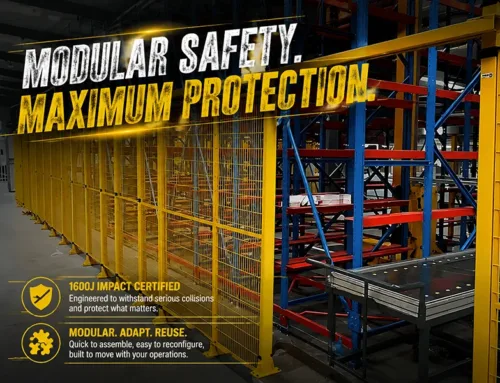
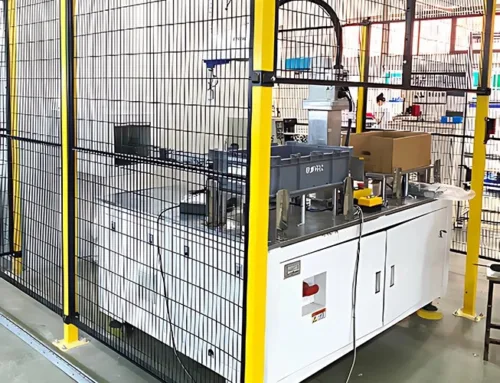
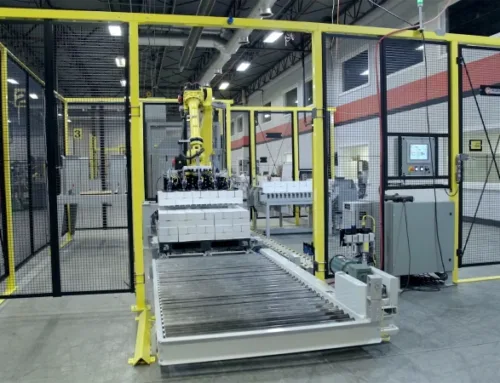
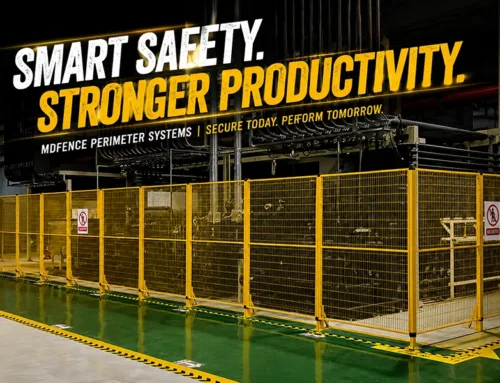
Machine Fence is built for pallet plants where forklifts move nonstop, visibility is limited, and one impact can stop an automated nailing line or put people at risk.

Why dense forklift traffic changes the guarding requirement
| Field | Value |
|---|---|
| Target scenario | Forklift-dense pallet production and machine protection zones |
| Main risk | High-frequency collision, downtime, and personnel injury near automated lines |
| Structure | Q235 cold-rolled seamless square tube with fully welded framed construction |
| Impact resistance | 1600J anti-impact performance |
| Protection logic | Physical armor instead of a visual warning line |
01. Old guardrails fail first in the real aisle

Many low-cost fence panels look acceptable on paper, but they deform quickly when a forklift clips a corner or a pallet load shifts in a narrow corridor. Once the panel bends, the line is exposed, the repair crew has to stop production, and the original investment turns into a recurring downtime cost. Machine Fence is designed for the exact opposite outcome: it keeps its geometry when the lane gets busy and the operator makes a mistake.
02. The frame is the proof, not the paint

The structural reason this product fits heavy machine guarding is simple: Q235 cold-rolled seamless square tube plus full weld construction gives the panel a rigid load path. The frame does not rely on weak spot connections or adhesive shortcuts. That is why the fence can absorb repeated shocks in forklift-heavy environments and keep the protected area stable for the next shift.
03. 1600J matters when collision risk is frequent

A production line that handles raw wood, finished pallets, and continuous fork traffic needs more than a marking system. The 1600J impact rating turns Machine Fence into a real buffer between a moving vehicle and expensive automation. In practice, that means the fence is there to take the hit, protect the nailing equipment, and keep operators out of the collision path.
Where Machine Fence fits best
- Forklift corridors beside automated nailing or assembly lines
- Raw material transfer zones with poor visibility or floor debris
- Finished pallet staging areas where turn radius is tight
- Perimeter protection for equipment that cannot afford unplanned downtime
In each of these zones, the guarding problem is not theoretical. The issue is repeated contact, accidental side-swipes, and the chain reaction that follows a line shutdown. Machine Fence is specified for those conditions because the product is built to stay rigid, absorb impact, and keep the core production asset running.
Specification snapshot
If you need a quick spec review, start with the material system, welding method, and impact performance. Those three points explain why this guard is appropriate for dense forklift operations and why it outperforms light visual fencing.
Machine Fence keeps the line online
When the cost of one collision is downtime, repair, or injury exposure, the right answer is a fence that behaves like protective equipment. Machine Fence is that layer of physical protection for pallet factories that run at speed.