EN
EN  DE
DE  RU
RU  PT
PT  JA
JA  ES
ES  IT
IT Machine Guarding
Machine Fence
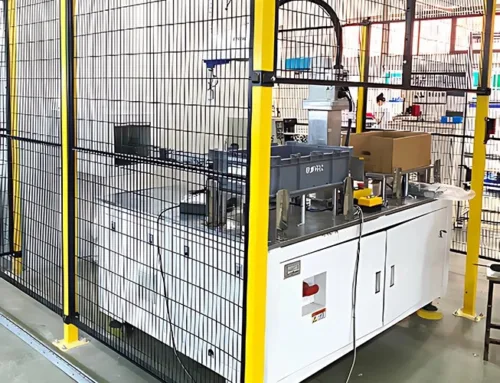
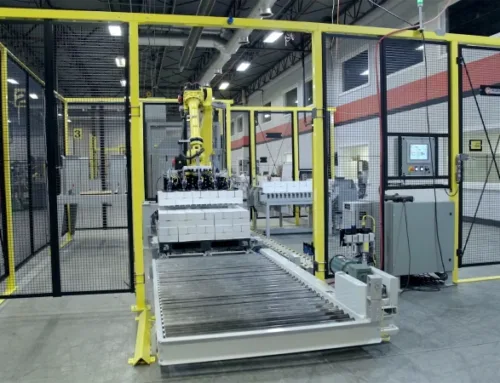
When an automation cell is packed into a crowded factory, the guard line has to protect the robot without stealing aisle width, forklift clearance, or production floor. Machine Fence solves that exact layout problem with a 20x100mm extreme anti-entanglement micro-mesh and a close-in 120mm installation position, so GBIM can build a compact cell instead of pushing the fence back to the 850mm stand-off that common 50x50mm mesh layouts often force.
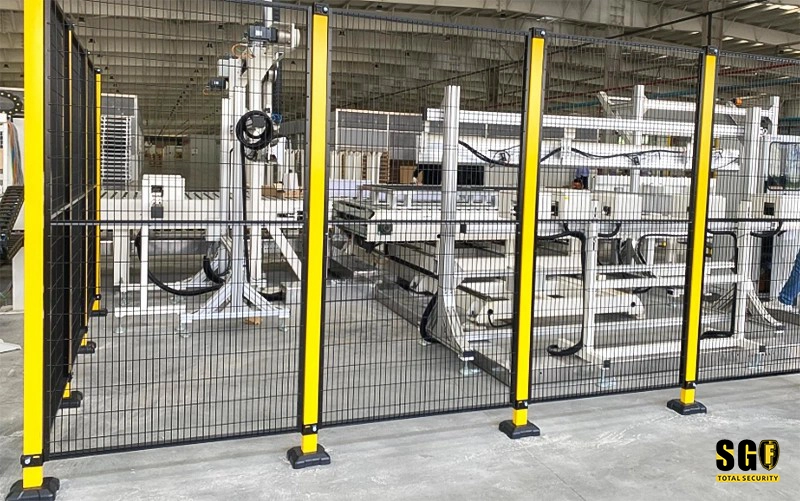
Why the fence can sit closer without wasting space
| Specification | Compact Machine Fence layout | Common oversized mesh layout |
|---|---|---|
| Mesh opening | 20x100mm micro-mesh | 50x50mm large mesh |
| Fence-to-hazard clearance | 120mm close-in position | 850mm setback |
| Factory impact on layout | Compact perimeter with wider usable aisle and staging space | Loss of forklift path width and usable floor area |
| Commercial outcome | Smaller automation footprint for the end customer | Higher hidden facility cost per installed cell |
Built for close-in guarding, not oversized spacing
Most plant managers do not buy fencing for the fence itself. They buy space back. If a guard has to sit 850mm away from the hazard source, the safety envelope starts to dominate the whole cell. That is where Machine Fence changes the economics: it keeps the boundary tight, protects the robot zone, and leaves the surrounding floor available for forklifts, maintenance access, and downstream material flow.
From a layout perspective, the key advantage is simple. A 20x100mm micro-mesh supports a tighter protective envelope than a generic large-aperture panel, so integrators can place the enclosure at 120mm rather than surrendering almost a meter of factory depth. For GBIM and similar automation suppliers, that difference is the gap between a bulky machine island and a compact, easier-to-sell cell.
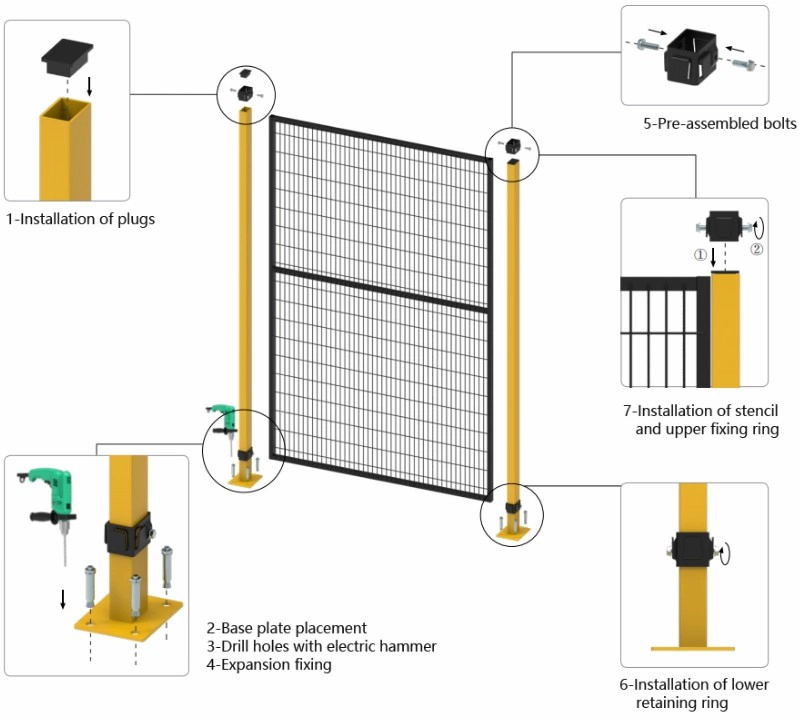
01. Micro-mesh geometry that supports a tight boundary
The 20x100mm panel format is the reason the enclosure can move close to the danger zone without turning the whole cell into dead space. It is a space-saving structure, not a space-consuming one.
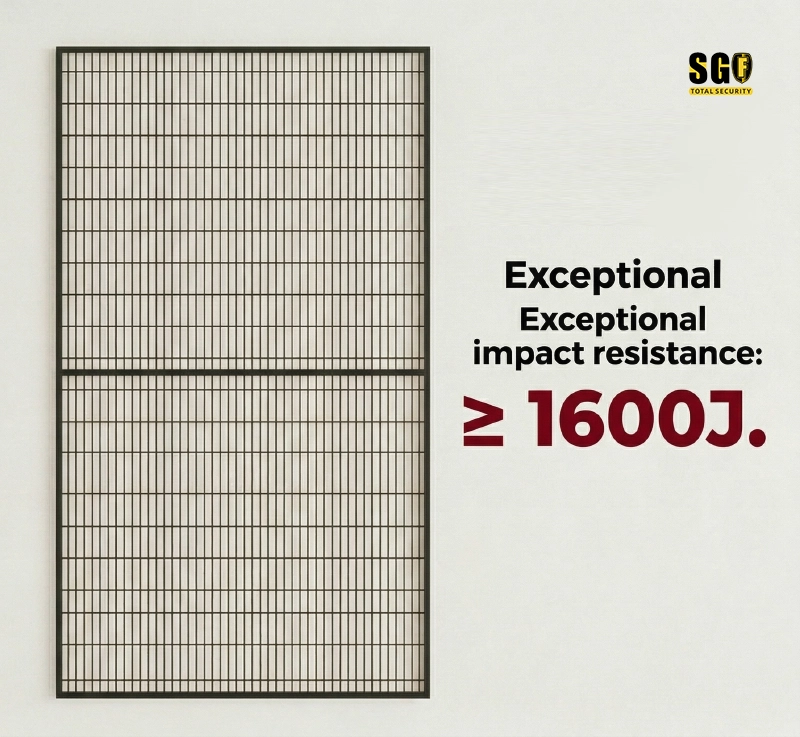
02. Rigid frame and repeatable panel connection
When an integrator builds a compact cell, the fence line has to stay straight and predictable. Stable panel connections help the enclosure preserve the planned footprint instead of drifting into aisle space.
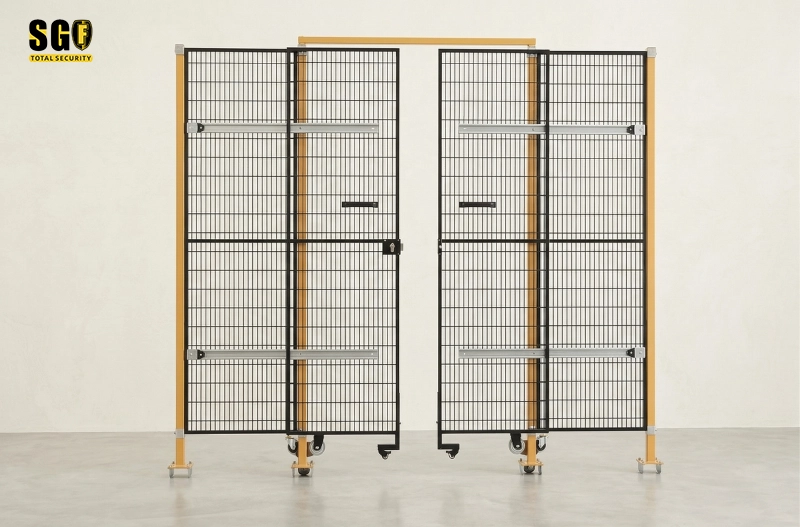
03. A compact perimeter that protects the business model
Smaller cell footprints are not only a technical benefit. They are a commercial advantage for the machine builder because every square meter saved at the end customer site makes the automation proposal easier to approve.
Where Machine Fence fits best
- Robot cells inside crowded factories where every aisle meter matters.
- GBIM-style automation units that must stay compact for delivery and installation.
- Projects where the customer wants to preserve forklift access and usable production floor.
- Machine guarding layouts that need a tight, engineered perimeter instead of an oversized buffer.
Specify the layout before the floor space disappears
When you send us the cell drawing, hazard source location, and target access points, we can map the fence line around the machine instead of forcing the machine around the fence. That is the practical difference between a standard guard and a compact Machine Fence design.
Keep the safety boundary tight and the production floor usable
For automation suppliers, the payoff is straightforward: a smaller enclosure footprint, easier end-customer approval, and a stronger offer in markets where factory space is expensive.