EN
EN  DE
DE  RU
RU  PT
PT  JA
JA  ES
ES  IT
IT Machine Guarding
Machine Fencing
Machine Fencing
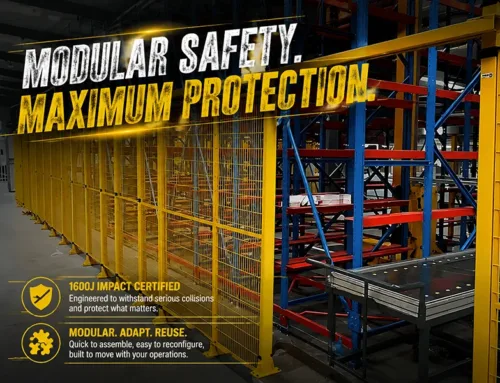
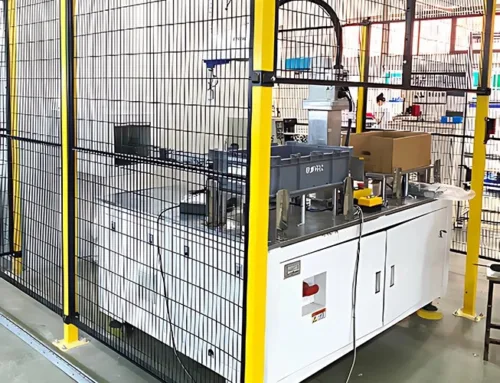
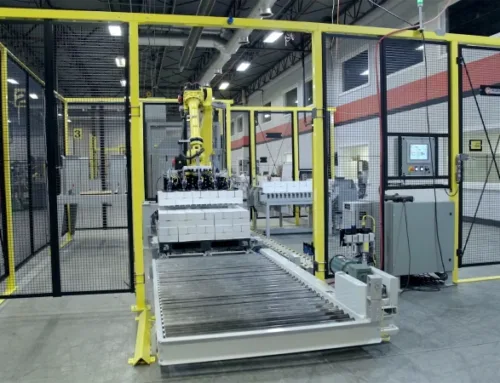
When palletizing, nailing, or cutting equipment throws wood chips and broken nails into the air, the guard must do two jobs at once: stop flying debris and pass safety review without eating the whole floor plan. That is exactly where Mdfence fits. Its modular steel frame and 20×100 mm narrow-slot mesh are built for industrial machine fencing zones where compliance and usable space both matter.
Instead of pushing a large-aperture fence far away from the hazard, Mdfence helps teams shorten the safe standoff to 120 mm. That matters in North American plants where every extra meter of separation turns into lost production space, lost storage space, and a harder layout review.
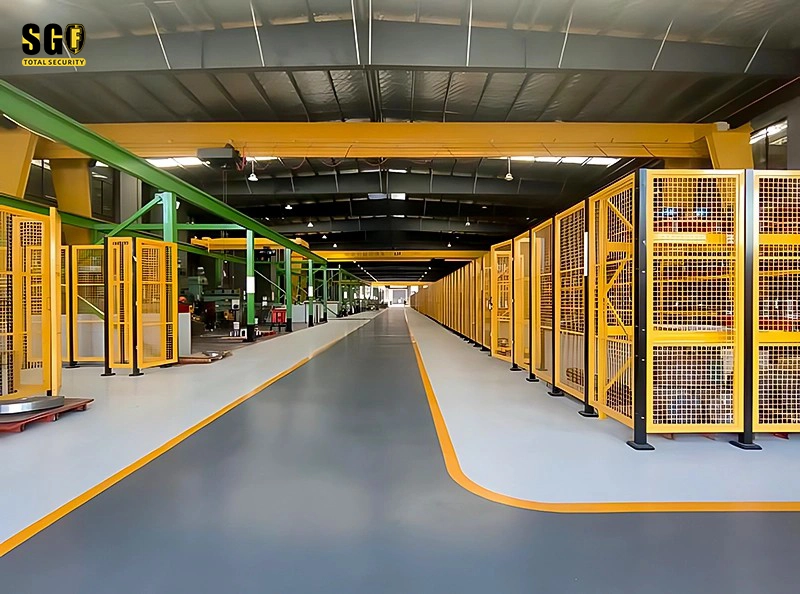
Why the structure works
| Product | Machine Fencing |
|---|---|
| Main structure | Modular Q235 carbon steel frame |
| Mesh opening | 20×100 mm narrow-slot mesh |
| Safety distance | 120 mm reduced standoff |
| Typical use | Palletizing, cutting, nailing, conveyor zones, and controlled access cells |
| Access options | Hinged, sliding, folding, telescopic, and double-door layouts |
The point of the specification is simple: a rigid framed panel is easier to align, harder to sag, and more predictable during safety review than loose or frameless mesh. That is why Mdfence is a better fit for machine fencing around fast-moving tools and high-splinter processes.
Three reasons the layout stays compact
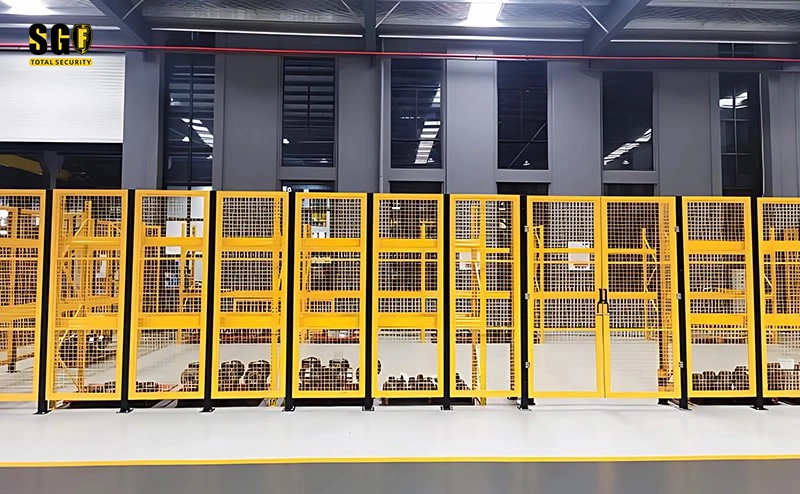
01. Narrow-slot mesh stops more than just hands
Wood fragments and broken nails do not behave like slow-moving test objects. A 20×100 mm aperture gives the fence a tighter physical barrier, which is the right direction for pallet plants that need to contain fast debris without pushing the machine into a huge exclusion zone.
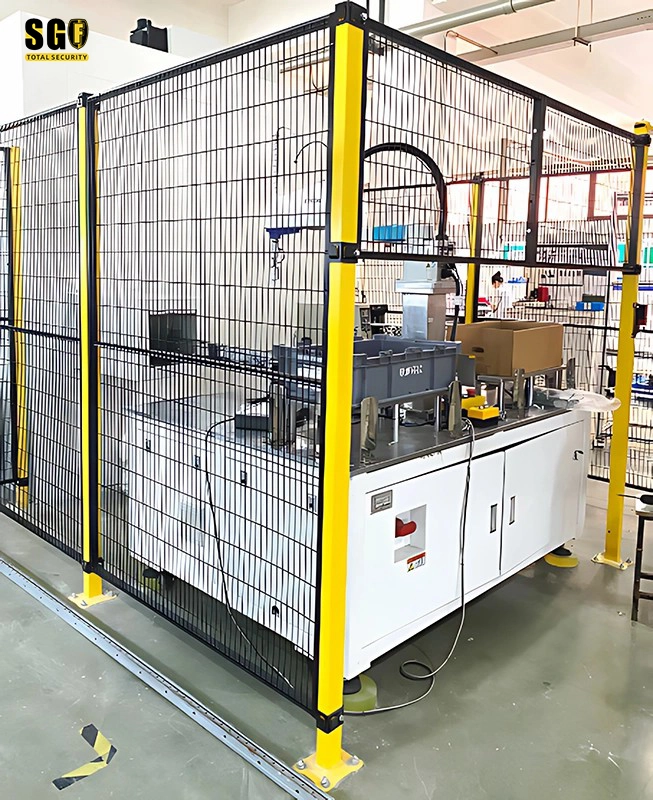
02. The framed panel keeps the line straight
Mdfence uses a welded steel frame instead of a loose mesh panel. That makes the perimeter easier to install, easier to keep square at the gate, and more stable when a project needs lock carriers, interlocks, or repeated access in day-to-day operation.
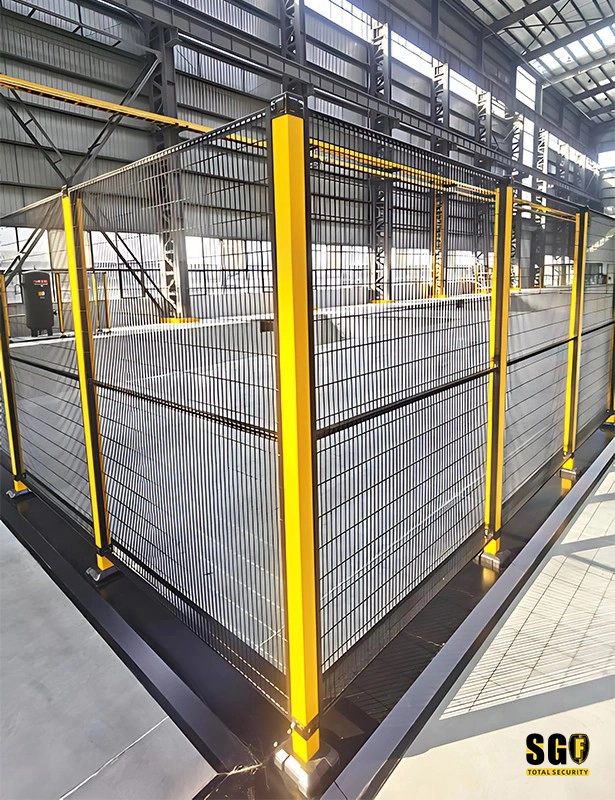
03. Rebuildable hardware protects future layout changes
Factories do not stay frozen. When a palletizer, cutter, or conveyor line changes, modular machine fencing is easier to reconfigure than a field-welded barrier. That helps plants keep compliance without rebuilding the entire perimeter from scratch.
Where this system fits best
- Robot palletizing and depalletizing cells that need a safer, tighter perimeter
- Packaging and cutting stations where flying debris is part of the daily load
- Conveyor line guarding and machine tool perimeters with controlled access points
- ASRS and warehouse automation areas that need a compact safety envelope
Layout notes for your next project
Before approving a guard line, plant teams usually need one thing: a clear answer on how the fence, gate, and safe access points will work together on the actual floor plan. Mdfence is built for that conversation. It supports narrow-slot containment, compact safe distance planning, and modular access hardware, so the drawing can follow the machine instead of swallowing the room.
If your team is reviewing a pallet line, cutting line, or mixed automation cell, use this section as the prompt to ask for a project-specific fence layout with posts, gates, and access hardware sized to the line.
Machine Fencing for tighter safety zones
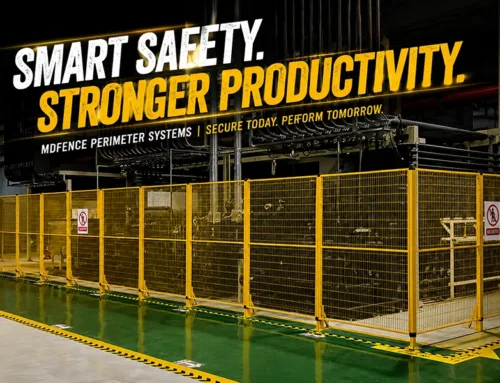
When the old answer is a big mesh fence pushed far away from the machine, the result is usually wasted floor space. Mdfence gives you a modular steel machine fencing system that contains the hazard, supports access control, and helps reclaim valuable production and storage area.