EN
EN  DE
DE  RU
RU  PT
PT  JA
JA  ES
ES  IT
IT Machine guarding
Machine safety fencing
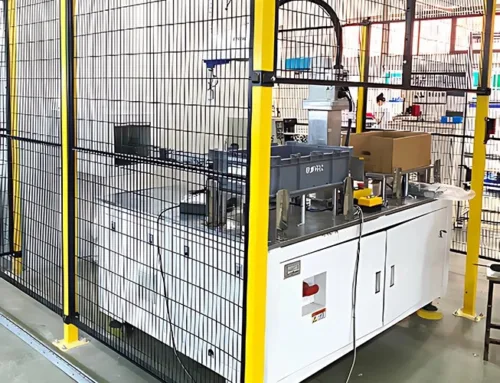
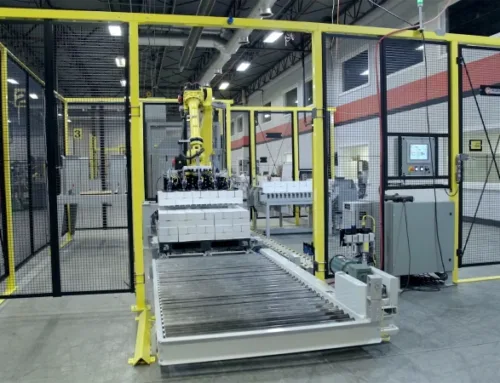
Woodworking and pallet nailing lines throw wood chips, broken nails, and metal fragments at speed. Machine safety fencing with a 20x100mm narrow mesh helps contain the hazard, while the engineered barrier supports a reduced 120mm safety distance to recover usable floor space.

| Problem | Flying wood chips and broken nails from cutting and nailing equipment |
|---|---|
| Old approach | Wide-aperture mesh forces a larger safety distance and wastes plant area |
| Mesh design | 20x100mm narrow-slot mesh |
| Key safety distance | 120mm reduced safety distance |
| Main result | Safer perimeter control with more usable production and storage space |
01. Narrow mesh that matches the hazard
The first issue in pallet processing is not only people access. It is the debris itself. A standard large-opening fence can leave enough path for high-speed chips and nail fragments to escape. The 20x100mm structure is built to intercept those smaller, faster projectiles.

02. Reduced clearance without compromising control
Traditional guarding often pushes the barrier far away from the machine because the aperture is too open to justify a shorter set-back. This product design supports a 120mm safety distance, which helps shrink the dead zone around the equipment and protects more of the building envelope for active use.

03. Better fit for compliance-driven layouts
For North American facilities working under OSHA or local labor rules, the fence has to do two jobs at once: block risk and keep the line layout practical. That is why the structure matters. Narrow apertures, defined set-back control, and modular perimeter planning make the layout easier to standardize across multiple cells.

Where this fence fits best
- Woodworking and pallet nailing stations with flying chip and broken-nail risk
- Cutting and trimming lines that need compact perimeter guarding
- Plants trying to recover storage or circulation space from oversized exclusion zones
What to specify before you buy
Start with the machine hazard: chip size, nail splash direction, and the actual clearance you need to protect. Then match the fence aperture and safety distance to the layout, so the barrier solves the risk without swallowing valuable floor area.
Need a safer fence that saves space too?
Machine safety fencing is the practical answer when you need to contain flying debris, respect the required set-back, and keep your plant footprint working for production instead of being lost to a wide no-go zone.