PT
PT  EN
EN  DE
DE  RU
RU  JA
JA  ES
ES  IT
IT 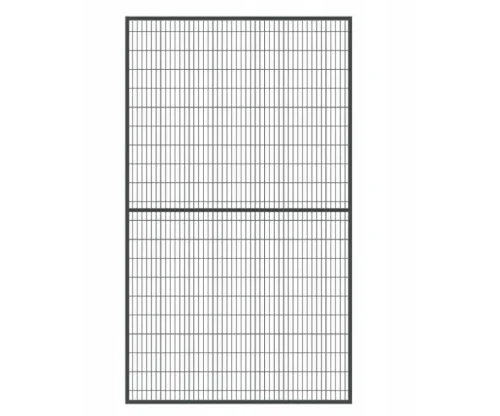

In automated automotive production lines, poor visibility into robotic welding cells isn’t just an annoyance—it’s a direct threat to your OEE (Overall Equipment Effectiveness). When operators cannot clearly see a misaligned part or a jammed CNC spindle through glaring silver mesh, they are forced to break the safety interlock circuit to open the cell door. Every unnecessary machine stop kills your cycle time. The right color combination in your physical perimeter eliminates these blind spots while maintaining strict OSHA compliance.
The Optical Physics of Robot Cell Guarding
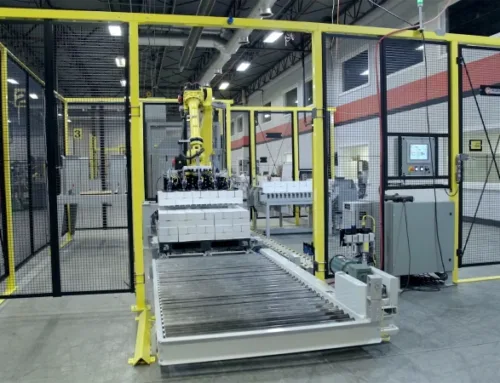
The Integrator’s Pain Point (Before): Many system integrators default to all-yellow or galvanized silver wire mesh for their turnkey solutions. Inside a modern “lights-out” manufacturing facility or a brightly lit automotive assembly plant, silver and yellow meshes reflect the 5000K LED high-bay lighting. This creates a severe glare, acting like a visual wall. When an EHS engineer or facility manager tries to monitor the precise movements of a 6-axis robotic arm, they suffer from eye fatigue and cannot spot micro-defects like weld spatter buildup or servo motor errors without shutting down the line.
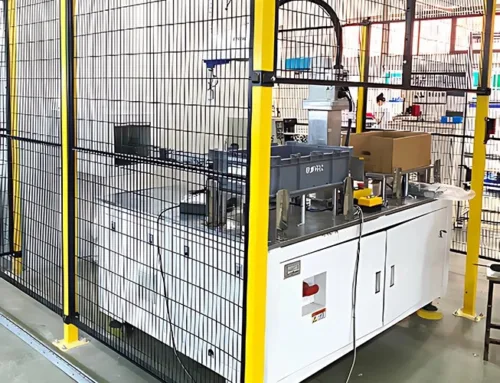
The Engineering Logic (Why it works): The industry standard for high-performance Cerca de Segurança para Robôs relies on optical absorption. By utilizing RAL 9005 (Deep Black) epoxy polyester powder coating on the wire mesh, the fencing absorbs ambient light rather than reflecting it. This creates a “screen door effect,” rendering the mesh virtually transparent to the human eye when focusing on the brightly colored industrial robots (like KUKA or FANUC) operating inside.

The Operational Benefit (After): Operators gain unobstructed, zero-glare visibility into the hazardous zone. They can perform visual quality inspections and verify machinery status from a safe distance without opening the access doors. This directly reduces MTTR (Mean Time To Repair) and prevents unnecessary triggering of the PLC safety circuits, keeping your automated production line running at peak capacity.
High-Visibility Perimeters vs. Heavy Forklift Traffic
The Integrator’s Pain Point (Before): In dynamic material handling areas, AGV (Automated Guided Vehicle) paths frequently intersect with robotic work cells. If the entire fence is dark or blends into the background, a driver operating a 10,000 lbs forklift might misjudge the turning radius. A single collision can destroy the perimeter, exposing the multi-million-dollar automated assembly system and halting production until a hot-work permit is issued to weld a repair.
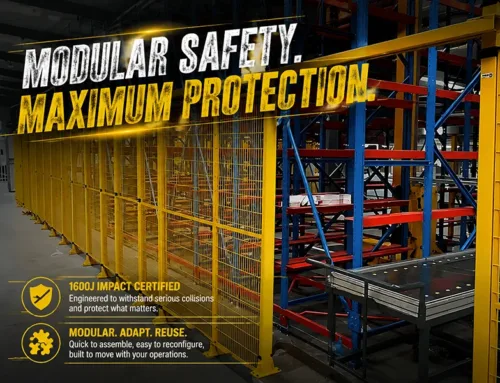
The Engineering Logic (Why it works): While the mesh is black for visibility *through* the barrier, the structural backbone must scream “Danger.” Using RAL 1023 (Safety Yellow) for the 2.36 x 2.36 inches (60x60mm) Q235 carbon steel posts establishes an unmistakable, high-contrast visual boundary. When anchored with M10 expansion bolts, this Cerca de Segurança Industrial framework is certified to withstand up to 1600 Joules of impact energy—absorbing the kinetic energy of a stray pallet or minor forklift bump through plastic deformation rather than catastrophic brittle failure.

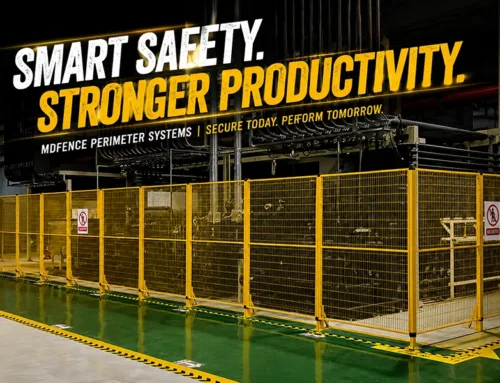
The Operational Benefit (After): You achieve the perfect balance: maximum internal visibility for process monitoring and maximum external visibility for traffic management. The high-visibility yellow posts act as a psychological deterrent for forklift drivers, drastically reducing accidental collisions and protecting your high-value robotics integration investments.
Maintaining Line-of-Sight at Critical Access Points
The Integrator’s Pain Point (Before): Access points are the most dangerous zones in any robotic layout. Using solid steel panels for wide access doors creates massive blind spots. An operator might open a door to load a raw engine block, completely unaware that a robotic arm is currently in its high-speed return trajectory right behind the solid barrier.
The Engineering Logic (Why it works): Mdfence modular door systems—whether sliding, hinged, or folding—utilize the same framed black mesh architecture as the static panels. The 0.78 x 3.93 inches (20x100mm) narrow mesh is fully welded into a rigid frame. This ensures that even massive double sliding doors maintain perfect structural integrity without sagging, while providing 100% visual transparency into the cell before the operator ever touches the lock carrier.

The Operational Benefit (After): Safety interlocks (like Omron or Pizzato) integrated into these Sistemas de Proteção de Máquinas work flawlessly because the doors don’t warp. More importantly, workers have complete situational awareness before entering the hazard zone, eliminating “caught-in/between” accidents and ensuring smooth LOTO (Lockout/Tagout) procedures.
Standardized Color Specifications for ISO Compliance
| Component | Standard Color | Primary Function in Automation Integration |
|---|---|---|
| Vertical Posts (60x60mm) | RAL 1023 (Safety Yellow) | Defines the physical perimeter; alerts AGVs and forklifts to the hazard boundary; supports ISO 14120 visual compliance. |
| Framed Wire Mesh | RAL 9005 (Deep Black) | Eliminates glare; provides optical transparency for machine vision systems and human inspection; hides industrial oil and grease stains. |
| Locking Mechanisms & Carriers | Metallic / Black | Provides highly visible, standardized mounting points for electrical safety interlocks (PLC integration). |
Frequently Asked Questions (FAQs)
1. Why shouldn’t we use all-yellow panels for our automotive robotic cells?
Using yellow for the wire mesh creates a “visual wall” due to light reflection. In brightly lit assembly lines, this causes severe eye fatigue for operators trying to monitor the robotic integration inside, leading to missed defects and unsafe entry into the cell.
2. Does the black powder coating withstand weld spatter in automotive welding stations?
Yes. The RAL 9005 black finish is an epoxy polyester electrostatic powder coating that passes ISO 9227 salt spray tests. It is highly resistant to industrial coolants, machining oils, and minor weld spatter commonly found in robotic welding environments.
3. Are the yellow and black colors compliant with OSHA and ISO machine guarding standards?
Absolutely. The contrast aligns perfectly with ISO 14120 guidelines for fixed guards. The Safety Yellow (RAL 1023) posts fulfill the requirement for hazard boundary identification, while the black mesh fulfills the requirement for safe process observation.
4. Can we use transparent polycarbonate panels instead of black wire mesh for better visibility?
While polycarbonate offers excellent visibility and protection against fluid splashes (like in CNC machining centers), black wire mesh is generally preferred for robotic cells because it allows for essential airflow to cool servo motors and does not scratch or cloud over time in dusty environments.
5. How does the color of the mesh affect the ISO 13857 safety distance calculation?
Color itself does not change the physical reach distance formula (which is dictated by the 0.78 x 3.93 inches narrow mesh opening, allowing installation as close as 4.72 inches to the hazard). However, the superior visibility of black mesh prevents operators from instinctively pressing their faces or hands against the fence to see inside, thereby reducing behavioral risks.