PT
PT  EN
EN  DE
DE  RU
RU  JA
JA  ES
ES  IT
IT 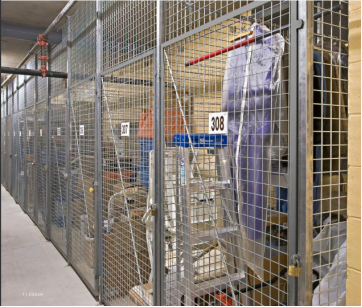
In the world of property management, the basement often exists as a line item on the expense report. It’s a space that demands maintenance, lighting, and occasional pest control—a cost center. We’re conditioned to think of it in terms of problems: it’s cluttered, it’s damp, it’s underutilized.
But I want to propose a fundamental shift in that thinking.
Imagine you owned a small retail strip, and one of the storefronts sat empty for years. You would never allow that. You’d see it as a glaringly obvious source of lost income. It’s time we started looking at our basements with that same commercial real estate mindset. That unused square footage isn’t just a problem to be solved; it’s a dormant, underperforming asset waiting to be activated.
The biggest barrier to activating it is often the perceived cost. Building a business case that can get ownership excited requires more than just saying “we can make some money.” It requires a clear, compelling calculation of the return on investment (ROI). This article is designed to give you a simple, back-of-the-napkin framework to do just that, transforming you from a manager of costs into a creator of revenue.
Step 1: Size the Opportunity (Calculate Your Gross Revenue Potential)
First, let’s figure out the top-line number. This is the exciting part that will capture your boss’s attention.
Measure Your Usable Space:
Grab a tape measure. Forget the boiler room and inaccessible crawl spaces. Measure the open, contiguous areas that could realistically be converted. Let’s say you find a clear area that’s 40 feet by 30 feet. That’s 1,200 square feet of potential.
Determine a Realistic Unit Mix:
You don’t need to be a professional architect. A good rule of thumb is that a typical storage unit, including clearance for a small hallway, averages about 40-50 square feet. For our 1,200 sq. ft. space, that means you could comfortably fit around 24-30 individual units. Consider a mix of sizes—smaller 4’x5′ units for boxes and larger 5’x8′ units for bikes, furniture, and outdoor gear.
Research Your Market Rate:
This is critical for a credible proposal. Call two or three self-storage facilities in your neighborhood and ask for the monthly rate on their smallest units (e.g., 5’x5′). Let’s say the average is $85/month. Because your storage is on-site—an incredible convenience for tenants—you can often apply a “convenience premium.” Even if you match the market rate at $85, you’re offering a superior value proposition.
Do the Math:
Now, calculate your annual gross potential.
25 Units x $85/month = $2,125 in new monthly recurring revenue.
$2,125 x 12 months = $25,500 in new annual revenue.
This is your headline. It’s a powerful number that reframes the entire conversation from “fixing a problem” to “launching a new, profitable service.”
Step 2: Understand the Investment (The “I” in ROI)
Now we need to look at the cost side with a clear, unsentimental eye. There are two primary paths, each with a vastly different financial profile.
The “Heavy” Path (Traditional Construction):
This involves contractors, permits, drywall, framing, electrical—the works. If you get a quote for $70,000, a seasoned manager knows to budget at least 20-30% more for contingencies. The “surprises” we discussed in our last post—the code compliance, the unforeseen structural issues—are almost a certainty. So, for your business case, you should be using a realistic, all-in number, say $90,000.
The “Lean” Path (Modular locker wire Systems):
This approach is fundamentally different. It’s a product, not a construction project. The costs are primarily the materials and a predictable number of labor hours for assembly. There are no demolition, drywall, or extensive system rework costs. For the same 25-unit project, a realistic all-in cost for a heavy-duty modular locker wire system might be around $28,000.
Step 3: Calculate the Payback Period (The “Aha!” Moment)
This is where you bring it all home. The payback period is the single most important metric for any investor or property owner. The formula is simple: Total Investment / Annual Net Revenue = Payback Period in Years. (For this exercise, we’ll use Gross Revenue, though a more detailed analysis would factor in minor ongoing costs).
Let’s compare our two paths:
Construction Payback: $90,000 / $25,500 per year = ~3.5 years. This means for three and a half years, all revenue is simply paying off the initial investment.
Modular System Payback: $28,000 / $25,500 per year = ~1.1 years (or about 13 months). After just over a year, the system is fully paid for, and every dollar of revenue thereafter is pure profit contributing to your Net Operating Income (NOI).
This is the number that makes you a hero. It’s the difference between a long-term capital project and a self-funding amenity that turns profitable while your colleagues are still getting their construction plans approved.
By shifting your perspective and running these simple numbers, you change your role. You are no longer just maintaining a building; you are actively managing an asset portfolio. You have a data-driven case that demonstrates your ability not just to control costs, but to intelligently invest in revenue creation. That cluttered basement isn’t a liability; it’s the most straightforward business case you’ll make all year.