PT
PT  EN
EN  DE
DE  RU
RU  JA
JA  ES
ES  IT
IT 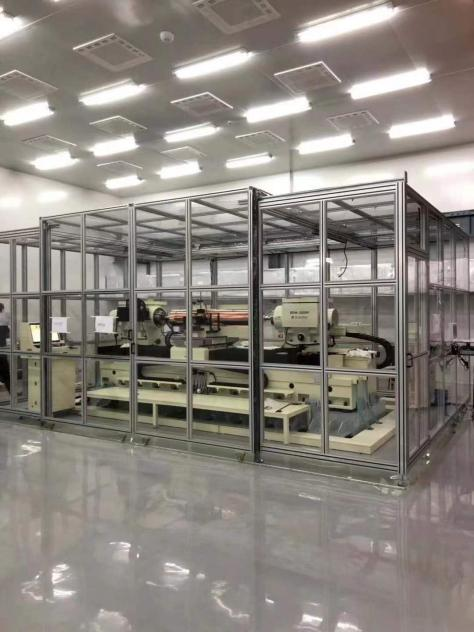
A Strategic Briefing for Manufacturing Leaders
For a decade, Industry 4.0 has captivated manufacturing with its digital promise: IIoT, AI, machine learning, and digital twins. Companies invest millions in sensors, analytics platforms, and cloud computing – creating agile digital nervous systems. But a critical question remains: What value does hyper-agile “software” deliver when constrained by rigid physical “hardware”?
The smart factory revolution stalls because production floors remain industrial relics. Static infrastructure bottlenecks digital ambitions. This briefing addresses the imperative to align physical infrastructure with digital transformation goals.
The Core Conflict: Digital Twins vs. Static Reality
Digital twins enable rapid simulation and optimization – identifying efficiency gains in minutes. But consider discovering a 15% productivity improvement requiring robotic cell reconfiguration. With traditional welded Cerca de Segurança Industrial, implementation means:
- Two-week production shutdowns
- Five-figure operational expenses
- Contractor mobilization delays
The result? Valuable optimizations remain unimplemented. This impedance mismatch between digital capability and physical inflexibility represents Industry 4.0’s greatest barrier.
Modern Manufacturing’s Physical Demands
Contemporary production principles clash with fixed infrastructure:
- Mass Customization: “Lot size one” requires production lines that reconfigure rapidly
- Autonomous Systems: AMRs/AGVs need adaptable layouts optimizing navigation
- Data-Driven Optimization: Insights require physical systems that implement changes rapidly
Rigid Cerca de Segurança Industrial exemplifies this misalignment, creating costly change resistance.
The Paradigm Shift: Physical Infrastructure as a System
Software development revolutionized through “Infrastructure as Code” – treating hardware as flexible, version-controlled components. We must apply this paradigm to production environments:
- View factory layouts as configurable systems, not permanent constructions
- Treat walls, workstations, and safety guarding as modular components
- Enable deployment, scaling, and reconfiguration on demand
Modern Aluminum Profile Fence systems embody this philosophy. Their T-slot architecture serves as the factory floor’s physical API – allowing component reconfiguration with USB-like simplicity.
The Vision: Sentient, Scalable Factories
When physical infrastructure matches digital agility, transformation accelerates:
- Simulation-proven layouts implemented in single shifts
- Continuous synchronization between digital twins and physical reality
- Intelligent Cerca de Segurança Industrial becoming IIoT nodes providing cycle-time data and safety analytics
Modular Aluminum Profile Fence systems enable this transition from automated to truly adaptable facilities.
Leadership Imperative
Industry 4.0 investment extends beyond algorithms and data. To unlock transformative ROI, leaders must address foundational physical agility. The critical question evolves from “What software makes us smarter?” to “Is our physical hardware limiting our software potential?”
The next industrial revolution will be led by organizations recognizing that production environments must become as dynamic, modular, and scalable as the code running upon them. Modern Aluminum Profile Fence solutions provide the physical infrastructure layer enabling this evolution.