PT
PT  EN
EN  DE
DE  RU
RU  JA
JA  ES
ES  IT
IT Scrap dismantling cells • cold-work retrofit
Safety guarding systems for scrap dismantling cells that cannot use hot work
When residual fuel, oil, and metal dust make a demolition line a fire-risk zone, safety guarding systems must be installed without welding, cutting, or sparks. Mdfence gives retrofit plants a fast cold-work option with high reuse value and far less shutdown time.
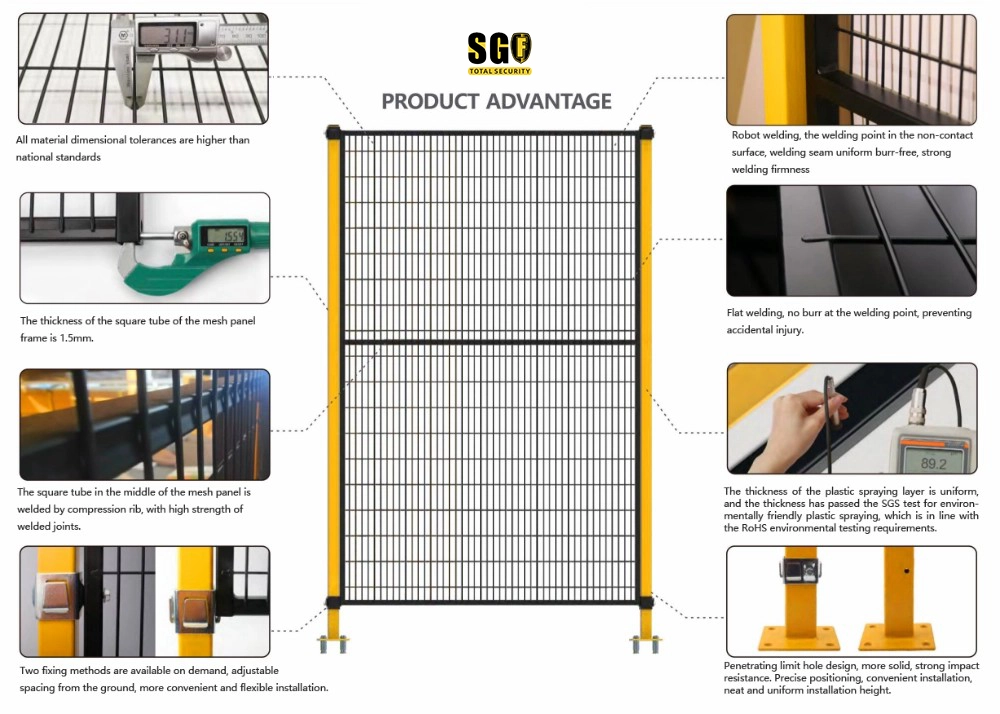
Why cold-work guarding matters in high fire-risk dismantling areas
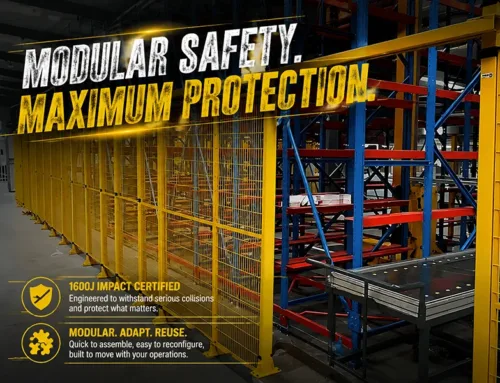
In scrap dismantling and metal recycling, the problem is not only containment. The real issue is how to protect operators and equipment without introducing new ignition sources. If the fence must be welded, cut, or reworked on site, the guarding project itself can become the hazard. Mdfence is built for that exact condition: fast mechanical assembly, no hot work on site, and a layout that can be dismantled and rebuilt when the line changes.
| Project challenge | Resposta do Mdfence |
|---|---|
| Residual fuel, oil, and dust create a fire-sensitive work zone | Cold-work installation avoids welding and cutting, so no sparks are introduced during assembly |
| Frequent line changes make fixed fencing expensive to keep | Modular posts, mesh panels, and clamps let the fence be removed and rebuilt without destroying the asset |
| Shutdown cost rises when retrofit work takes too long | Mechanical assembly shortens on-site installation and helps reduce downtime during plant upgrades |
| Old fencing often becomes scrap after one revision | Reconfiguration keeps most components in service, supporting the 95%+ reuse target for long-term projects |
O que torna o Mdfence adequado para este trabalho
1. No-spark assembly for a hazardous environment
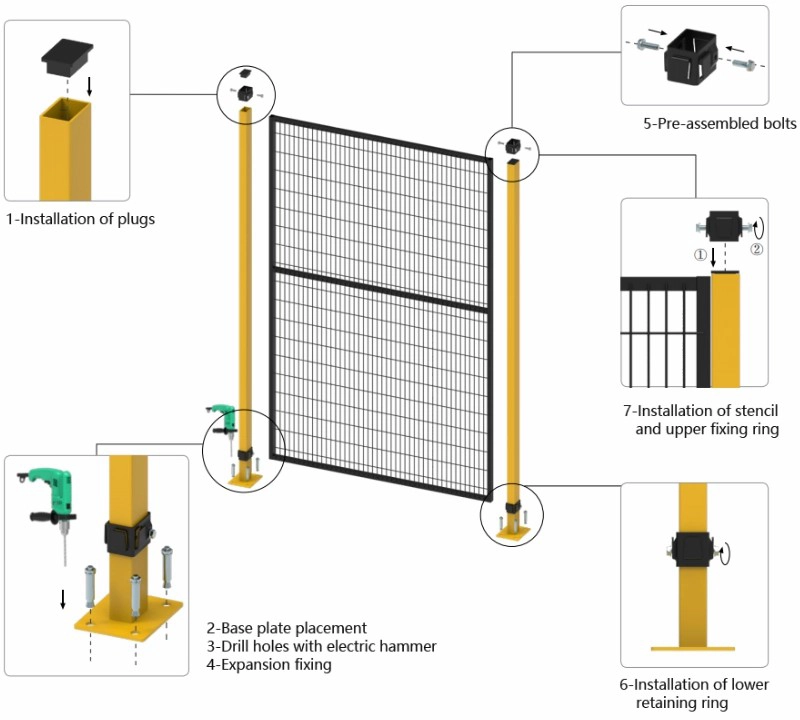
Mdfence uses an interlocking, clamp-based structure that is assembled mechanically on site. That means the guarding team can work inside an explosive-risk dismantling area without bringing in welding, cutting, or other hot-work operations. For a plant manager, that is the difference between a guarding project that protects the line and a guarding project that adds risk to the line.
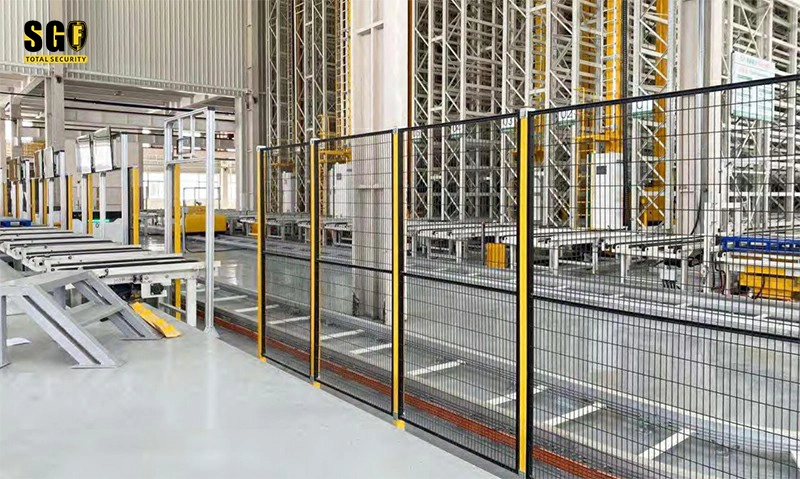
2. Fast re-layout when the process changes
Scrap dismantling plants do not stay still for long. Conveyors move, access points shift, and sorting zones are expanded or narrowed as throughput changes. The Mdfence structure is designed to be taken down and rebuilt without destroying the original investment, so the same guarding asset can be reused as the line evolves. That is why it is a strong fit for retrofits where asset reuse matters as much as first-pass installation.
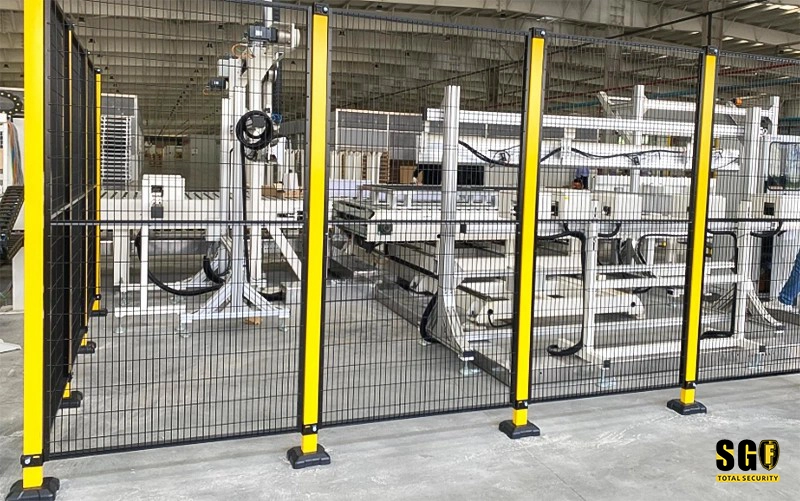
3. Built for perimeter control, not just visual separation
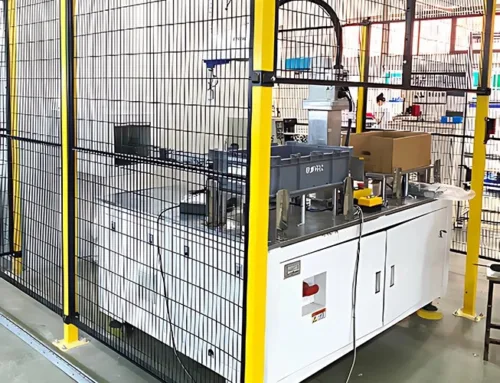
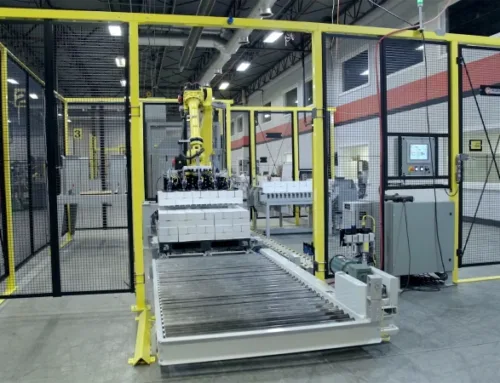
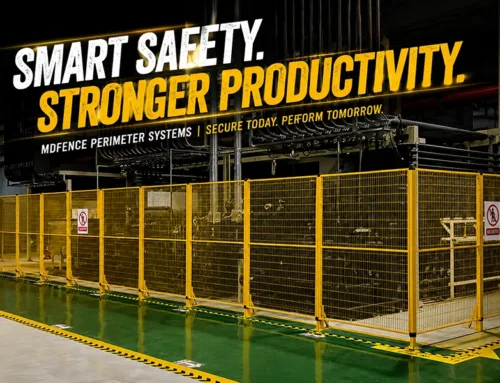
The clean factory image shows the kind of job Mdfence does well: define a working envelope, separate people from moving equipment, and maintain a clear boundary around the process area. The coated steel structure, fixed base detail, and mesh panel layout give the fence the mechanical discipline needed for heavy industrial use, while still leaving the system flexible enough for future changes.
Where this solution is the right fit
- Automotive dismantling cells with residual fuel, oil, or other ignition-sensitive residues
- Metal dust and scrap sorting areas where hot work is difficult to approve
- Retrofit projects that need a fast shutdown window and a clean installation method
- Plants that expect frequent line changes and want guarding assets to be reused instead of scrapped
For these sites, the goal is not to buy a fence once and forget it. The goal is to install a guarding system that can move with the process, keep installation safe, and preserve value when the plant is upgraded again.
What to prepare before a retrofit quote
Share the cell size, access points, equipment location, and the parts of the line that must stay live during upgrade work. With that information, Mdfence can be planned as a cold-work safety guarding systems layout that fits the fire-risk zone and the next revision of the process.
Move from hot-work risk to cold-work reconfiguration
If your dismantling line is in a fire-sensitive area, Mdfence gives you a practical way to guard the cell without sparks, shorten installation time, and keep most of the system in service when the layout changes.