EN
EN  DE
DE  RU
RU  PT
PT  JA
JA  ES
ES  IT
IT Robot fencing systems
Robot fencing systems for woodworking lines that need a tighter perimeter
Pallet nailing and cutting machines can throw wood chips, off-cuts, and broken nails at speed. If the guard uses a large opening mesh, the safe perimeter has to move far away from the machine, and that wasted setback eats valuable floor area. Mdfence is built for that exact problem: a 20x100mm narrow-slot mesh that contains flying debris while supporting a compact 120mm safety distance layout for space-starved plants.

Why Mdfence fits pallet nailing and cutting cells
Wood processing equipment is a difficult guarding case because the hazard is not only the rotating blade or nailing head. The bigger issue is the mix of fast-moving wood fragments and metal nail breakage that can leave the machine footprint. A standard large-aperture fence may look economical at first, but it often forces the entire guard line to sit too far from the process. That means the plant loses production and storage area just to meet a safety offset. Mdfence solves the geometry first: a tighter mesh opening, a containment-focused panel structure, and a layout that supports a shorter setback when the machine perimeter is assessed correctly.
| Requirement | Mdfence detail |
|---|---|
| Primary hazard | Flying wood chips, broken nails, and cutting debris from pallet processing equipment |
| Mesh geometry | 20x100mm narrow-slot opening designed to block small, high-speed fragments |
| Compliance support | Precision mesh construction passed the finger-test requirement needed for a compact safety offset |
| Layout benefit | Supports a 120mm safety distance concept instead of pushing the fence line deep into the factory |
| Plant result | Releases more usable space for production aisles, infeed, staging, and storage |
Structure and proof points behind the narrow-slot design
1. The mesh opening is small enough to stop debris that large-aperture panels miss
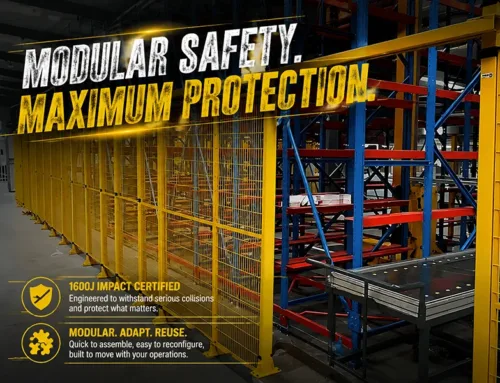
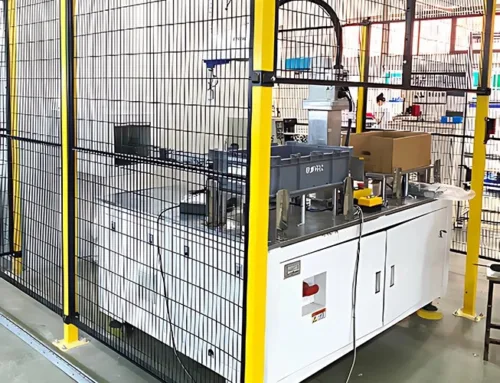
The first visual proof is the panel itself: the fence is not designed as a generic enclosure, but as a narrow-slot guarding surface. In pallet nailing and cutting zones, the problem is rarely only a person entering the hazard area. The real issue is containment of chips, splinters, and nail fragments that can travel past an ordinary mesh. The 20x100mm opening gives Mdfence a tighter interception pattern, so the guard can control smaller fragments before they reach the aisle or an adjacent workstation.

2. The safety distance can be compressed without wasting the whole building layout
The second image speaks to the real commercial gain. Once the mesh can support the compact offset, the fence no longer needs to sit far away just to compensate for a wide opening. That matters in North American plants where every square meter must serve production, staging, or logistics. With Mdfence, the safety line can be planned around a 120mm setback target, which helps preserve usable floor area near the machine while still keeping the perimeter controlled.

3. The guarding concept is made for pallet nailing and cutting lines, not generic factory traffic
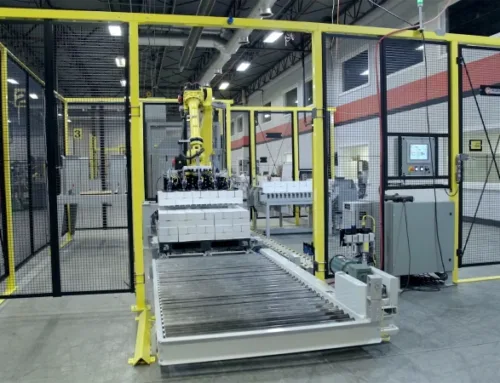
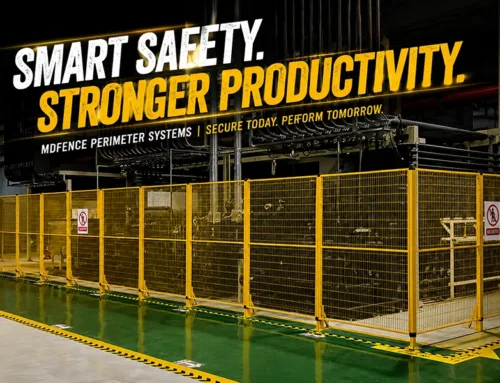
The third evidence point is application fit. Pallet lines are aggressive work cells: nailing heads, saws, and infeed/outfeed movements all create a sharper hazard profile than ordinary machine rooms. Mdfence is shaped for this type of perimeter because it balances debris containment with a practical fence layout around the machine. The result is not just protection. It is a cleaner machine island that can be integrated into a busy plant without swallowing the room around it.

Where this guarding system fits best
- Pallet nailing lines that throw broken nails and wood chips into the surrounding area
- Cutting stations where splinters and off-cuts can travel beyond the machine footprint
- Wood processing cells that need compact perimeter control instead of a wide setback zone
- Retrofit projects where plant managers want to recover floor area without loosening safety discipline
Mdfence is strongest when the priority is both containment and compactness. If the fence is only used to mark a boundary, a cheaper large-opening panel may be enough. If the line throws debris at speed and the factory cannot afford to waste space, the narrow-slot design becomes the better fit. That is why the product is a practical answer for plants that need a tighter machine perimeter and a layout that still works for daily operations.
What to confirm before you lock the layout
Before you freeze the fence footprint, confirm the machine type, the direction of debris travel, and the clearance needed for material flow around the line. Then match those inputs to the 20x100mm mesh format and the compact 120mm safety distance concept. That way the guarding design is tied to the real hazard, not to an oversized default barrier that consumes more building area than necessary.
Need a robot fencing systems layout for a wood processing line?
If your pallet nailing or cutting cell is losing space to an oversized safety buffer, Mdfence can help you map a tighter perimeter around the machine while keeping the debris problem under control. Share the line sketch, machine footprint, and target setback, and we will translate the requirement into a compact guard layout.