EN
EN  DE
DE  RU
RU  PT
PT  JA
JA  ES
ES  IT
IT Robot Safety Fence for plasma cutting and milling cells
Robot Safety Fence for Plasma-Cutting Debris Control and Floor-Space Recovery
When plasma cutters and milling machines throw hot chips at speed, the challenge is not only containment. The real cost is the aisle you lose when a fence has to be pushed back for safety. This Robot Safety Fence uses a 20×100 mm anti-reach mesh and a 20×30 mm fully welded rectangular tube frame so the guarding can sit legally close to the hazard and recover valuable floor area.
Why the old wide-mesh fence wastes space
A large plasma cutting bay does not behave like a light-duty machine cell. Fast metal chips, flying burrs, and cutting spatter demand a barrier that blocks impact without forcing the guard line far away from the equipment. If the mesh opening is too large, the fence must be installed farther from the danger zone to stay compliant. That means dead floor space, longer walking routes, and less usable production area.
| Problem | Robot Safety Fence answer |
|---|---|
| High-speed chip and spatter release | 20×100 mm narrow aperture helps stop tool-fed debris from passing through. |
| Fence line pushed too far from machine | Compact anti-reach geometry supports installation as close as 120 mm where the risk assessment allows. |
| Frame deflection under impact or vibration | 20×30 mm fully welded rectangular tube frame adds stiffness and keeps panels aligned. |
| Lost usable factory area | Near-hazard placement recovers aisle width and keeps the layout efficient. |
Why this guarding structure fits plasma-cutting and milling lines
Narrow aperture for debris containment
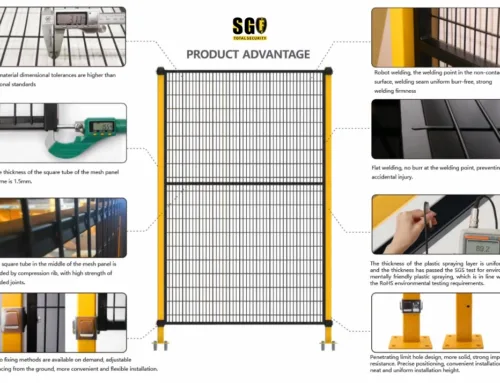
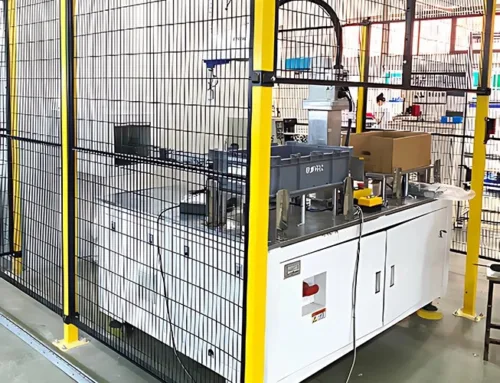
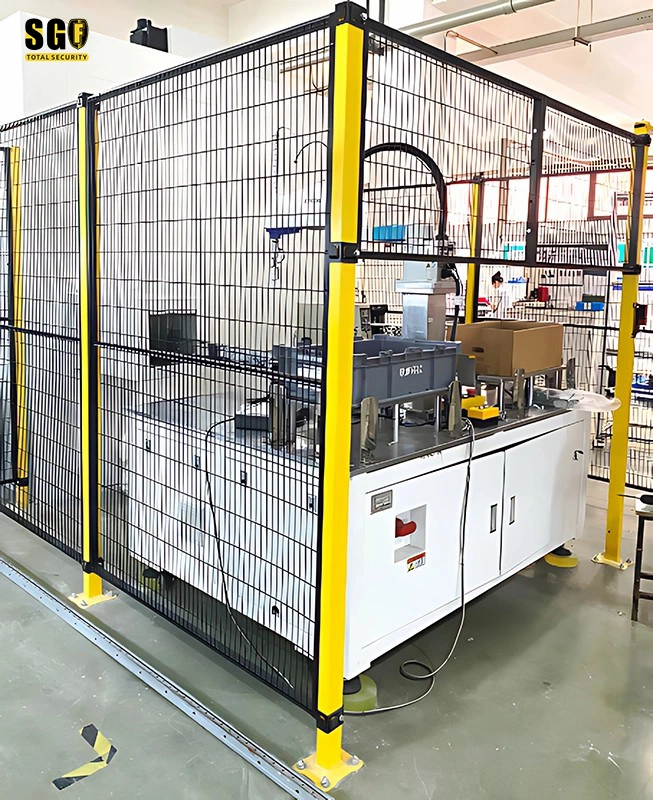
The first requirement is simple: stop the chips before they leave the cell. The 20×100 mm narrow mesh is built for that job. It is tight enough to block the kind of fast-moving scrap that tends to ricochet out of cutting and milling zones, yet open enough to keep visibility and inspection practical. The specification board in the image is the proof point: the product is not a generic fence, but a built-for-purpose guarding system with measurable details.
Stiff frame that stays straight
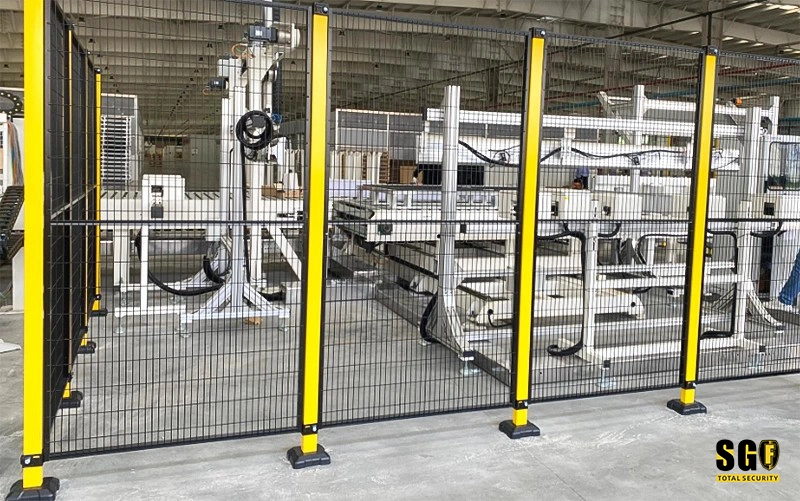
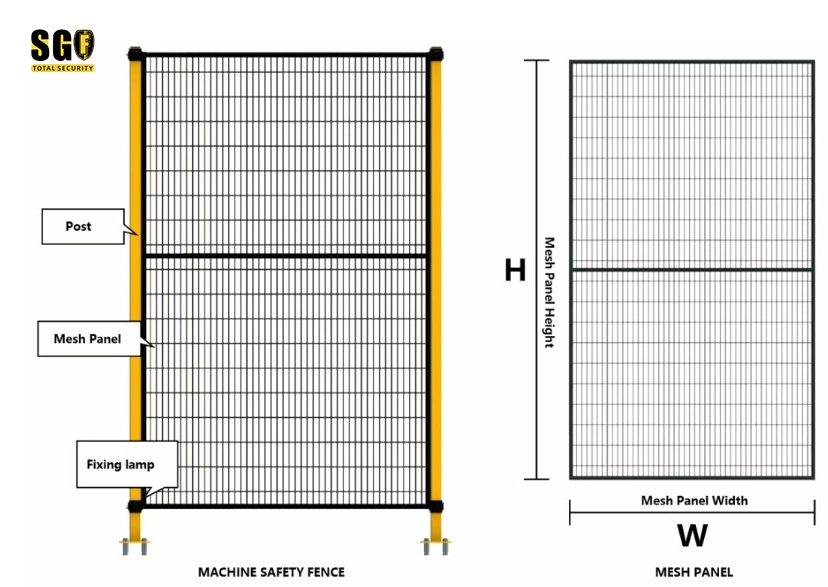
Containment alone is not enough if the fence racks, flexes, or opens gaps at the joints. That is why the frame uses 20×30 mm fully welded rectangular tube members. The technical view shows the post, mesh panel, and fixing clamp relationship clearly, which matters on a real machine line where accuracy at each connection point decides whether the fence line remains stable over time.
Layout that gives floor space back
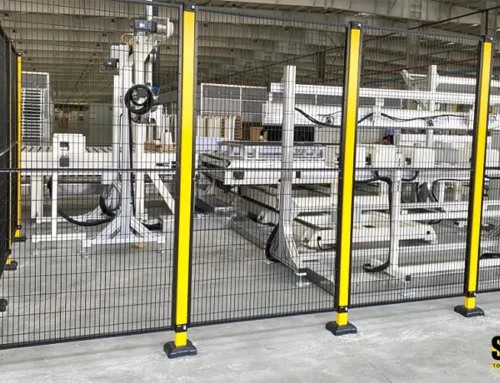
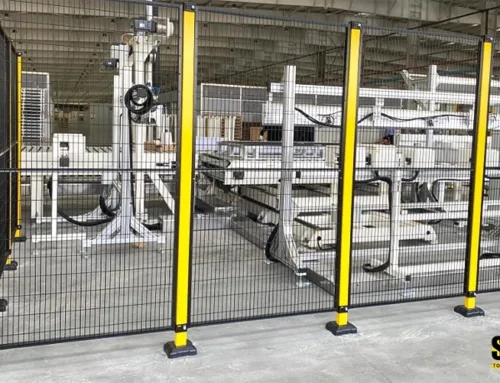
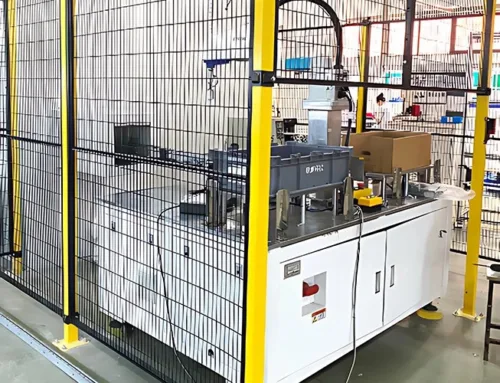
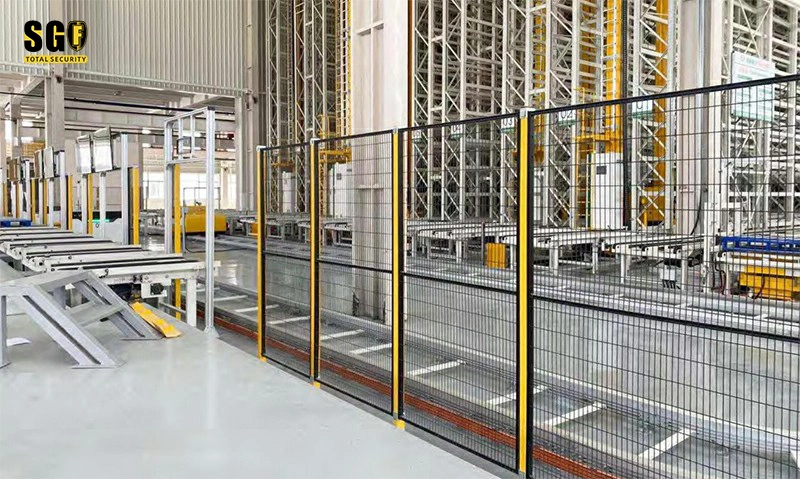
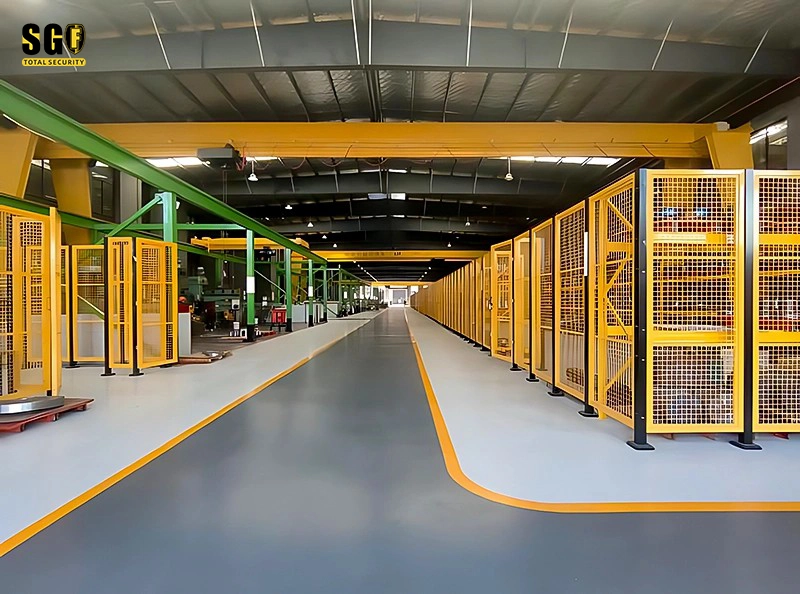
The real payoff appears on the factory floor. By keeping the guard line close to the hazard, the layout can preserve circulation space without compromising the protection zone. The aisle image shows how the system runs cleanly along the production route instead of consuming the whole room. That is the difference between a compliant barrier and a barrier that quietly destroys usable square meters.
Where the Robot Safety Fence creates the most value
- Plasma cutting cells where high-speed metal chips and spatter must be contained.
- Milling bays that need closer guarding without opening up a large dead zone around the machine.
- Mixed processing lines where operators, carts, and transfer equipment still need a clean route past the cell.
- Factories trying to reclaim expensive floor space while keeping an ISO-aligned guarding strategy.
For plants that run heavy plasma cutting or milling, the right answer is not a wider fence. It is a smarter fence. The Robot Safety Fence combines narrow-aperture containment, stiff welded framing, and close-placement layout logic so the protected cell stays safe while the rest of the shop stays usable.
What to specify before you order
Send the machine footprint, the debris direction, the required access points, and the target clearance around the hazard. Then match that layout against the 20×100 mm anti-reach mesh and the 20×30 mm welded frame. This is the quickest way to confirm whether your cell can move closer to the equipment without losing compliance or service access.
Reclaim floor space without giving up containment
The Robot Safety Fence is built for plants that need both: stronger debris control and a tighter, more efficient layout. If your current barrier forces the fence line too far away from the machine, this is the upgrade that changes the geometry of the whole bay.