EN
EN  DE
DE  RU
RU  PT
PT  JA
JA  ES
ES  IT
IT Machine safety fence for plasma cutting debris control
Machine safety fence for plasma cutting debris control and floor-space recovery
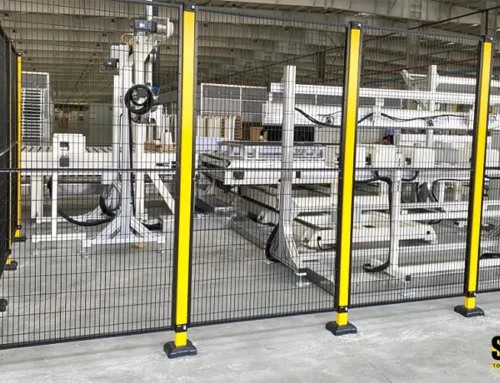
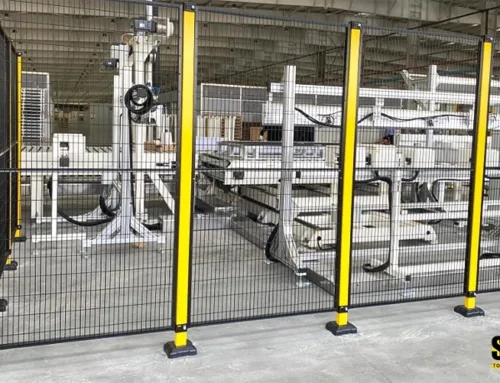
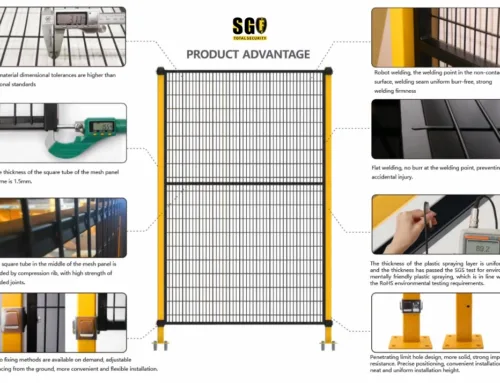
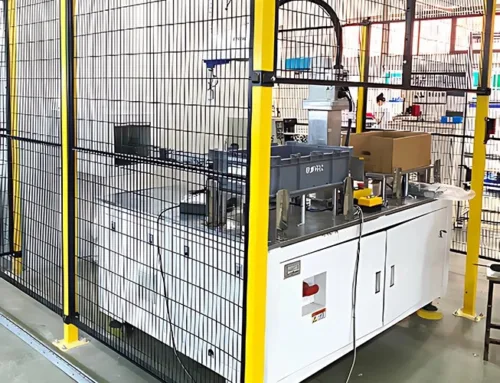
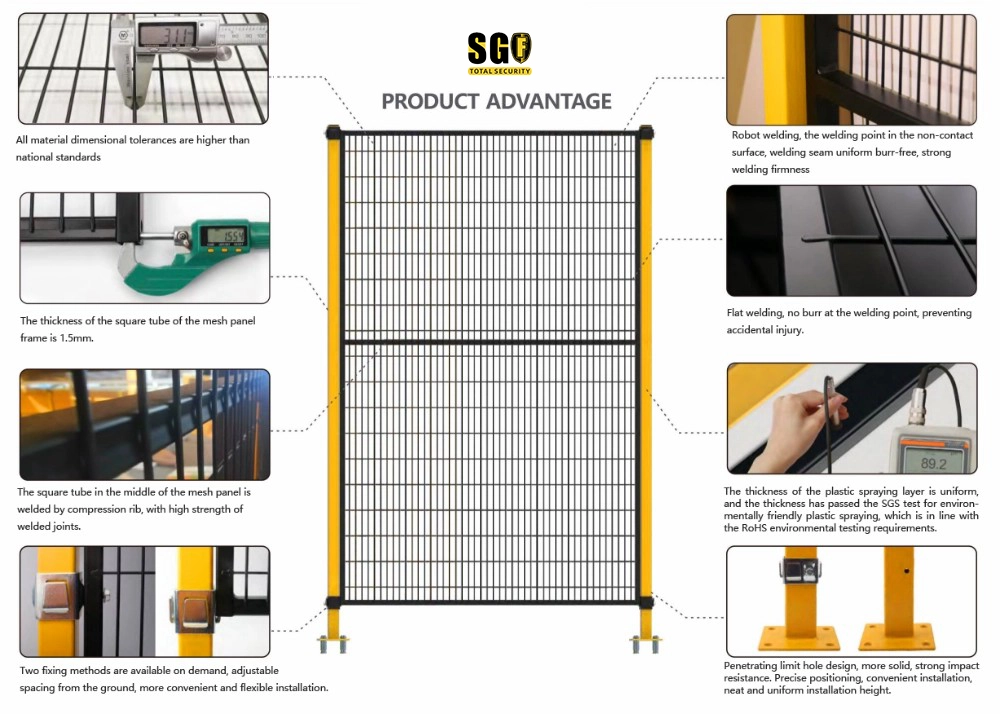
When a large plasma cutter or milling machine throws high-speed metal chips, the real problem is not only containment. If the mesh opening is too large, the fence must move far away from the danger zone, and that wasted aisle can become expensive dead space. Mdfence solves both issues with a 20x100mm anti-finger mesh and a rigid 20x30mm fully welded rectangular tube frame, so the fence can be installed as close as 120mm while still meeting ISO-aligned safety requirements.
Why the old fence layout wastes floor area
In cutting bays, the old trade-off is predictable: the mesh must be open enough to satisfy a generic guard concept, but that same openness fails to stop flying debris at the point where it matters most. Once the barrier has to be moved back to keep a safe separation, the machine cell grows, forklift circulation tightens, and the plant loses usable floor area. For high-value workshops, that is not a minor design detail. It is recurring cost.
| Requirement | Mdfence answer |
|---|---|
| Flying chip control | 20x100mm narrow aperture mesh blocks high-speed metal splash and reduces hand-reach risk |
| Structural rigidity | 20x30mm fully welded rectangular tube frame resists bending and keeps panel alignment stable |
| Compact installation | Fence can be installed as close as 120mm from the hazard line where the layout allows |
| Space recovery | Closer placement returns valuable factory floor space that would otherwise stay empty |
| Application fit | Plasma cutting, milling, and mixed machining cells with debris ejection and strict aisle control |
Why this machine safety fence fits the job
1. The mesh is made for chip control, not visual comfort alone
A 20x100mm aperture is tight enough to raise the barrier against finger insertion and to keep airborne metal waste from escaping into the aisle. That matters in plasma cutting zones, where the debris is fast, hot, and irregular. The value here is simple: the fence is designed around the physics of the hazard, not just the shape of the room.
2. The frame carries the load and keeps the line straight
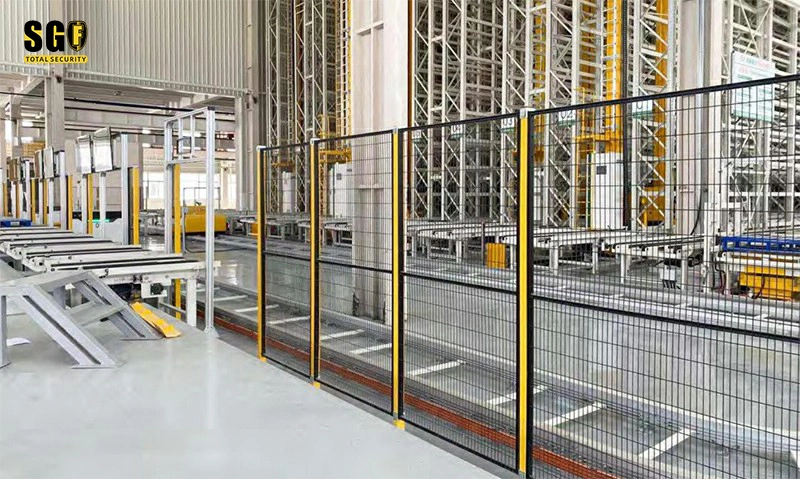
The 20x30mm fully welded rectangular tube frame gives the panel the stiffness that thin welded wire systems usually lack. That rigidity helps the line stay true over long runs, keeps the mesh from “walking” under vibration, and supports a layout that can stay close to the machine without losing confidence in the guard line.
3. Installation details are what make the close approach legal
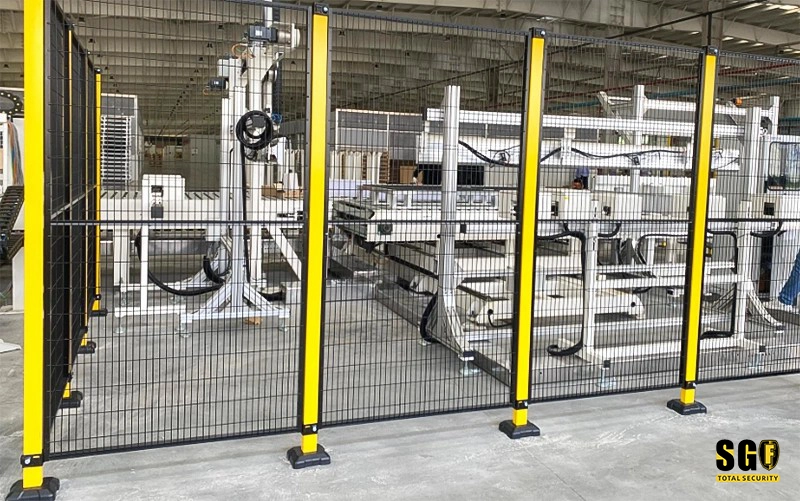
Many fence concepts fail at the base, not the mesh. Mdfence uses a practical mounting structure with base plate positioning, drilling, expansion bolts, and retaining rings, so the final installation is not just strong on paper. It is repeatable on site, and that matters when the fence has to sit as close as 120mm while still respecting the safety plan.
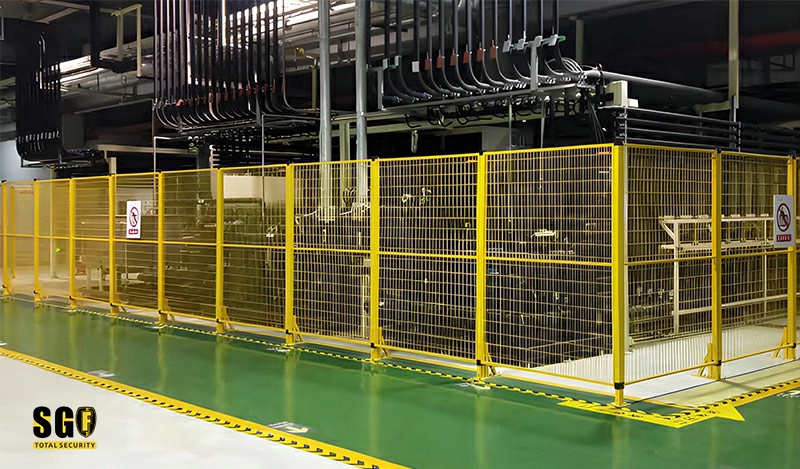
Where the machine safety fence creates the most value
- Plasma cutting cells where chip splash must be stopped before it reaches walkways
- Milling and machining areas where frequent metal waste makes aisle protection critical
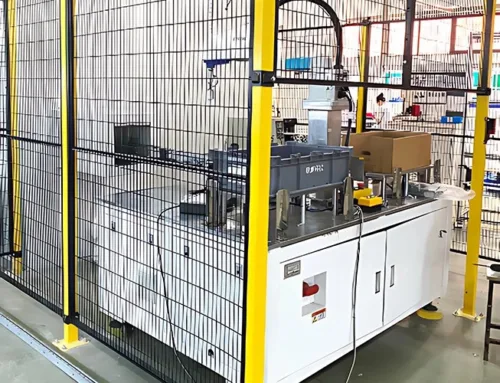
- Compact factory layouts where every extra meter of setback wastes expensive floor area
- Mixed automation cells that need a rigid perimeter and clear access control
- Plants that want a safer enclosure without expanding the machine zone footprint
The best proof is the layout itself: a square enclosed work area can stay compact without feeling fragile. That is where the Mdfence machine safety fence changes the economics of the cell. Instead of paying for dead space, the plant uses the room it already owns.
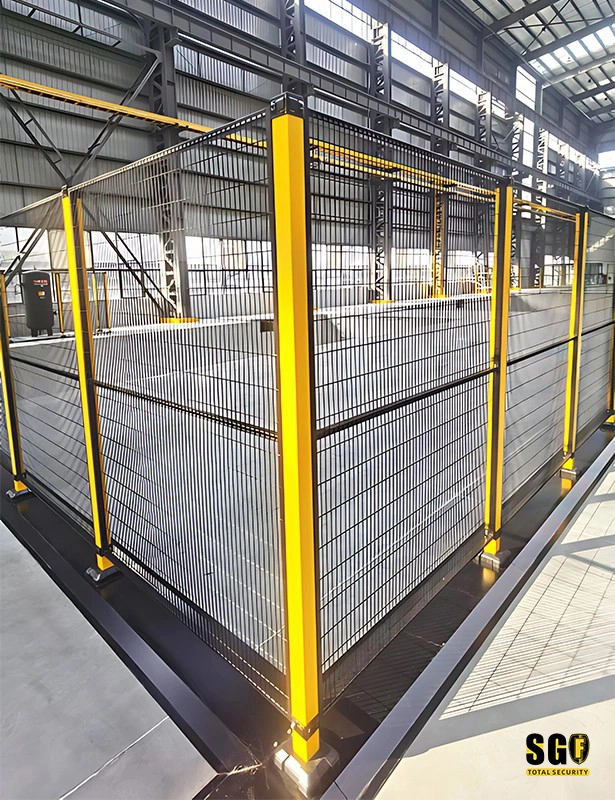
What to specify before you choose a machine safety fence
Start with the debris type, the machine footprint, and the smallest safe installation distance you can hold in the real workshop. Then check whether the panel can keep the aperture narrow enough to contain flying waste while the frame stays rigid under vibration. For this use case, Mdfence is built around the answer: 20x100mm narrow-hole mesh, 20x30mm welded rectangular frame, and a close-fit layout down to 120mm.
Recover floor space without weakening the guard line
If your cutting or milling zone is wasting aisle width just to satisfy a generic fence layout, this is the point to rethink it. The right machine safety fence should stop the debris, protect the operator, and still let the plant reclaim valuable working area. Mdfence is built for that balance.