RU
RU  EN
EN  DE
DE  PT
PT  JA
JA  ES
ES  IT
IT 
Walk through almost any warehouse, and you’ll see the posters: “Safety First!” and the ultimate goal, “Our Target: Zero Accidents.” These messages are born from the best of intentions. As leaders, our fundamental responsibility is to ensure every team member returns home safely. The goal of zero accidents is a noble one.
But it begs a challenging question: If everyone is committed to this goal, why do accidents still happen? The uncomfortable answer is that the “Zero Accidents” mindset is a flawed approach. It focuses on the outcome, rather than the system, and inadvertently places the burden of perfection on your employees. It’s time for a more effective approach: shifting our goal from “Zero Accidents” to “Zero Tolerance for Risk.”
The Hidden Flaw in a “Zero Accidents” Culture
A culture that relentlessly chases “zero accidents” can create negative consequences. It can discourage the reporting of near-misses—the most valuable source of learning in any safety program. An employee who makes a mistake that almost led to an incident may hesitate to report it, fearing blame for tarnishing a perfect record.
More fundamentally, this approach assumes that accidents are primarily the result of individual carelessness. It promotes a reactive cycle: an incident occurs, we investigate “what the person did wrong,” and we implement more training or stricter rules. This is a losing strategy because it ignores a foundational principle: people are fallible. A safety culture built on the expectation of human perfection is a culture destined to fail.
The Power of “Zero Tolerance for Risk”
A “Zero Tolerance for Risk” culture operates on a different premise. It accepts human fallibility as a given. The focus shifts entirely from trying to perfect the human to perfecting the system in which the human works. The guiding question is no longer, “Who made a mistake?” It becomes, “Where did our system fail to prevent that mistake from causing harm?”
This mindset requires leaders to become relentless hunters of risk, using the Hierarchy of Controls. A “Zero Accidents” culture often spends its energy on the weakest controls (training, slogans). A “Zero Tolerance” culture dedicates its resources to the strongest: Engineering controls.
Получите бесплатное предложение
Putting “Zero Tolerance” into Practice
How do you begin this shift? Start by walking your floor and asking a new question at every potential hazard: “If a tired, distracted, but well-intentioned employee makes a predictable mistake right here, what is the worst possible outcome?”
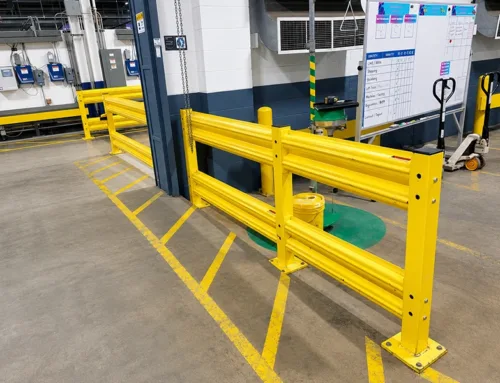
Let’s apply this to the familiar warehouse walkway marked by a yellow painted line. The predictable mistake is a forklift driver cutting a corner too tightly. The worst possible outcome is a life-altering injury to a pedestrian. If the answer is a severe outcome, your system is based on hope, not safety. A yellow line is an administrative control; it relies on behavior. A “Zero Tolerance” approach dictates this is insufficient.
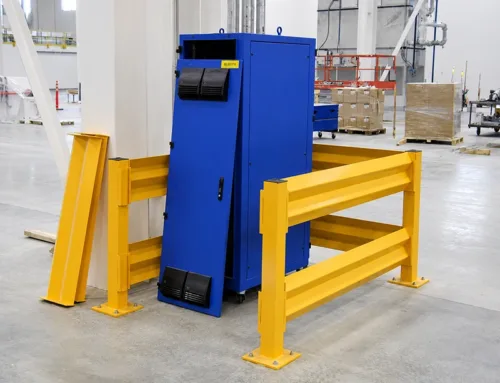
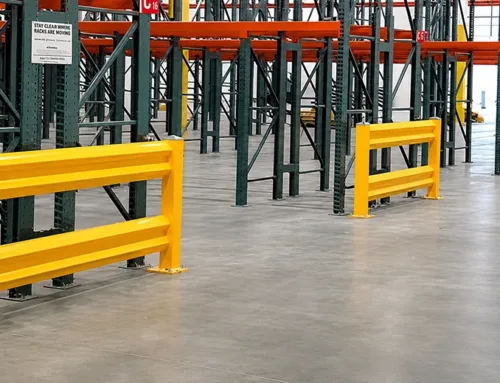
This is where an engineered control, such as гибкие барьеры безопасности, becomes the logical solution. It is the physical embodiment of a “Zero Tolerance” philosophy. It re-engineers the environment so that a predictable human error cannot result in a tragedy. The system, not the person, becomes the guarantor of safety. Investing in solutions like гибкие барьеры безопасности physically prevents the worst-case scenario.
True safety leadership isn’t measured by days without an accident, but by the number of risks you have systematically engineered out of your operation. Stop chasing zero on your incident report. Start hunting for risks with zero tolerance.