EN
EN  DE
DE  RU
RU  PT
PT  JA
JA  ES
ES  IT
IT In an active food plant, the layout problem is rarely about the fence itself. The real blocker is hot work control: flour, milk powder, sugar dust, cardboard, and plastic packaging all raise the cost of any welding job. Mefence solves the installation problem with a frameless, clip-fixed safety fence industrial system that can be assembled without open flame, without sparks, and without shutting down the whole site.
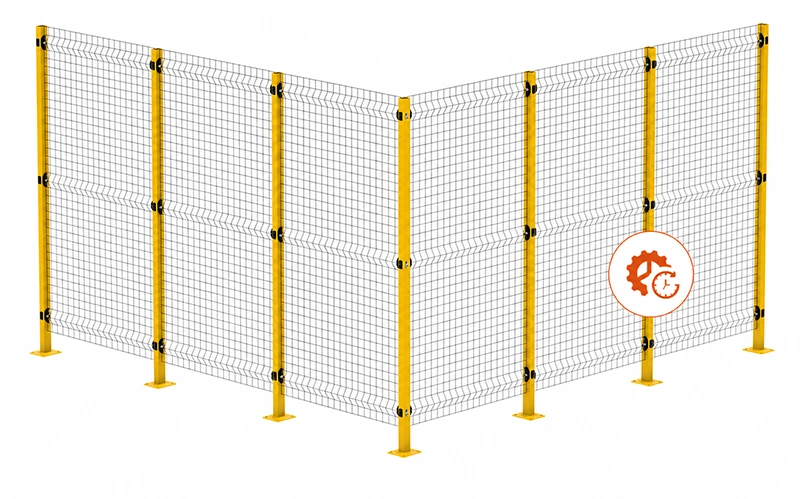
The real problem in food plants: hot work makes the project expensive before the first panel goes in
Food factories run with combustible dust risk, active packaging traffic, and continuous production schedules. That combination turns a simple barrier project into a permit-heavy operation. Traditional welded framing usually means a hot work permit, fire watch, area isolation, cleaning the work zone, and often a production stop or a weekend shutdown. In other words, the fence cost is not the fence cost anymore.
This is why the common answer in food plants is simple: if the project can be done without welding, it becomes far easier to approve, schedule, and complete.
Why Mefence fits this job
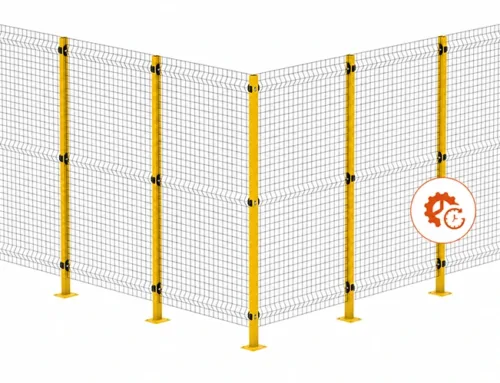
Mefence is SGF’s frameless 3D industrial safety fence. It is built for zoning, machine guarding periphery, and modular workshop separation rather than heavy impact resistance. For a food plant retrofit, that positioning matters: the fence is there to define space, guide movement, and protect people from access to restricted areas — not to create a welded, permanent obstacle that forces a hot work workflow.
- Frameless welded wire mesh design with no perimeter tube frame
- Clip-fixed assembly with plastic clip and self-tapping screw connection
- Optional base plate posts and expansion bolt installation
- Standard yellow-black finish with custom colors available
- 3 mm / 4 mm wire diameter options
- Mesh openings: 20×100 mm or 50×50 mm
- Panel width: 200–1400 mm; panel height: 200–3000 mm
- Post sizes: 40×60 mm or 60×60 mm
Structure evidence: the panel, the post, and the connection details are made for fast on-site adaptation
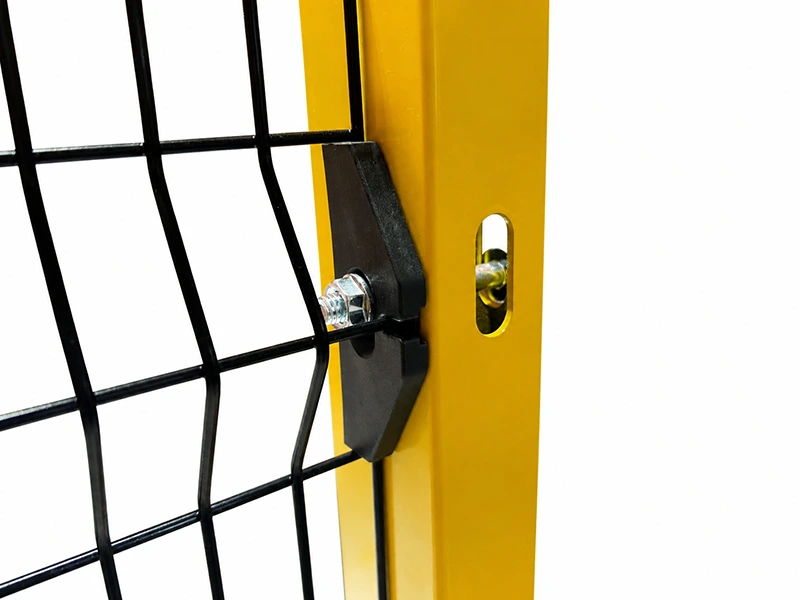
The close-up detail shows the real logic of the system: a powder-coated steel post, slotted holes for adjustment, and a welded mesh panel fixed by bolts and clips. That means the installer can tune the layout around pipes, conveyor edges, columns, and uneven site dimensions without bringing in a welding crew.
The 3D bent mesh profile also matters. It gives the panel stiffness while leaving room for routing, slat inserts, and layout changes. In a food plant, where utility lines and line-side clearances are rarely perfect, that flexibility saves rework.
What the spec sheet actually gives you
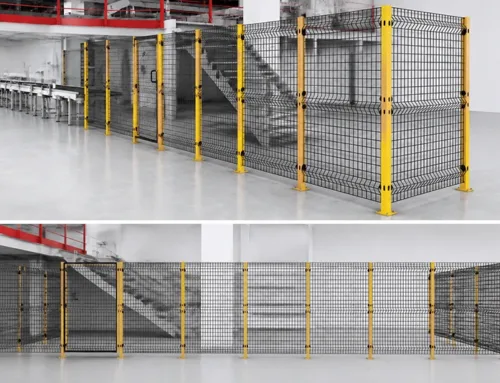
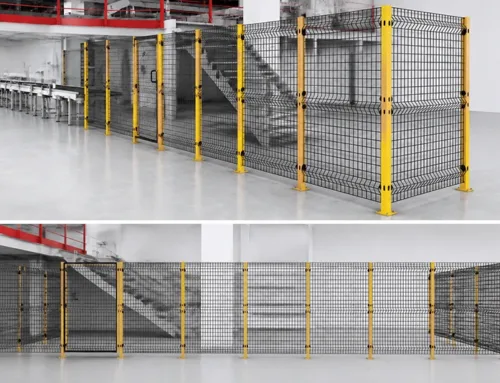
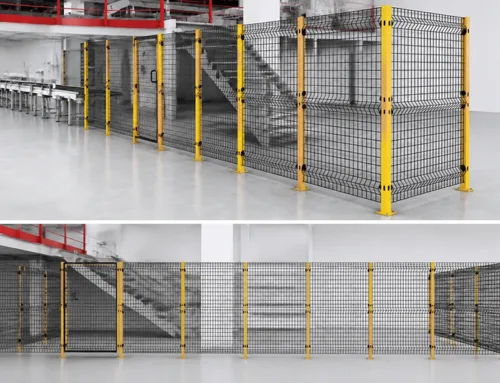
Image proof from a real factory environment
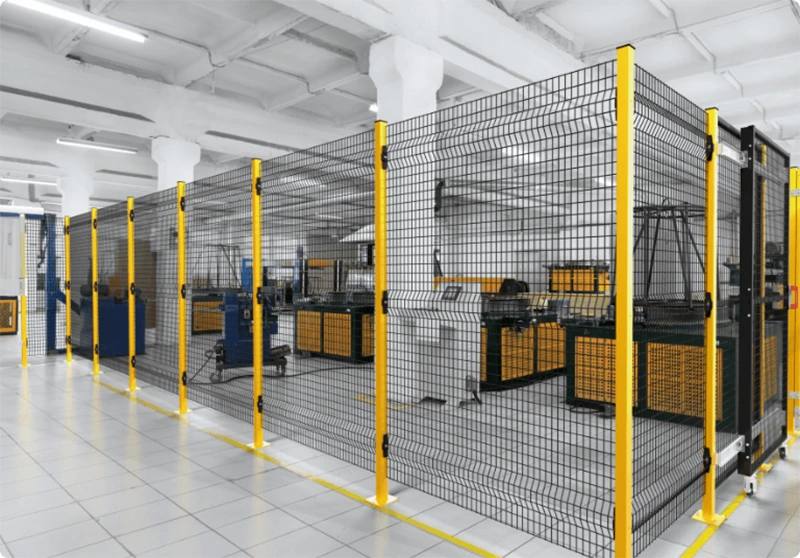
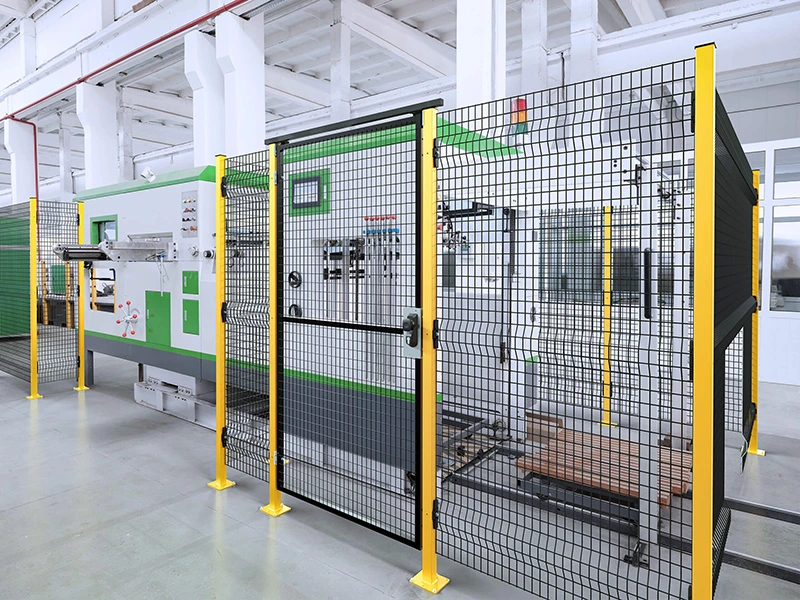
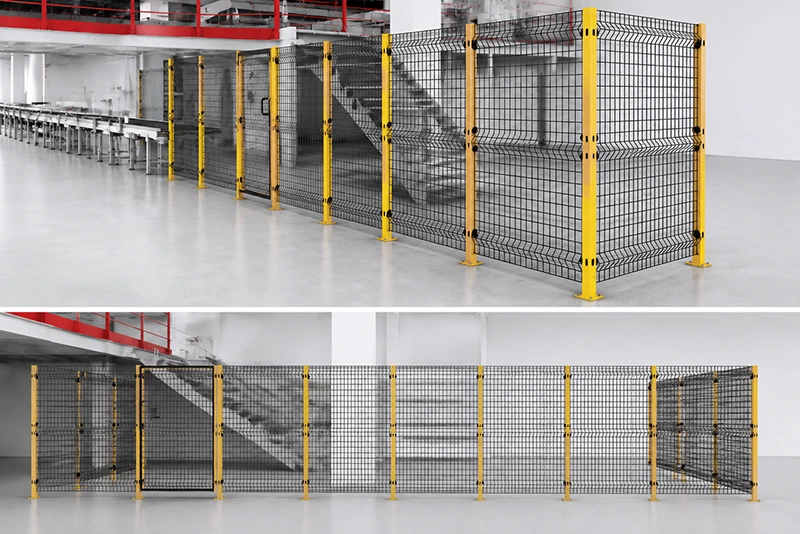
The gallery matters because it proves the same product can do three things food plants care about: define a clean boundary, keep entry controlled, and fit a live production environment without turning the job into a welding project.
Where this approach works best
- Packaging zone separation inside an operating plant
- Maintenance corridors around mixers, conveyors, and filling lines
- Temporary partitions during weekend retrofit work
- Controlled access around robotic or automated equipment perimeters
- Layout changes where standard framed fences are too rigid
And one important boundary: zero hot work means the installation process avoids open flame, sparks, and on-site welding. It does not mean the fence itself is fireproof or flame-retardant. For food plants, that distinction is important.
Final result: a fence that makes the permit problem smaller, not bigger
In a food plant, the winning solution is not the fanciest barrier. It is the one that can be approved, installed, and put into service without disrupting production. Mefence turns that into a practical retrofit path: no welding, no sparks, no hot work permit escalation, and no forced clean-down of the whole site just to add a dividing line.
That is why safety fence industrial is not just a search term here. It is the actual requirement: a fence that fits the plant’s safety process as well as its floor plan.
Need a layout that fits an active food plant?