EN
EN  DE
DE  RU
RU  PT
PT  JA
JA  ES
ES  IT
IT Machine Fencing
safety guarding fence
For pallet nailing and wood cutting lines, the real problem is not only impact risk. Flying wood chips, broken nails, and forced setback distances can waste expensive floor space. Mdfence uses a 20x100mm narrow-slot mesh to stop high-speed fragments while supporting a legal safety distance of just 120mm, helping plants protect operators without swallowing production area.

| Target line | Wood processing, pallet nailing, and cutting equipment |
|---|---|
| Main hazard | Flying wood chips and broken nails |
| Mesh design | 20x100mm narrow-slot mesh |
| Practical safety distance | 120mm after finger-test validation |
| Space outcome | Shorter exclusion zones and more usable shop-floor area |
Why the old wide-mesh fence wastes so much area
Traditional large-aperture safety mesh can satisfy a basic barrier role, but it often fails the job in wood-processing environments. When the machine throws chips, splinters, and nails at speed, the fence must be pushed far away from the hazard to satisfy the safety distance requirement. The result is predictable: the “safe zone” becomes dead space that steals room from production, staging, and storage.
That matters in North American facilities where compliance pressure is real. If the machine guarding strategy is built only around distance, the plant pays twice: once in hardware and again in floor area.
How Mdfence fits wood-chip and broken-nail exposure
Mdfence is built around a 20x100mm narrow-slot mesh, which gives the panel a tighter interception profile than ordinary coarse mesh. That smaller opening helps catch the small, fast-moving debris common in pallet nailing and cutting operations, instead of letting fragments travel through the barrier gap.

Just as important, the mesh is engineered to pass strict fingertip testing, which allows the hazardous source distance to be reduced to 120mm. In practice, that means the fence can be placed much closer to the machine than a generic barrier system, without forcing the site to give up extra square meters to unnecessary setback.
Evidence in the structure, not just the claim
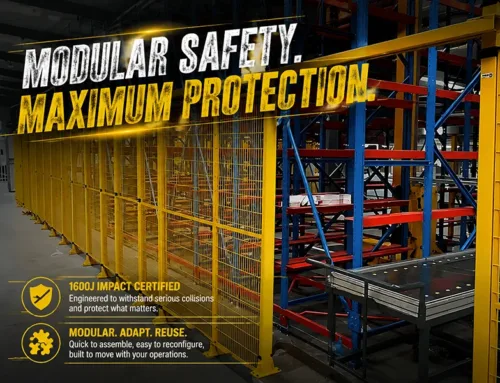
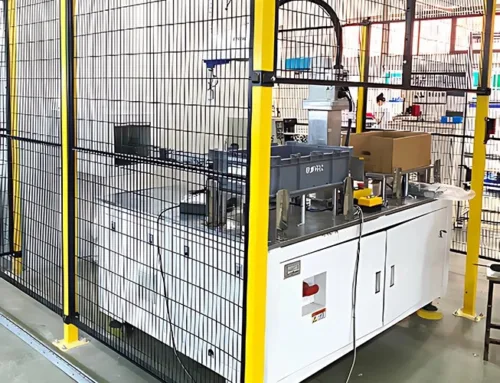
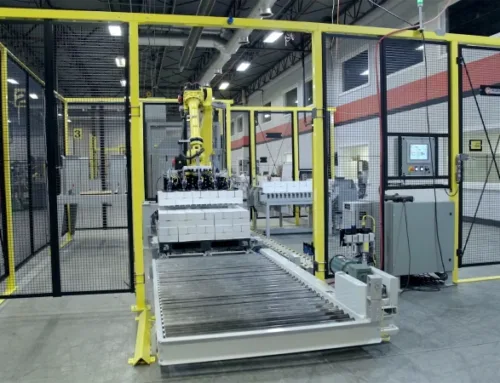
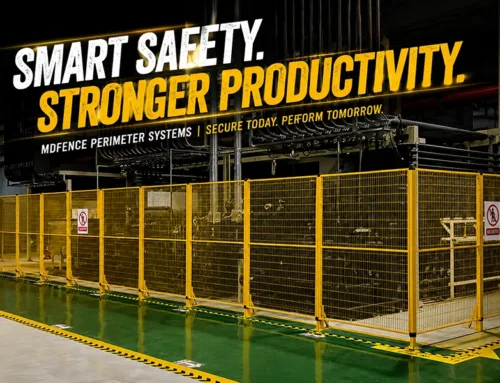
The value of this system is visible in the structure: narrow-slot mesh, rigid frame, and layout-ready panels designed for machine guarding instead of decorative separation. The photos show a clean industrial fence package that is built for controlled access and debris containment, not for broad, open-area enclosure.

This is the difference between a fence that simply surrounds a machine and a fence that protects the line while preserving the aisle geometry a plant actually needs.
Where this safety guarding fence makes the most sense
- Pallet processing cells where nail guns and cutters eject sharp fragments that need tighter perimeter control.
- Woodworking and material-prep stations where floor space is expensive and the safety distance must be kept compact.
- Reston-area production sites trying to recover usable area without weakening OSHA-aligned machine guarding discipline.
What to specify before you build the guarding layout
Start with the machine envelope, the fragment direction, the required access points, and the distance you need to preserve around the hazard. Then map those requirements against the 20x100mm mesh and the 120mm legal safe distance. That is the practical way to decide whether the guarding system is solving the hazard or simply consuming more plant area.
If your current setup forces the fence too far back, Mdfence is the kind of system that lets you tighten the perimeter while keeping the danger zone under control.
Cut the setback, keep the protection
For wood-processing and pallet equipment, the best fence is the one that blocks debris, passes the finger test, and gives your floor plan back to production. Mdfence does all three.