EN
EN  DE
DE  RU
RU  PT
PT  JA
JA  ES
ES  IT
IT MACHINE FENCING | INDUSTRIAL AUTOMATION SAFETY
Scrap Metal Lines Need More Than a Welded Safety Fence
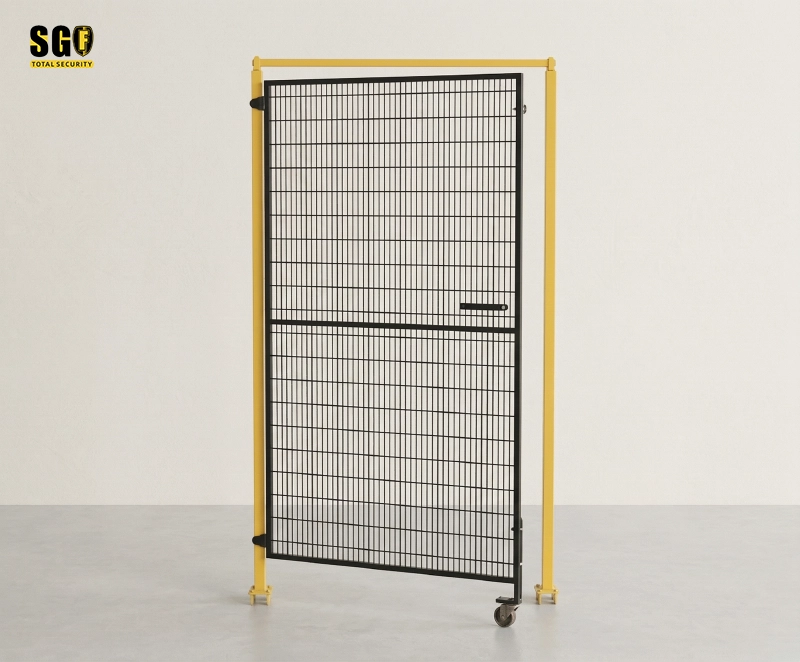
When jam clearing sends maintenance technicians inside a shredder or baler danger zone, machine guarding must do two jobs: create a physical boundary and prevent unexpected production line downtime caused by unsafe restart decisions. This machine safety fencing approach combines modular guarding with a lock-ready safety gate for controlled equipment isolation.
Why Jam-Clearing Areas Need Active Isolation
A welded enclosure alone does not stop an operator from entering during a jam. A temporary chain, padlock, or manually managed warning sign can be missed when production pressure is high. For a heavy-duty scrap metal sorting line and baler, the access point should be part of the machine safety circuit: opening the gate must initiate the site-defined stop and isolation sequence before service work begins.
| Engineering requirement | Machine fencing response |
|---|---|
| Keep people outside moving equipment zones | Modular industrial safety fencing with framed mesh panels creates a visible, configurable equipment isolation boundary. |
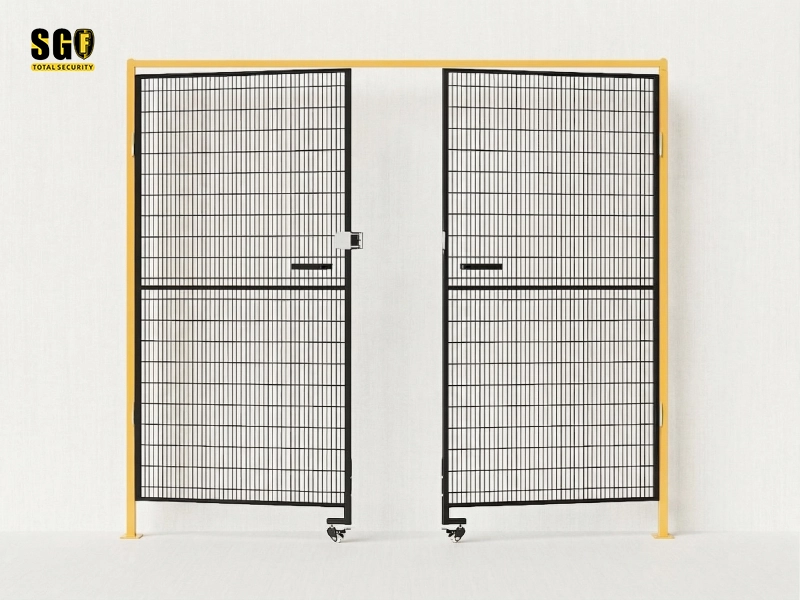
| Control access during jam clearing | A hinged safety door can be fitted with an adaptive lock carrier for mainstream safety interlock devices. |
| Reduce restart exposure | The gate interlock can be wired into the machine emergency-stop or STO architecture by the qualified integrator; the machine response remains site- and risk-assessment-dependent. |
| Support safety documentation | The physical guarding solution can be specified alongside OSHA machine guarding requirements, ISO 14120 and applicable local risk controls. |
Product Fit: A Gate That Can Join the Safety Circuit
Pre-fitted route for Omron and Pizzato devices
The key adaptation is the pre-engineered safety lock mounting carrier. It avoids drilling the gate frame on site and provides a defined mounting position for Omron D4NL and Pizzato FS series safety interlock devices. That makes safety interlock installation a planned interface rather than an improvised fabrication task, helping save engineering hours and shorten an automation project cycle.
Visible structure for machine guarding verification
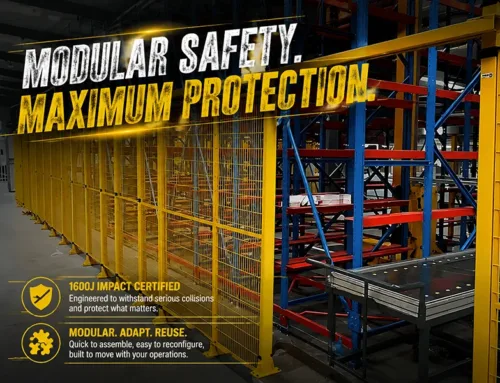
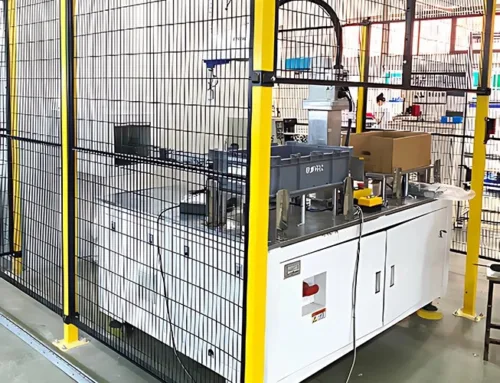
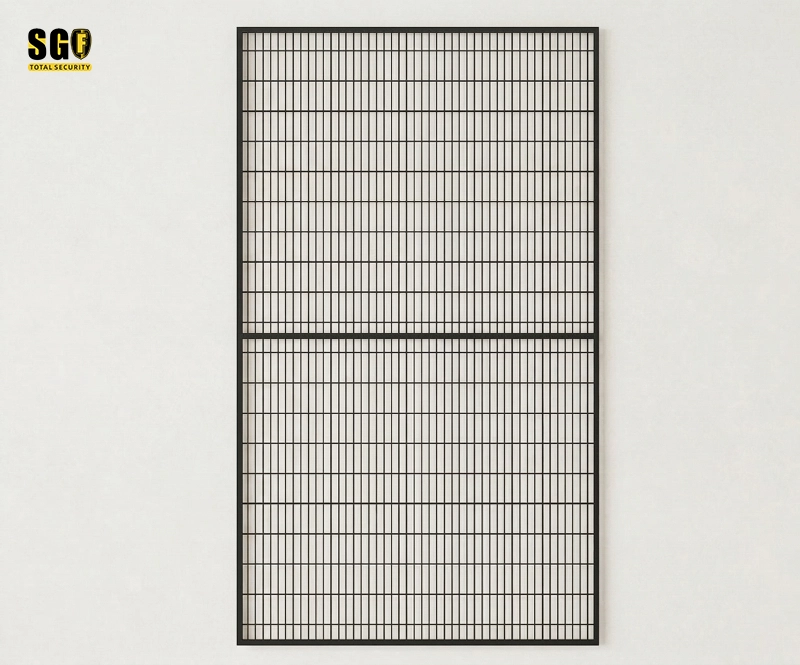
The panel evidence shows a framed mesh construction with a reinforcing mid rail, while the broader system uses steel safety fence posts and modular connections. Depending on the approved configuration, Mdfence references Q235 carbon steel, 2.0mm wall thickness, RAL1023 yellow powder coating, and flat full weld joints with burr-free weld safety design. Confirm the final panel, post, mesh aperture, finish, and impact requirement against the project drawing before release.
Modular perimeter guarding for changing line layouts
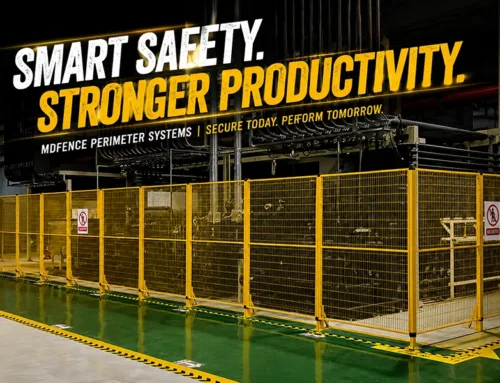
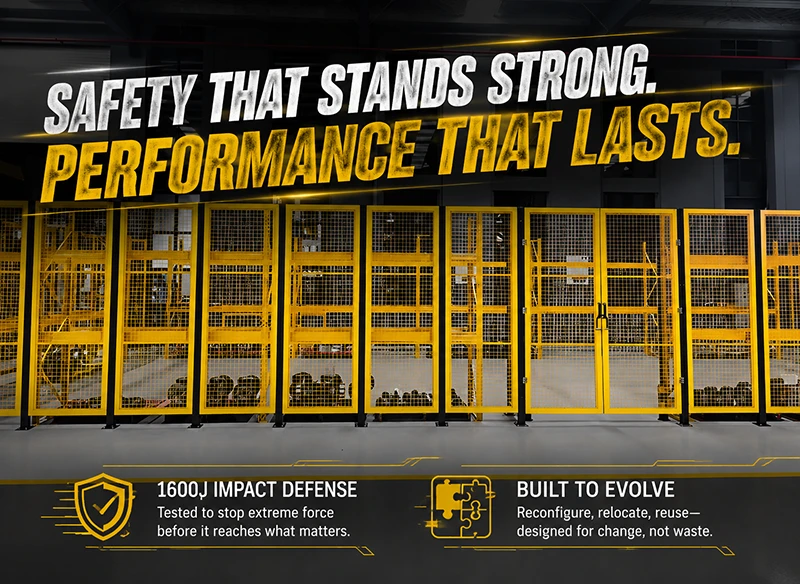
Scrap handling cells are rarely static. Conveyors, balers, access aisles, and maintenance clearances change as equipment is upgraded. A configurable safety fence uses separate panels, posts, gates, and safety fence accessories so the boundary can be extended or rearranged without rebuilding a fully welded enclosure. Floor-mounted steel posts and bolted base plates also provide a clear installation reference for automation system isolation.
Where This Machine Guarding Pattern Applies
- Scrap metal sorting: isolate conveyors, transfer points, and manual inspection or jam-clearing access.
- Baler and shredder maintenance: place a lockable hinged safety door at the service entry and define the isolation sequence with the controls team.
- Automated material handling safety: separate forklift and pedestrian routes from moving machinery with a continuous guarding fence.
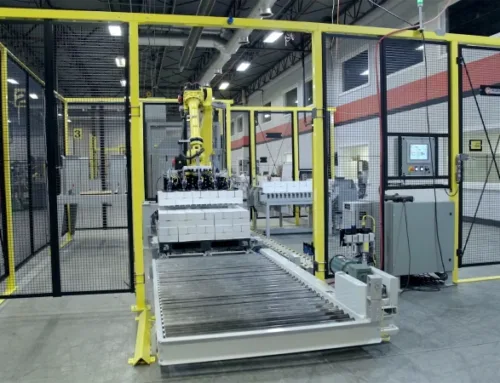
- Robot cell guarding and production cells: reuse the same panel-and-gate logic for industrial automation safety and machine perimeter guarding.
This is not a substitute for a task-specific risk assessment, LOTO procedure, safety relay or STO validation. The value is in connecting the physical guarding layout to the controls design so that equipment isolation is deliberate, documented, and testable.
Specify the Boundary Before Fabrication
Share the machine footprint, access points, gate swing, maintenance frequency, hazard zone, required mesh or polycarbonate panel type, post layout, safety interlock model, and stop-circuit architecture. The Mdfence configuration can then be checked for panel dimensions, 60x60mm square tube post options, finish, fixing method, and lock-carrier compatibility before production.
Turn Jam Clearing Into a Controlled Safety Operation
Use industrial safety fencing as the first physical barrier, then let the adaptive lock carrier connect the access door to the qualified machine safety design. Contact SGF to review your scrap metal line, baler, or shredder perimeter guarding requirements.