EN
EN  DE
DE  RU
RU  PT
PT  JA
JA  ES
ES  IT
IT 

|
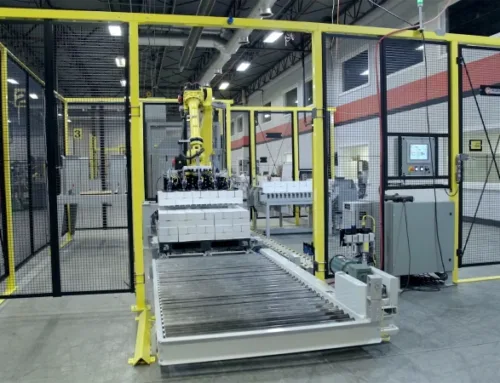
Is Your “Safety” Fence Just a Visual Barrier?In a Tier-1 automotive plant, a KUKA arm holding a 150kg engine block moves at 2m/s. If a servo error occurs, kinetic energy doesn’t care about “warning signs.” It cares about physics. Most generic wire mesh collapses under < 600 Joules. We engineer Industrial Safety Fencing systems certified to withstand 1600 Joules—the difference between a “near miss” report and a catastrophic EHS shutdown. |
Defining the Impact: What Does 1600 Joules Mean on the Factory Floor?
When we discuss Machine Guarding, “strong” is not a technical specification. In the realm of ISO 14120 compliance, we deal in Joules.
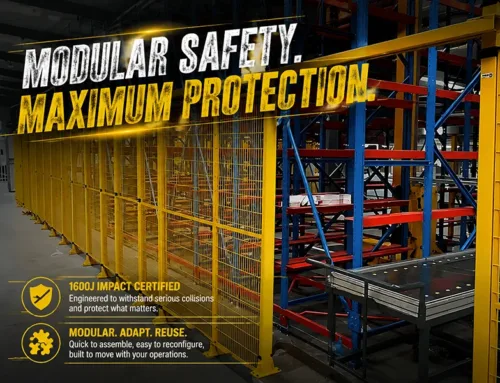
To answer the title question directly: Yes, the Mdfence system is engineered to withstand a robot collision. But let’s break down the physics. An impact resistance of 1600 Joules is roughly equivalent to a 100kg object (like a heavy workpiece or a rogue AGV) hitting the fence at 20 km/h.
In an automated welding station or assembly cell, the risk isn’t just the robot arm itself; it’s the ejected part. If a gripper fails while a robot is swinging a chassis component, that metal becomes a projectile. A standard “frameless” wire mesh (often used in light storage) will deform elastically and then fail, allowing penetration.

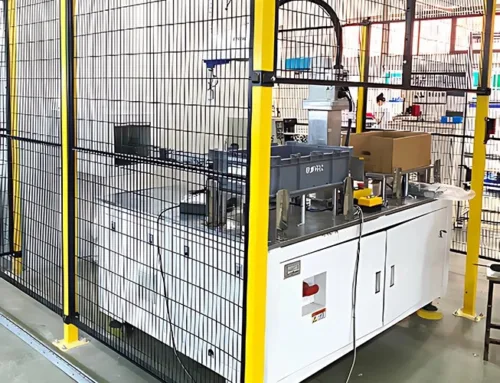
Figure 1: The Mdfence Framed Panel structure (20x30mm tube frame) provides the rigidity required to absorb kinetic energy without brittle fracture.
The Anatomy of Resistance: Why Q235 Steel Matters
Resistance is not just about thickness; it’s about the frame architecture. Our Robot Safety Fencing utilizes a fully welded Framed Panel design.
- The Frame (20x30mm Tube): Unlike “double wire” fences that rely on wire tension, our panels have a structural Q235 steel skeleton. Upon impact, this frame distributes the point-load across the entire module.
- The Post (60x60mm): The energy is transferred from the panel to the post. A 1.5mm or 2.0mm wall thickness ensures the post acts as a cantilever beam, absorbing energy through controlled plastic deformation rather than snapping.
- The Anchorage: Ultimately, the force goes to the floor. We use heavy-duty M10x70mm expansion bolts. The unique “ear” base design prevents the anchor from shearing off under shear loads generated by a collision.

Figure 2: The 60x60mm Q235 Post with reinforced base plates transfers impact energy into the concrete foundation, preventing system collapse.
Beyond Impact: Integration with Safety Logic (STO)
Physical resistance is the last line of defense. The primary defense in a Robot Cell is the logical integration. A fence that cannot hold a safety switch reliably is a liability.
System Integrators often struggle with generic fences because they lack mounting surfaces for interlocks (like Omron D4NL or Pizzato). This leads to onsite drilling, which ruins the powder coating and creates alignment issues. If the door sags, the key doesn’t engage, the machine won’t start, and your OEE (Overall Equipment Effectiveness) plummets.
Our system includes pre-engineered Safety Interlock Carriers. Whether you need a simple padlock hasp for LOTO (Lockout/Tagout) or a complex mounting plate for a solenoid-locking switch, the frame rigidity ensures precise alignment over thousands of cycles.

Figure 3: Dedicated mounting kits for safety switches ensure seamless integration with your PLC’s safety circuit.
The “Hidden” ROI: Floor Space and Safety Distance
In automotive manufacturing, floor space is premium real estate. The ISO 13857 standard dictates the “Safety Distance” (Sr) based on the mesh opening size.
Cheap 50x50mm mesh allows fingers to penetrate further, requiring the fence to be placed further away from the hazard (often 200mm to 850mm away). Our standard 20x100mm “Finger Safe” mesh restricts penetration to the fingertip only. This allows you to install the Industrial Safety Fencing as close as 120mm from the hazard zone.
The Result: You save nearly 1 square meter of floor space per linear meter of fencing. For a large assembly line, this means you can fit more stations into the same footprint, directly increasing plant capacity.
Frequently Asked Questions (Automotive & Automation Context)
Q1: Does this fencing meet ISO 14120 requirements for ejected parts?
Yes. The system is tested to withstand impacts up to 1600 Joules, specifically designed to contain ejected workpieces or tooling failures common in high-speed machining and robotic cells.
Q2: Can we integrate light curtains with the fence posts?
Absolutely. We offer specialized 80x80mm posts with internal cable management channels specifically for mounting safety light curtains (emitter/receiver) without exposed wiring.
Q3: How do we handle conveyor ingress/egress through the fence?
We provide customizable “Tunnel Guard” kits. These are cut-outs in the mesh panel framed with steel profiles, sized according to ISO 13857 to allow product flow while preventing operator reach-in.
Q4: Is the system compatible with Lockout/Tagout (LOTO) procedures?
Yes. Our door systems can be equipped with multi-padlock hasps or integrated with captive-key systems, ensuring maintenance personnel can secure the zone before entry, fully complying with OSHA 1910.147.
Q5: What happens if a forklift damages a panel?
Unlike welded barriers that require cutting and hot work to fix, Mdfence is modular. You can unbolt the damaged panel and replace it in minutes using standard tools, with zero impact on surrounding operations.