EN
EN  DE
DE  RU
RU  PT
PT  JA
JA  ES
ES  IT
IT Machine guarding for recycling and dismantling lines
Safety guarding fence for heavy-duty scrap flyout and collision control
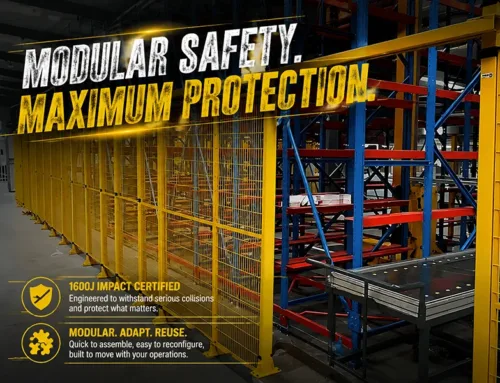
When a recycling line throws heavy fragments or a forklift clips the edge of a work cell, a light fence fails fast. Mdfence is built for those impacts, combining Q235 structural steel, 1600 J impact resistance, and 20×100 mm micro mesh to hold the line closed.
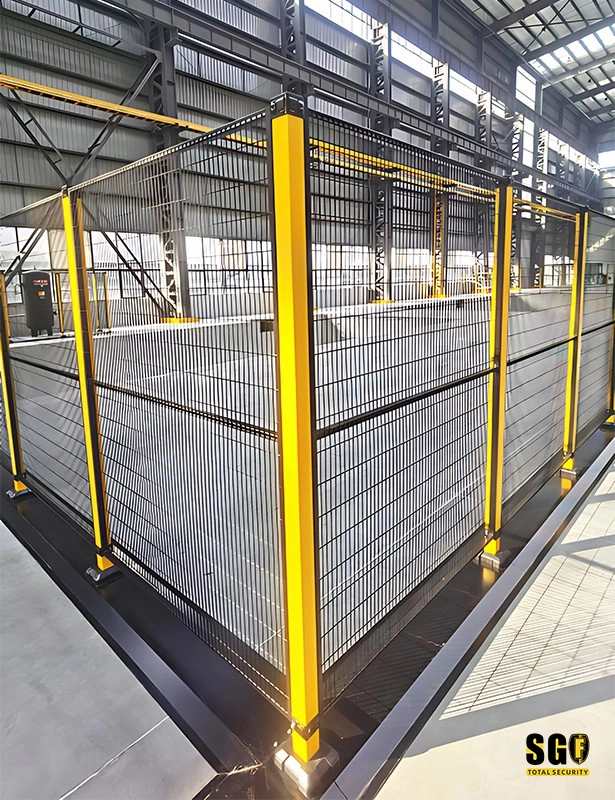
Why this safety guarding fence fits heavy-impact recycling lines
Scrap crushing, car dismantling, and metal transfer zones do not fail gently. Ordinary light fencing bends, opens at the joints, or leaves gaps wide enough for flyout. Mdfence is adapted to that job: it uses a welded Q235 carbon steel frame with 60×60 mm posts, TÜV-certified impact performance, and a fine 20×100 mm anti-insertion mesh to stop fragments before they reach people or traffic lanes.
| Requirement | Mdfence response |
|---|---|
| High-impact collision risk | Rated to resist 1600 J of impact energy, roughly the force of a 100 kg load striking at 20 km/h. |
| Flying scrap and sharp fragments | 20×100 mm micro mesh reduces open area and helps block metal chips, shards, and rebound debris. |
| Forklift and handling traffic near the perimeter | 60×60 mm Q235 steel posts and rigid welded construction reduce deformation at the contact point. |
| Safety proof for plant managers | TÜV-certified structure gives a clear engineering reference for guarded zones and audit discussions. |
Structure evidence behind the protection
1. Impact-rated steel frame that stays upright after contact
The first barrier failure in scrap and dismantling sites is usually structural: the post bows, the weld tears, and the gap widens. The product advantage board shows the weld seam, coating, and base plate together because those three details carry the load path. Mdfence uses Q235 carbon steel and 60×60 mm posts to provide a rigid frame that can absorb abuse without collapsing the full cell.
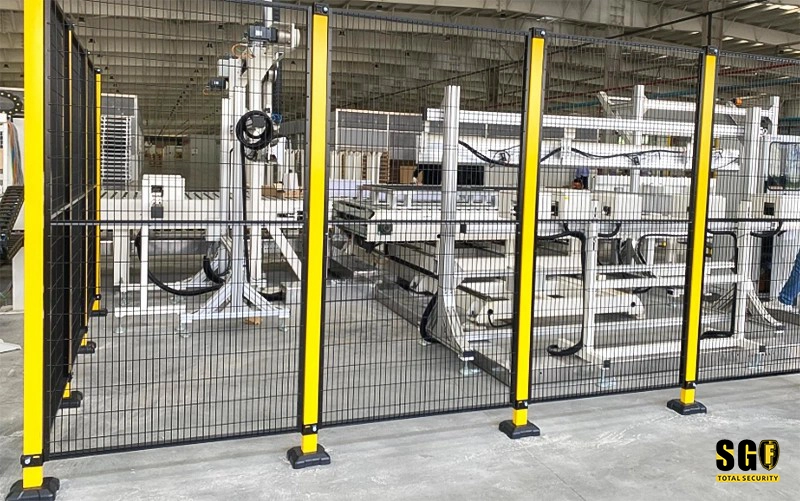
2. Micro-mesh containment that closes the escape path
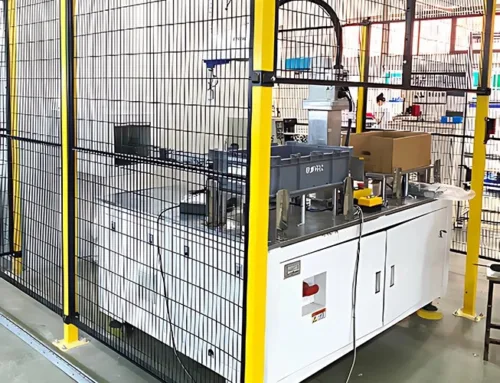
Impact resistance alone is not enough if the opening is too large. The technical front view highlights the post and clamp layout that keeps the mesh panel tight and aligned. The 20×100 mm micro mesh is the practical answer for flyout control: it helps block small metal pieces, protects fingers from accidental entry, and keeps the guard useful even when the line is working hard and fast.
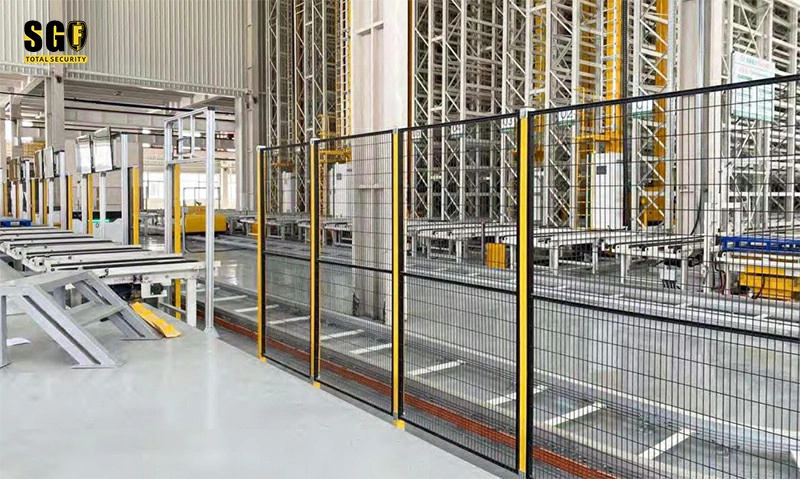
3. Base plate installation for retrofit and fast plant changeover
Many recycling plants do not have the luxury of a full shutdown. That is why the installation diagram matters. Base plate drilling, expansion bolts, and retaining rings make the fence practical for retrofits around crushers, dismantling stations, and transfer corridors. The result is a guard that can be installed in a controlled way and returned to service without turning the project into a long outage.
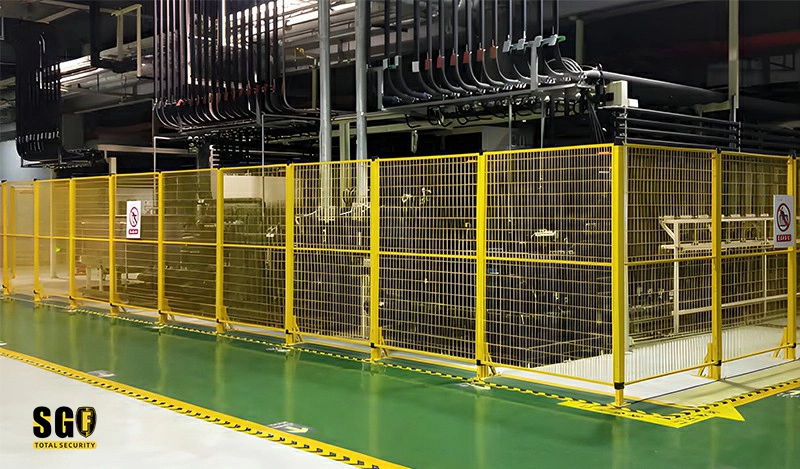
Where this safety guarding fence is used
- Perimeter protection around scrap crushing and sorting equipment
- Vehicle collision boundary near forklift travel lanes and loading points
- Operator exclusion zones beside dismantling tools and shear stations
- Containment walls for transfer corridors with rebound debris risk
- Upgrade projects where light fencing has already failed once
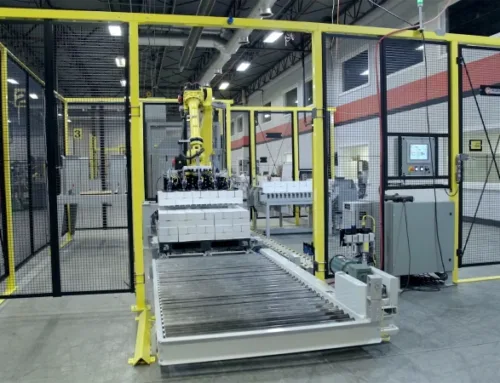
Across these applications, the value is the same: keep heavy fragments in the cell, keep hands out of the hazard, and keep the barrier standing after routine abuse. Mdfence is sized for industrial contact, not for decorative separation.
What to specify before you quote a safety guarding fence
Start with the impact profile, the traffic pattern, and the fragment size you need to stop. Then match the fence to the site: Q235 steel structure, 60×60 mm posts, 1600 J impact resistance, TÜV certification, and 20×100 mm micro mesh for the containment side of the job. Those details are what turn a generic fence into a guarding system that can survive real scrap and dismantling work.
Build the guarding line around the actual risk
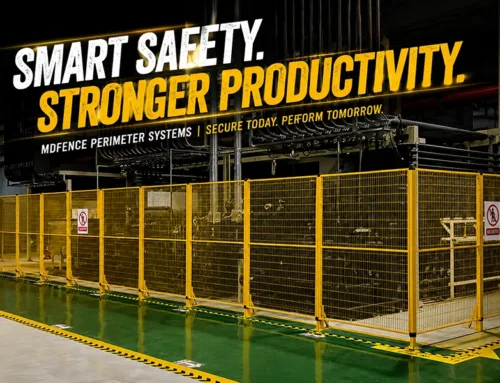
If your site has heavy flyout, fork traffic, or repeated perimeter hits, the fence must be engineered for impact first and appearance second. Mdfence gives you the steel, mesh density, and install detail to do that in one system.